Georgia's Virtual Zone status for IT companies: tax treatment and getting paid by foreign clients
Georgia's Virtual Zone regime exempts qualifying IT companies from profit tax on software and IT services supplied to clients outside Georgia. It has drawn many founders to Tbilisi. The status depends on where the clients are, so how and from where they pay matters.
- Published
- Reading time
- 2 min read
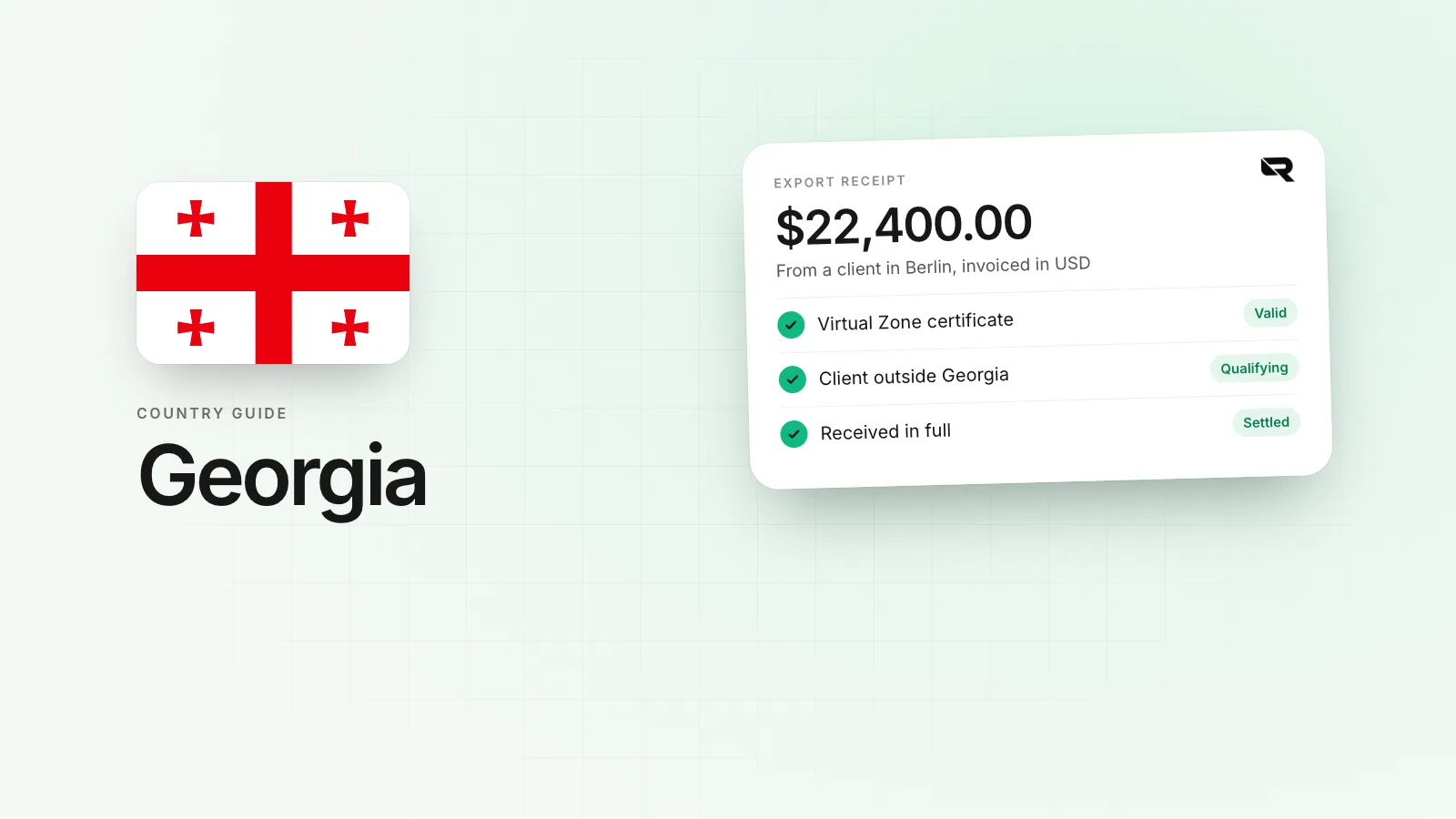
A Tbilisi software company with 18 developers builds apps for clients in Germany, the US and the UK. It holds Virtual Zone status, so its profit from those contracts is exempt from Georgian profit tax. A local bank asked to develop an app too. The founders declined: Georgian clients would not qualify for the exemption, and mixing them in complicates the books.
What the Virtual Zone is
Georgia introduced the Virtual Zone regime to attract IT businesses. A Georgian legal entity, typically an LLC, applies to the Ministry of Finance for Virtual Zone Person status. Once certified:
- profit from supplying qualifying IT products and services to persons outside Georgia is exempt from profit tax,
- such supplies are generally treated as outside Georgian VAT,
- the company still pays other taxes, such as payroll taxes on employees.
Dividends paid to shareholders generally remain subject to dividend withholding tax.
Client location is the test
The exemption depends on the client being outside Georgia. Services to Georgian clients are taxed normally. That makes three records essential:
- Contracts that identify the foreign client and its address.
- Invoices issued to that client.
- Payments coming from the client abroad.
A payment from a Georgian intermediary for a foreign end client can raise questions. Keep the contract chain clear.
Currency
Georgia has an open currency regime. Companies receive dollars and euros freely, hold them in foreign currency accounts and convert to lari when they choose. Many Virtual Zone companies keep salaries partly pegged to dollars, so holding dollars until payroll avoids converting twice.
How foreign clients pay
A Berlin client paying a Georgian IBAN sends an international transfer, often SWIFT, which can lose fees on the way. A US client sends an international wire. Neither is domestic for them. Giving US clients US account details and EU clients a euro IBAN, where your structure allows, lets them pay locally and in full.
Where Rivet fits
A Rivet business account accepts registered companies after verification, including Georgian LLCs. Approved companies get US dollar details in their own name on every plan, so American clients pay by ACH, and euro details with an IBAN plus sterling details from the Growth plan. Payments are matched to invoices, which keeps the client-location trail tidy, and balances convert at a rate shown before you confirm. Rivet is not a bank; regulated partner institutions hold the funds.
Questions people ask
What is a Virtual Zone Person?
A Georgian legal entity certified by the Ministry of Finance as carrying out IT activity. Its profit from supplying qualifying IT services to persons outside Georgia is exempt from profit tax.
Does Virtual Zone status cover individual entrepreneurs?
No. It is granted to legal entities, such as an LLC. Individual entrepreneurs use other regimes, such as small business status.
Are dividends from a Virtual Zone company taxed?
Dividends paid to individuals are generally subject to Georgian dividend withholding tax. Check the current rate and any treaty with an adviser.
Can a Georgian company receive dollars?
Yes. Georgia does not restrict foreign currency receipts, and companies can hold dollar and euro accounts.
Sources
William covers what happens once a company starts moving money: getting the business verified, paying contractors and suppliers abroad, and keeping card spend under control. William writes for the founder or finance lead who has to make it work this week, and links every rule cited to the text it comes from.
More from William Sunjo M. →This article is general information, not legal, tax or financial advice. Rules and fees change; check the sources above and the provider’s current terms before you act on them.
- georgia
- virtual zone
- it company
- profit tax
- usd
- gel