Foreign currency accounts for exporters: holding the currency you sell in
An exporter earns in dollars or euros and spends partly in the same currencies. Converting everything on arrival costs money twice. A foreign currency account fixes that.
- Published
- Updated
- Reading time
- 2 min read

An exporter's revenue arrives in someone else's currency. If every dollar is converted into local money when it lands, and some of it is converted back to pay for freight or software a week later, the business pays two spreads on the same money. A foreign currency account is the simple fix.
What is a foreign currency account?
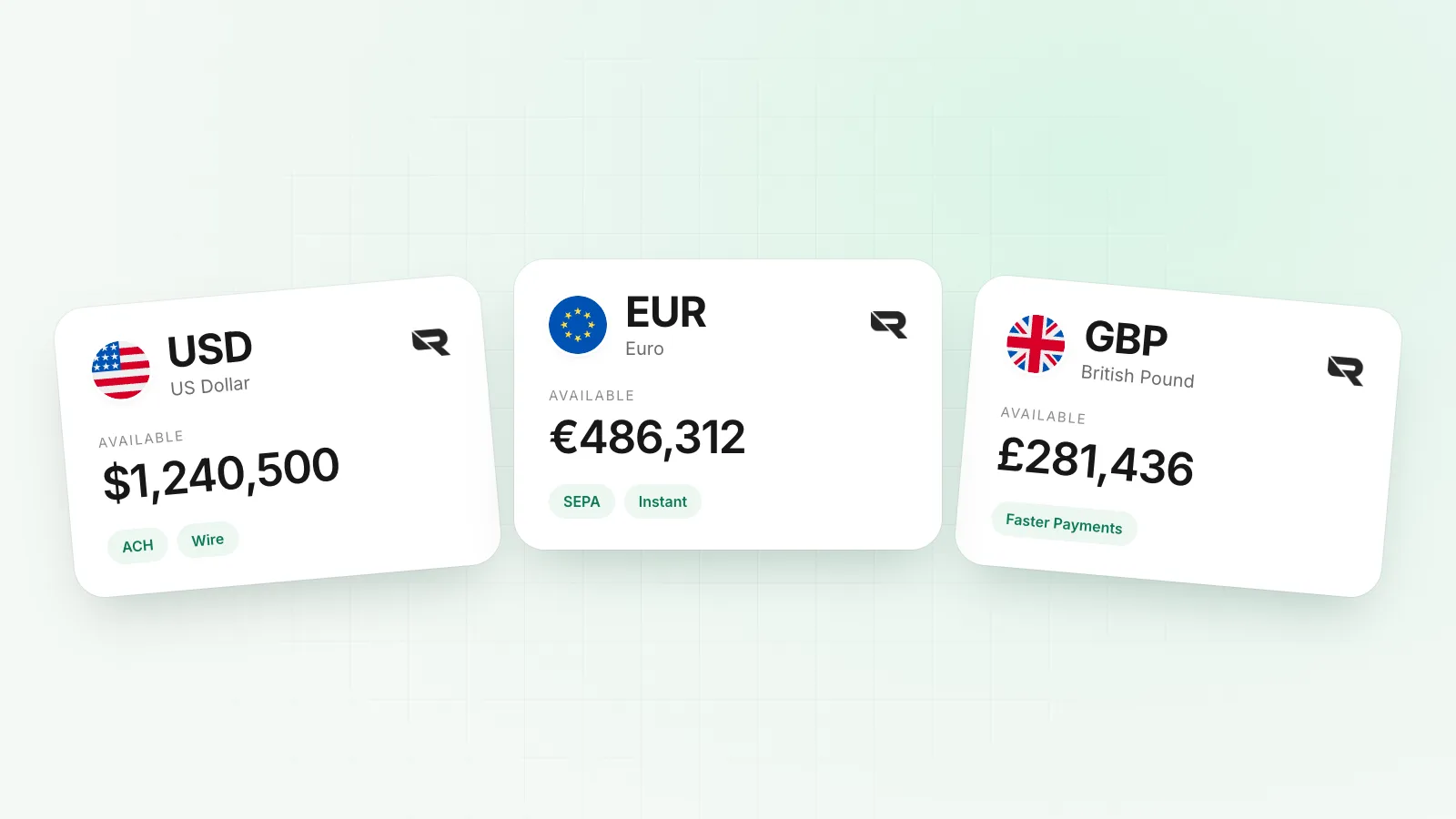
It is an account in a currency other than your own, held in your company's name: USD for a Kenyan coffee exporter, EUR for a Moroccan textile maker, GBP for an Indian software firm with UK clients. It receives payments in that currency, holds them, and pays out in it.
Where the savings come from
- Convert once, not twice. Pay foreign costs, such as freight, packaging, cloud hosting, ads and foreign contractors, from the foreign balance.
- Choose the moment. Convert what you need locally when you need it, at a rate you see.
- Lower receiving costs. With local details in the buyer's currency (ACH for US buyers, SEPA for EU buyers), the buyer pays a domestic transfer and nothing is deducted on the way.
The true cost of international payments shows how much of an FX bill comes from margins and double conversions.
The risk you take on
A balance in USD goes up and down in local terms as the exchange rate moves. Most exporters manage this with a simple rule: keep enough foreign currency to cover the next month or two of foreign costs, and convert the rest on a schedule. Larger exporters add forward contracts.
Local rules on export proceeds
Many countries regulate what exporters do with foreign earnings.
- India: export proceeds must be realised and repatriated within the period the RBI sets. Exporters can hold eligible earnings in an EEFC account at an Indian bank.
- Pakistan: the State Bank of Pakistan lets exporters, including IT exporters, retain a share of proceeds in foreign currency accounts under set conditions.
- Nigeria, Kenya and others: central banks set their own rules, and they change. Ask your bank.
Any provider abroad should fit into those rules: proceeds received in your company's name, then moved home with a clear record. The Payoneer alternatives guide for South Asia covers this for Pakistan, India and Bangladesh.
What to look for
| Feature | Why |
|---|---|
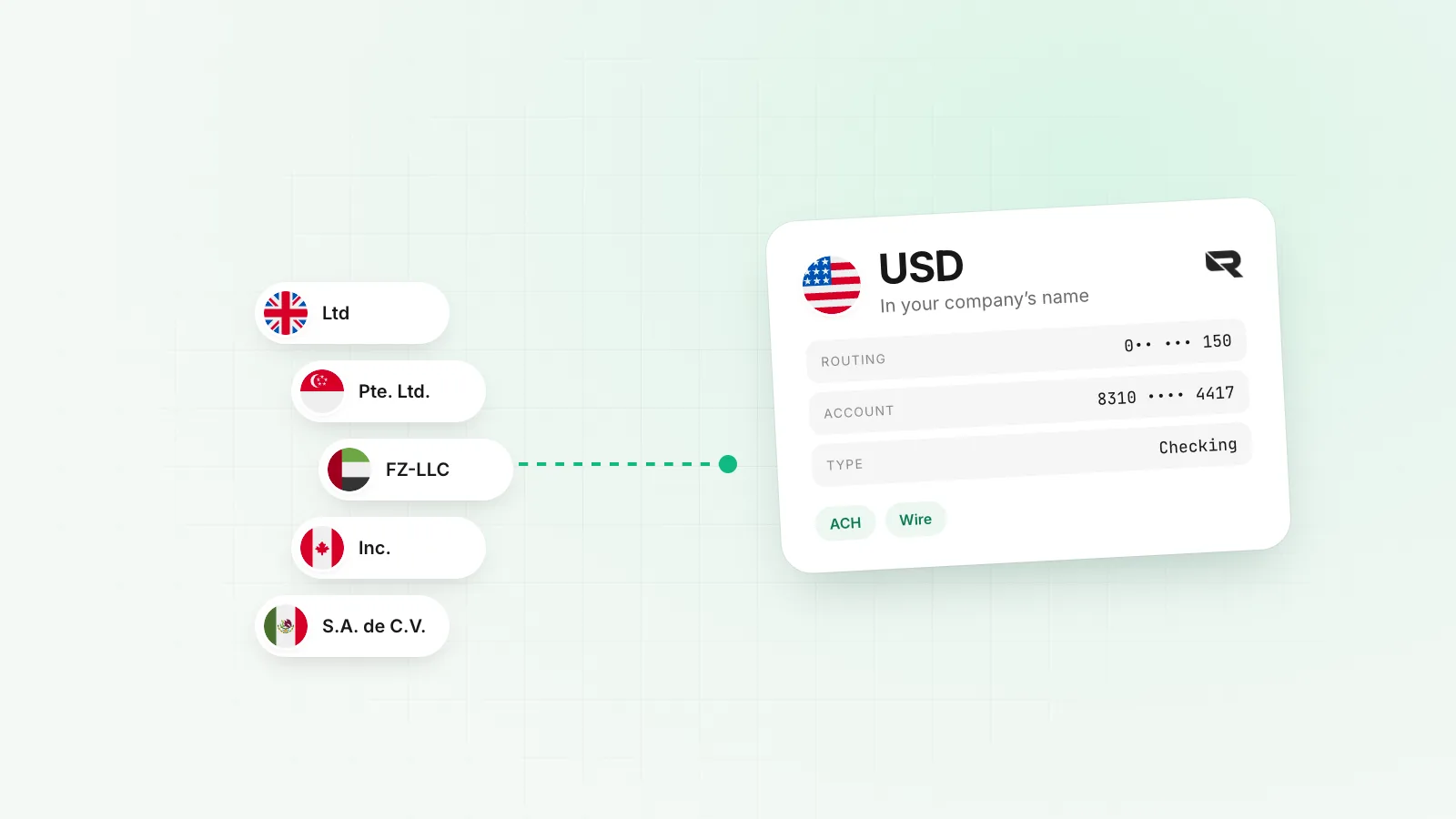
| Details in your company's name | Buyers' finance teams and your auditors |
| The rails your buyers use | ACH and wire for the US, SEPA for the EU, Faster Payments for the UK |
| Published conversion margin | So you can compare |
| Payouts in the currencies you spend | Pay suppliers without converting |
| A clean route home | For proceeds you must repatriate |
On Rivet
Rivet gives exporters registered in the countries we support USD details in the company's name on the free plan, and EUR and GBP from Growth. Conversion is from 0.80% on Starter to 0.30% on Scale, shown before you confirm, and payouts to suppliers in 120+ countries come from the same balances. See Bank accounts and Pricing.
Questions people ask
What is a foreign currency account for business?
An account in a currency other than your local one, held by your company, such as a USD account for a Kenyan exporter. It can receive payments in that currency, hold them, and pay suppliers in that currency, without converting.
Why do exporters need foreign currency accounts?
To avoid converting twice. An exporter that receives USD and pays some costs in USD, such as freight, software, raw materials or ads, can pay them straight from the USD balance. Only the amount needed locally is converted, when the rate suits.
What is an EEFC account?
An Exchange Earners' Foreign Currency account lets Indian residents who earn foreign exchange, including exporters, keep up to the full amount of their eligible earnings in foreign currency at an Indian bank, under Reserve Bank of India rules.
Do I have to convert export proceeds?
It depends on your country. Some require exporters to repatriate proceeds within a set time and convert a share. Others let exporters hold foreign currency freely. Ask your bank about the current rules for your type of export.
Sources
Rashidatou writes Rivet's guides to how money moves between countries: the payment rails, what each one costs, and the account details a company needs to get paid in another currency. Every figure in Rashidatou's articles is traced to the scheme rulebook, the regulator or the provider's published price list, and those sources are listed at the end.
More from Rashidatou K. →This article is general information, not legal, tax or financial advice. Rules and fees change; check the sources above and the provider’s current terms before you act on them.
- foreign currency account for exporters
- foreign currency account for business
- eefc account
- fx risk
- export proceeds