Revolut Business alternatives: when the FX allowance stops fitting
Revolut Business prices FX as a monthly allowance. Inside it, conversion is cheap. Outside it, the price changes. Here is how to tell whether you have outgrown it.
- Published
- Updated
- Reading time
- 2 min read
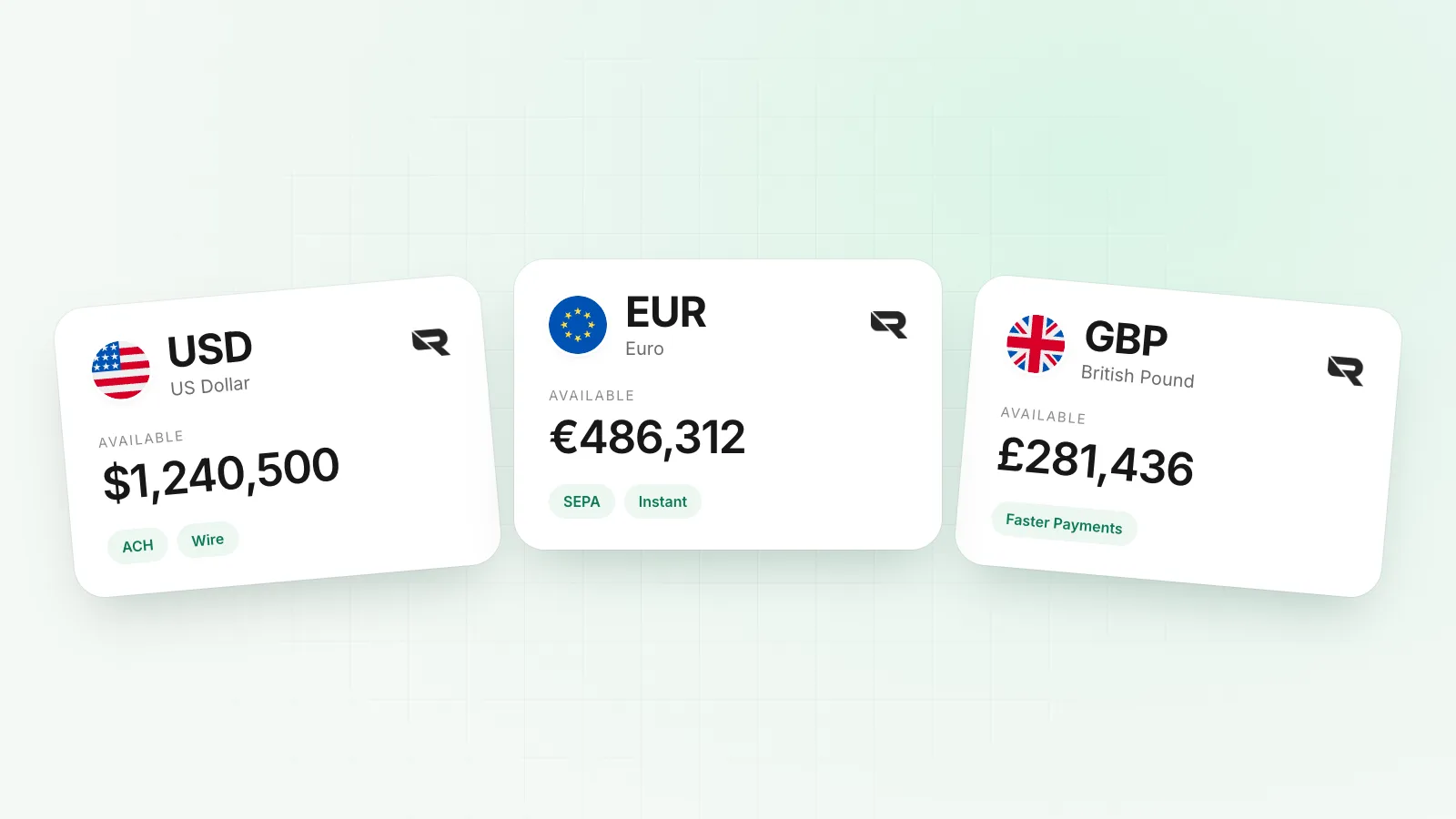
Revolut Business has a pricing model you do not see elsewhere: each plan includes a monthly amount of currency exchange at the interbank rate. Inside that allowance, conversion is very cheap. Once you pass it, the per-conversion fee kicks in. Whether Revolut is good value comes down to how your monthly volume compares with the allowance.
Figures below are from Revolut's US plans page, read on 1 November 2026. Plans and fees differ by country.
How Revolut Business plans work
| Plan | Price | FX at interbank rate per month | Free international transfers | Free local transfers |
|---|---|---|---|---|
| Basic | From 10 USD | 1,000 USD | 0 | 10 |
| Grow | From 40 USD | 20,000 USD | 5 | 100 |
| Scale | From 140 USD | 80,000 USD | 25 | 1,000 |
| Enterprise | Custom | Custom | Custom | Custom |
Outside the allowances:
- FX above the allowance: 0.6%
- FX outside market hours: 1%
- International transfers beyond the free number: 5 USD each
- Local transfers beyond the free number: 0.20 USD each
When the allowance stops fitting
Take a company on Grow converting 50,000 USD a month and sending 15 international transfers.
- Plan: 40 USD.
- FX: 30,000 USD above the allowance at 0.6% is 180 USD.
- Transfers: 10 beyond the free 5, at 5 USD, is 50 USD.
Total: 270 USD. Moving to Scale (140 USD) would cover all of it inside the allowance and the free transfers. The model rewards picking the right plan, and it penalises months that spike.
The alternatives
Wise Business
No plan fee and conversion from 0.23% on major pairs. On the month above, Wise's FX would be about 115 USD at that rate, though transfer fees work differently. Best for steady, frequent conversion. See Wise Business alternatives.
Airwallex
FX at 0.5% above interbank for major currencies, with no allowance. Free Explore plan; paid plans per user. Strong on accounts payable and cards. See Airwallex vs Wise vs Rivet.
Rivet
Flat plans, not per user: Starter is free with USD details and unlimited digital cards; Growth is 200 USD with EUR and GBP details and physical cards; Scale is 500 USD. FX is from 0.80% on Starter to 0.30% on Scale, shown before you confirm. Rivet onboards companies registered in many countries Revolut does not serve, and US LLCs with owners abroad.
Questions to answer before you switch
- Where is your company registered, and does the new provider accept it?
- What do you convert in a normal month, and in your busiest month?
- How many international payouts do you send, and to where?
- Do clients pay you by ACH, SEPA, Faster Payments or SWIFT?
The multi-currency account guide covers the rest of the checklist, and Pricing lists Rivet's fees in full.
Questions people ask
What are the alternatives to Revolut Business?
Wise Business, Airwallex, Payoneer and Rivet are the most common. Mercury is an option for US companies that only need USD. Which is best depends on how much you convert, how many transfers you send, and where your company is registered.
Does Revolut Business charge FX fees?
Each plan includes a monthly amount you can exchange at the interbank rate. Above that, Revolut charges 0.6%, and 1% for exchanges outside market hours, according to its US plan page. Fees may differ in other countries.
Revolut Business or Airwallex?
Revolut is often cheaper for a company whose monthly conversion fits inside a plan's allowance. Airwallex charges per conversion with no allowance, and its paid plans are priced per user. Teams that need accounts payable and approvals often prefer Airwallex; small teams that convert a predictable amount often prefer Revolut.
Does Revolut Business offer a credit card?
Revolut offers business credit in some markets, subject to eligibility. Its standard corporate cards spend from the account balance. Check its site for your country.
Sources
Rashidatou writes Rivet's guides to how money moves between countries: the payment rails, what each one costs, and the account details a company needs to get paid in another currency. Every figure in Rashidatou's articles is traced to the scheme rulebook, the regulator or the provider's published price list, and those sources are listed at the end.
More from Rashidatou K. →This article is general information, not legal, tax or financial advice. Rules and fees change; check the sources above and the provider’s current terms before you act on them.
- revolut business alternatives
- revolut business
- airwallex vs revolut
- fx allowance
- business account