Do you need a business account as well as Stripe or Shopify Payments?
Stripe and Shopify Payments take the money. They still need somewhere to send it, and they do not pay your suppliers. Here is how the pieces fit.
- Published
- Updated
- Reading time
- 2 min read
Search "airwallex vs stripe" or "wise vs stripe" and you get comparisons of two kinds of product that do different jobs. A founder setting up an online business usually needs one of each. This guide explains where a processor stops and a business account starts.
What does Stripe or Shopify Payments actually do?
A payment processor collects money from customers by card, wallet or local method, holds it while the payments settle, and pays it out to a bank account you connect. That is the whole job. Stripe and Shopify Payments both work this way, and both charge per transaction for it.
What a processor does not do:
- hold your money long term
- pay suppliers, contractors or staff
- give your team cards for ads, software or travel
- give you account details so clients can pay you by bank transfer
Those are business account jobs.
Where the payout goes
Each processor pays out to an account in a supported country and currency. Stripe's documentation lists the payout currencies available for each account country. If you sell to US customers in USD and connect USD account details, the payout lands in USD with no conversion. Connect a local-currency account and the processor converts first, at its own rate.
That conversion is easy to miss. On a store doing 30,000 USD a month, a 1% difference in conversion cost is 300 USD a month before any other fees.
Where Shopify Payments is not available
Shopify Payments works only for stores based in the countries on Shopify's supported list. Stores elsewhere sell with a third-party provider. The payout question is the same: the provider needs an account in your company's name to pay into, and you need a way to pay your own costs.
The setup most online businesses end up with
| Job | Tool |
|---|---|
| Take card payments at checkout | Stripe, Shopify Payments or another processor |
| Receive processor payouts in USD, EUR or GBP | Business account with details in the company's name |
| Get paid by bank transfer from B2B clients | Same business account |
| Pay suppliers and contractors abroad | Business account payouts |
| Pay for ads and software | Company cards with a limit per card |
Should the business account be multi-currency?
If you sell in more than one currency, yes. A store selling in USD and EUR can receive each payout in its own currency, pay EUR suppliers from the EUR balance, and convert only the difference. The multi-currency account guide covers what to check.
Where Rivet fits
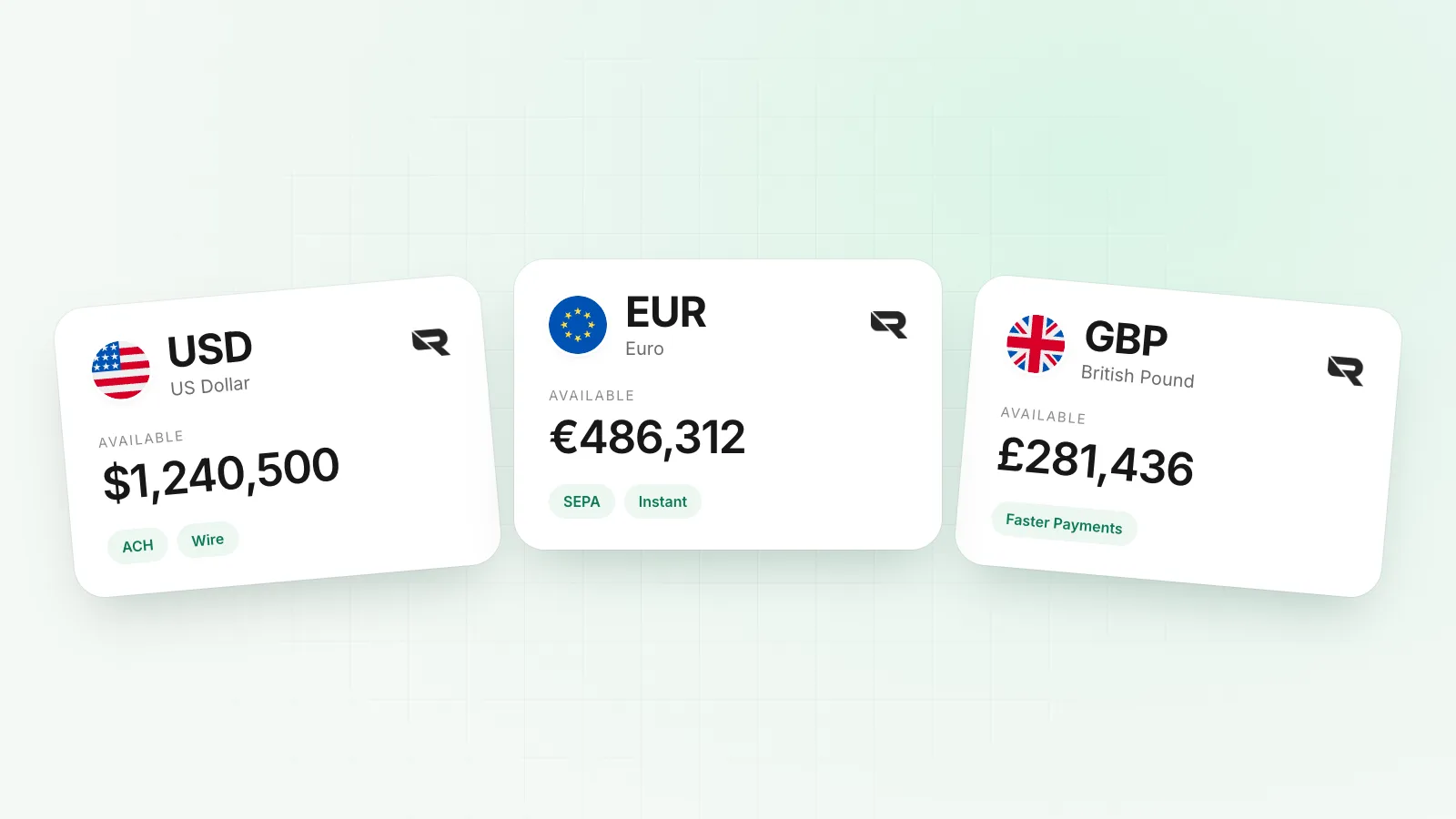
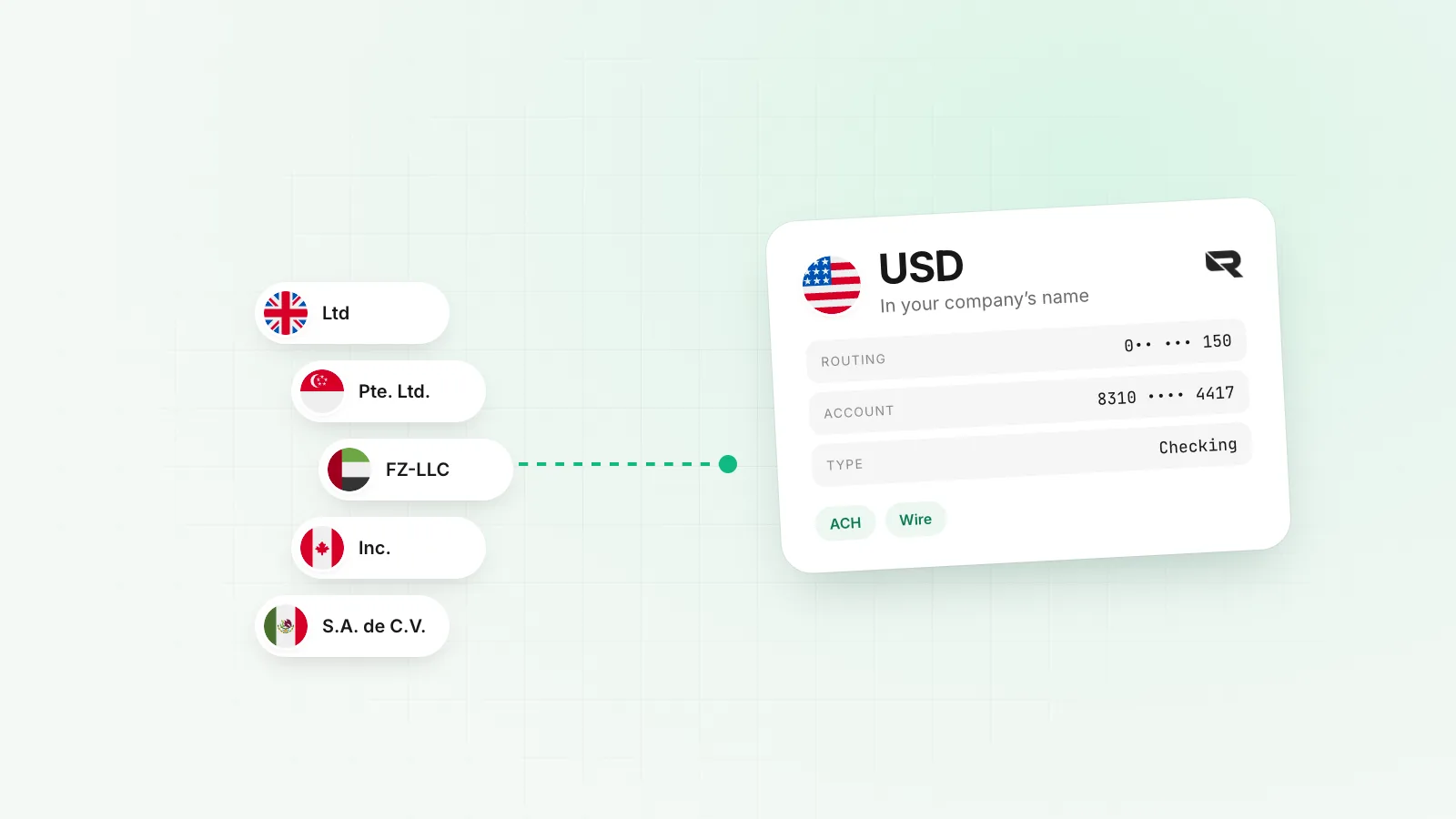
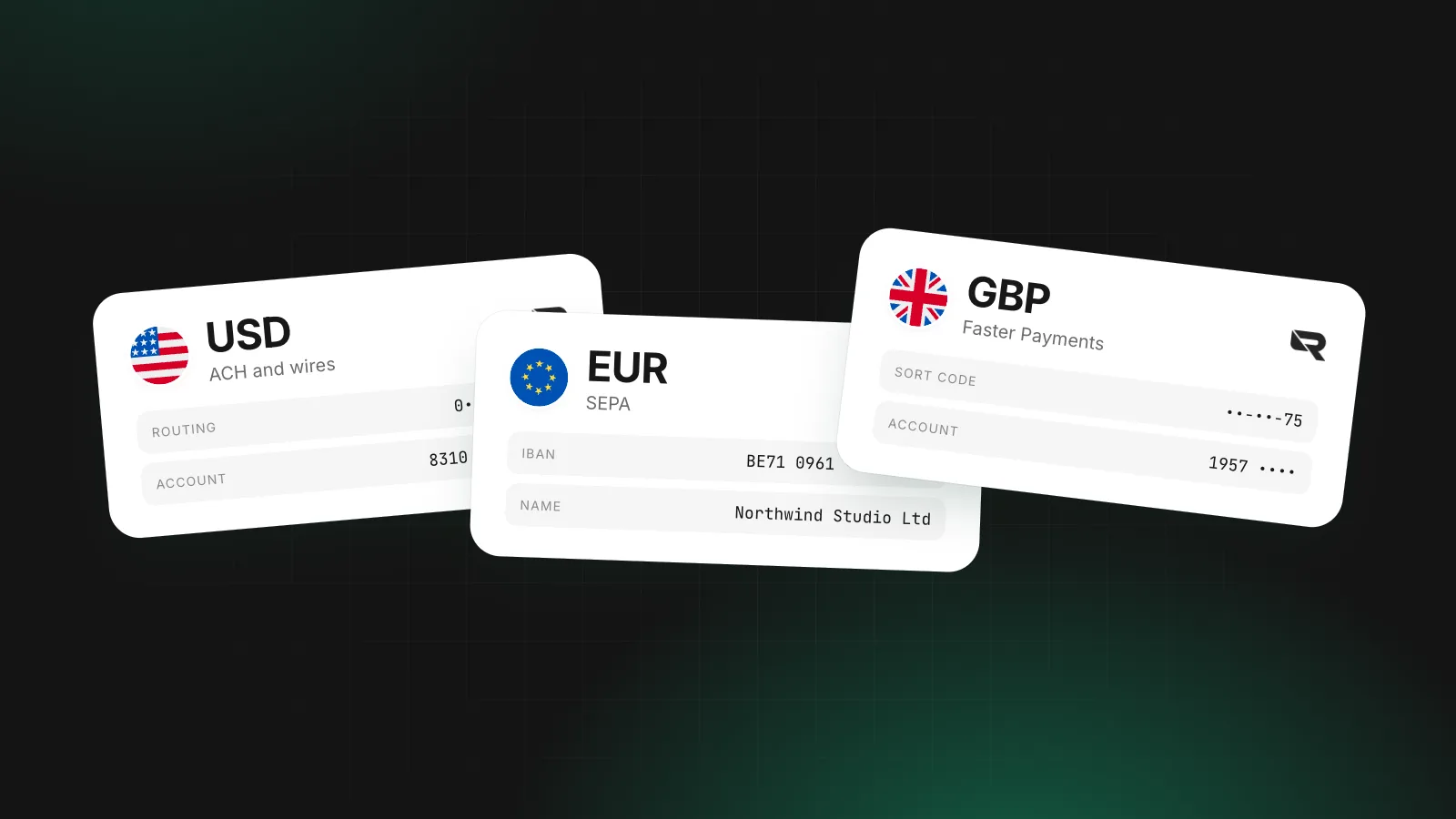
Rivet sits after the processor. On the free Starter plan a company gets USD details in its own name to connect as a payout account, and unlimited digital cards for ad spend and software. EUR and GBP details come with Growth. From the balance you can pay suppliers in 120+ countries in one batch. See Bank accounts for the details, and virtual cards for ad spend if most of your outgoing money goes to Meta and Google.
Questions people ask
Is Stripe a bank account?
No. Stripe is a payment processor. It holds your balance briefly while payments settle, then pays out to the bank account you connect. You cannot pay suppliers, hold money long term or issue a team card from the Stripe balance in the way a business account allows.
Airwallex or Stripe: which should I use?
They overlap only partly. Stripe is built to accept payments online. Airwallex, Wise and Rivet are built to hold, convert and send money. Many companies use Stripe at checkout and a business account for everything after the payout.
Can Stripe pay out in USD to an account outside the US?
Stripe pays out in the currencies supported for your country and the bank account you connect. Where USD payouts are supported for your account country, you can connect USD details. Check Stripe's payouts documentation for your country before you set it up.
Can I use Shopify Payments in my country?
Shopify publishes the list of countries where Shopify Payments is available. If yours is not on it, your store can still sell with a third-party payment provider, and payouts from that provider go to the account you connect.
Sources
Rashidatou writes Rivet's guides to how money moves between countries: the payment rails, what each one costs, and the account details a company needs to get paid in another currency. Every figure in Rashidatou's articles is traced to the scheme rulebook, the regulator or the provider's published price list, and those sources are listed at the end.
More from Rashidatou K. →This article is general information, not legal, tax or financial advice. Rules and fees change; check the sources above and the provider’s current terms before you act on them.
- stripe payouts
- shopify payments
- airwallex vs stripe
- wise vs stripe
- business account