ACH vs wire transfer: speed, limits, cost and when to use each
ACH is cheap and batched. A wire is fast and final. Here is how each works, how long it takes, what it costs, and which to put on your invoices.
- Published
- Updated
- Reading time
- 2 min read
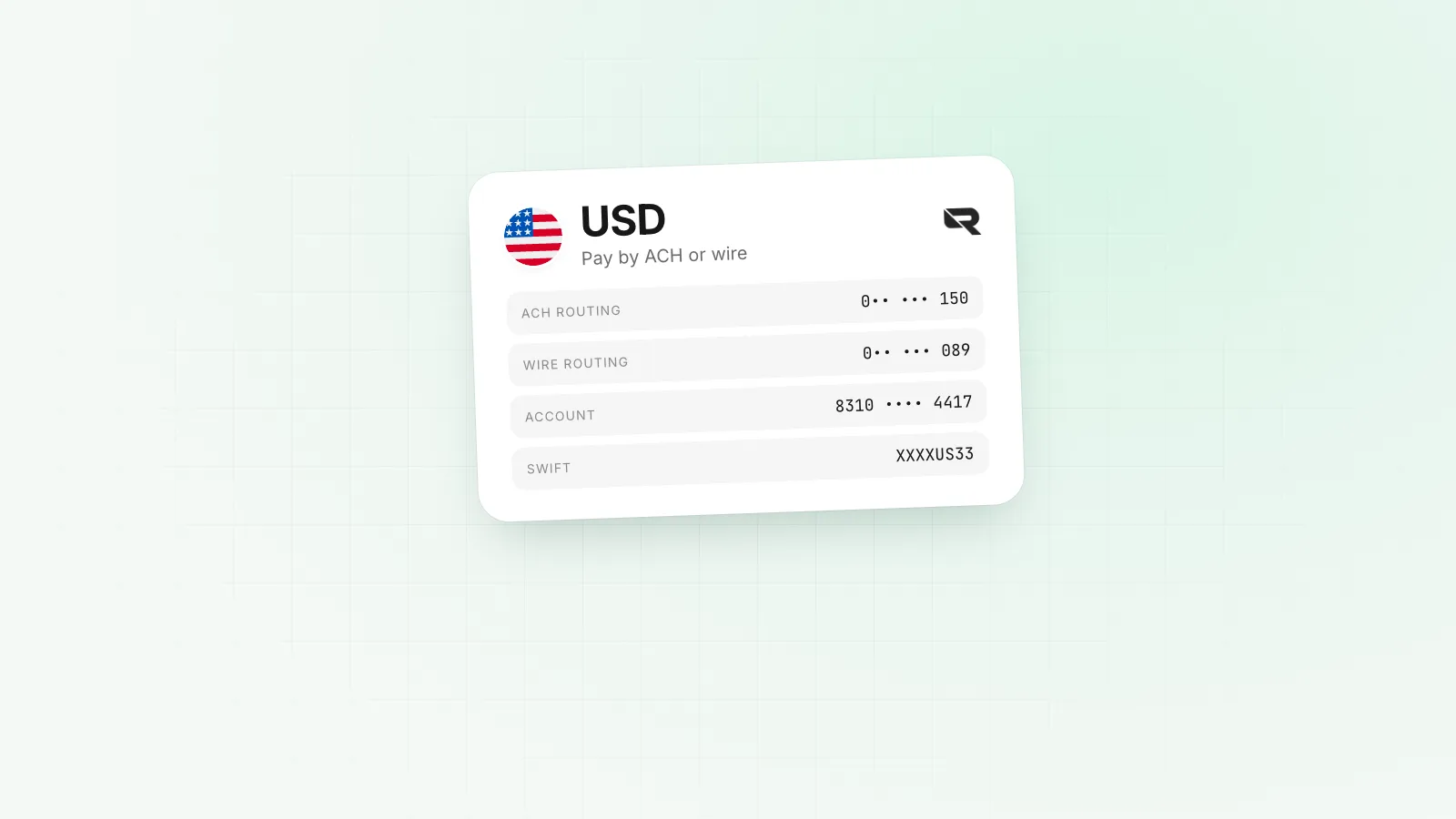
US clients pay their suppliers in two main ways: ACH and wire. The account details look almost the same, a routing number and an account number, but the rails behind them behave differently. If you invoice US clients, knowing which to ask for saves money and follow-up emails.
What is the difference between ACH and a wire?
ACH is a batch network run under Nacha's rules. Banks collect payments and exchange them in batches several times a day, so it is cheap and handles huge volumes. A wire, through the Federal Reserve's Fedwire service, moves each payment individually and settles it in real time. It is fast and final, and it costs more.
| ACH | Domestic wire (Fedwire) | |
|---|---|---|
| How it moves | In batches | One by one, in real time |
| Speed | 1 to 2 business days; same day with Same Day ACH | Minutes, during operating hours |
| Per-payment limit | 1 million USD for Same Day ACH; bank limits otherwise | Bank limits |
| Typical cost to send | Free to low | A fixed fee at most banks |
| Can it be reversed? | Returns allowed in specific cases | Generally final |
| Weekends and holidays | No settlement | No settlement |
How long does each take?
A standard ACH credit settles in one to two business days. Same Day ACH, available for payments up to 1 million USD, settles on the same business day if the bank submits it before the cut-off. A Fedwire payment arrives in minutes during the service's operating hours, which open the evening before the business day and close in the early evening Eastern time.
Neither settles on weekends or federal holidays. A payment sent on Friday afternoon may arrive on Monday.
What about FedNow and RTP?
FedNow, from the Federal Reserve, and RTP, from The Clearing House, are instant payment networks that run around the clock. Many banks now receive them, fewer let business clients send through them. They are useful, but most US accounts payable teams still pay suppliers by ACH or wire.
Which should you put on your invoice?
For regular invoices, ask for ACH. Most US finance teams pay suppliers in weekly ACH runs, and it costs them little. Give wire details too for large or urgent payments, and say which is which:
- ACH routing number and account number
- Wire routing number, which is sometimes different from the ACH one
- Account name exactly as registered
- Bank name and address
The USD account details guide explains each line.
A safety note
Because wires are final, fraudsters target them with fake "updated bank details" emails. If a supplier or client tells you their wire details changed, call them on a number you already have before sending. Tell your clients you will never change your details by email alone.
Receiving ACH and wires abroad
A company outside the US can receive both if it has USD details in its own name. On Rivet, those details come with the free Starter plan, and ACH and domestic wires land in your USD balance. The rails guide compares ACH with SEPA, Faster Payments and SWIFT, and Bank accounts shows what you get.
Questions people ask
How long does an ACH transfer take?
Standard ACH credits usually settle in one to two business days. Same Day ACH settles on the day it is sent, if submitted before the cut-off, for payments up to 1 million USD each. ACH does not settle on weekends or US federal holidays.
Is there a limit on ACH transfers?
Same Day ACH has a per-payment limit of 1 million USD under Nacha rules. Standard ACH has no network limit, but every bank sets its own daily and per-transaction limits for its customers, often much lower for new accounts.
Is a wire transfer faster than ACH?
Usually. A Fedwire payment settles in real time during operating hours. Same Day ACH can arrive the same day too, but in batches with set windows. For a large payment that must arrive today, a wire is the safer choice.
Which is safer, ACH or wire?
Both are secure rails. The difference is finality: a wire is final once sent, so fraud losses are hard to recover. ACH has return rules for some cases. For the payer, that makes verifying wire instructions by phone essential.
Sources
Rashidatou writes Rivet's guides to how money moves between countries: the payment rails, what each one costs, and the account details a company needs to get paid in another currency. Every figure in Rashidatou's articles is traced to the scheme rulebook, the regulator or the provider's published price list, and those sources are listed at the end.
More from Rashidatou K. →This article is general information, not legal, tax or financial advice. Rules and fees change; check the sources above and the provider’s current terms before you act on them.
- ach vs wire transfer
- ach transfer time
- ach transfer limit
- wire transfer
- fedwire