What is a SWIFT code, and when do you need one?
A SWIFT code identifies a bank, not an account. Here is how to read one, where to find yours, and which payments actually need it.
- Published
- Reading time
- 2 min read
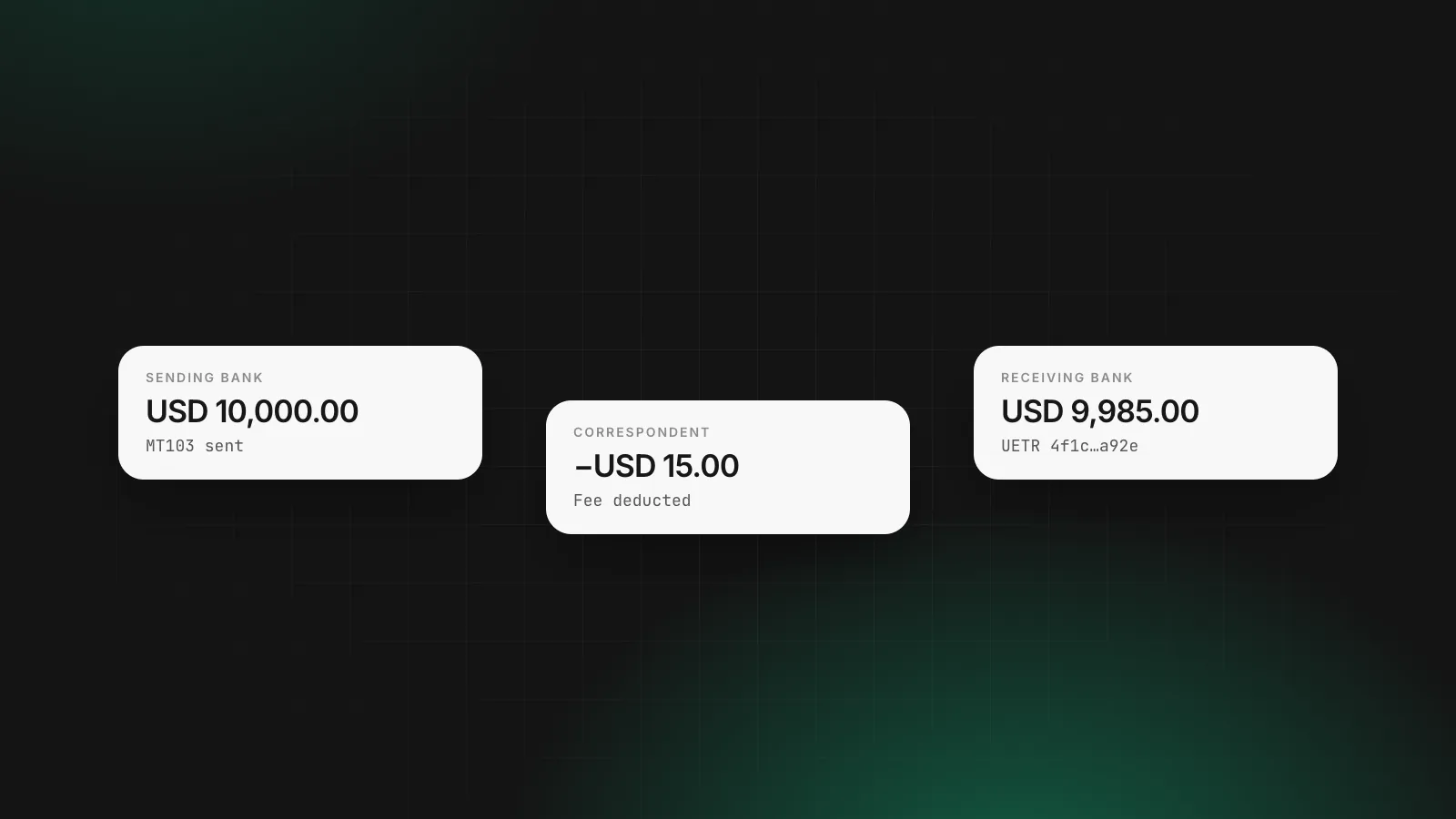
"What is a swift code for a wire transfer" is searched every day by people filling in a payment form for the first time. A SWIFT code tells banks which bank should receive an international payment. It says nothing about which account.
How to read a SWIFT code
A SWIFT code, also called a BIC (Business Identifier Code), has 8 or 11 characters.
| Part | Characters | Example | Meaning |
|---|---|---|---|
| Bank code | 4 letters | ABCD | Identifies the bank |
| Country code | 2 letters | US | Country of the bank |
| Location code | 2 letters or digits | 33 | City or head office |
| Branch code | 3 letters or digits, optional | XXX | A specific branch; XXX means head office |
An 8-character code points to the bank's main office. An 11-character code points to a branch.
When you need one
You need a SWIFT code to receive or send an international wire. The sending bank uses it to address the payment message on the Swift network.
| Payment | What identifies the bank |
|---|---|
| International wire | SWIFT code |
| US domestic ACH or wire | ABA routing number |
| UK Faster Payments | Sort code |
| SEPA transfer in euros | IBAN alone (the BIC is no longer required) |
So a US client paying your USD details by ACH never needs a SWIFT code. A client in Singapore paying the same account by wire does. The USD account details guide shows how to set both out on an invoice.
Where to find your bank's SWIFT code
- Your bank's wire instructions page or app, under "receive an international wire".
- Your account statement or online banking.
- Your provider's account details screen, if you hold details through a fintech.
Use the code your bank gives for incoming wires. Some banks use a different code for incoming international payments than the one printed in general lists, and third-party lookup sites are often out of date.
SWIFT code vs routing number vs IBAN
- A SWIFT code identifies a bank for international payments.
- A routing number identifies a US bank for domestic payments.
- An IBAN identifies an individual account in countries that use them, with the bank built in. The US does not use IBANs; see IBAN for a US bank account.
Common mistakes
- Giving the SWIFT code of a correspondent bank instead of your own, unless your bank tells you to.
- Copying a code from a lookup site rather than your bank.
- Leaving out the account holder name exactly as registered.
The SWIFT fees guide explains what an international wire costs once the details are right.
On Rivet
Rivet shows the right details for each way a client can pay: routing and account numbers for US clients, and the details for international wires for clients abroad. See Bank accounts.
Questions people ask
What is a SWIFT code used for?
To tell the sending bank which bank should receive an international wire. Banks use it to route the payment message over the Swift network. It is used alongside your account number or IBAN, which identifies the account itself.
Is a SWIFT code the same as a BIC?
Yes. BIC stands for Business Identifier Code, the ISO 9362 standard. SWIFT code is the common name for the same thing, after the network that registers them.
What is the SWIFT code for Chase, Wells Fargo or Bank of America?
Each bank publishes the code to use for incoming international wires in its wire instructions, and it can differ from codes listed on third-party sites. Use the code your bank gives you for incoming wires, together with your account number and the bank's address.
Do I need a SWIFT code for a domestic transfer?
No. US domestic payments use the ABA routing number. UK payments use the sort code. SEPA payments in euros need only the IBAN. The SWIFT code matters when money crosses borders by wire.
Sources
Rashidatou writes Rivet's guides to how money moves between countries: the payment rails, what each one costs, and the account details a company needs to get paid in another currency. Every figure in Rashidatou's articles is traced to the scheme rulebook, the regulator or the provider's published price list, and those sources are listed at the end.
More from Rashidatou K. →This article is general information, not legal, tax or financial advice. Rules and fees change; check the sources above and the provider’s current terms before you act on them.
- what is a swift code
- swift code for wire transfer
- bic code
- swift code vs routing number
- international wire