Banking a US LLC as a non-resident: EIN, documents and where to open the account
Forming a US LLC from abroad takes a day. Getting it a bank account is where most non-resident founders get stuck. Here is the order that works, and the filings people miss.
- Published
- Reading time
- 6 min read
Forming a US LLC from Lagos, Karachi, Manila or Douala takes about a day and a few hundred dollars. Banking it is harder. Founders search "us llc non resident bank account" for a reason: the company exists on paper, a US client is ready to pay, and there is nowhere to send the money.
This guide covers the order that works, the documents each step needs, the filings non-resident owners most often miss, and how a US LLC compares with a UK Ltd if you have not formed either yet. It is general information. Tax treatment depends on where you live, so check the tax side with an accountant.
Step 1: form the LLC
There is no citizenship or residency requirement to form a US LLC. You choose a state, file the articles of organization, and appoint a registered agent. The agent is a person or company with a physical address in that state who accepts legal papers for the LLC.
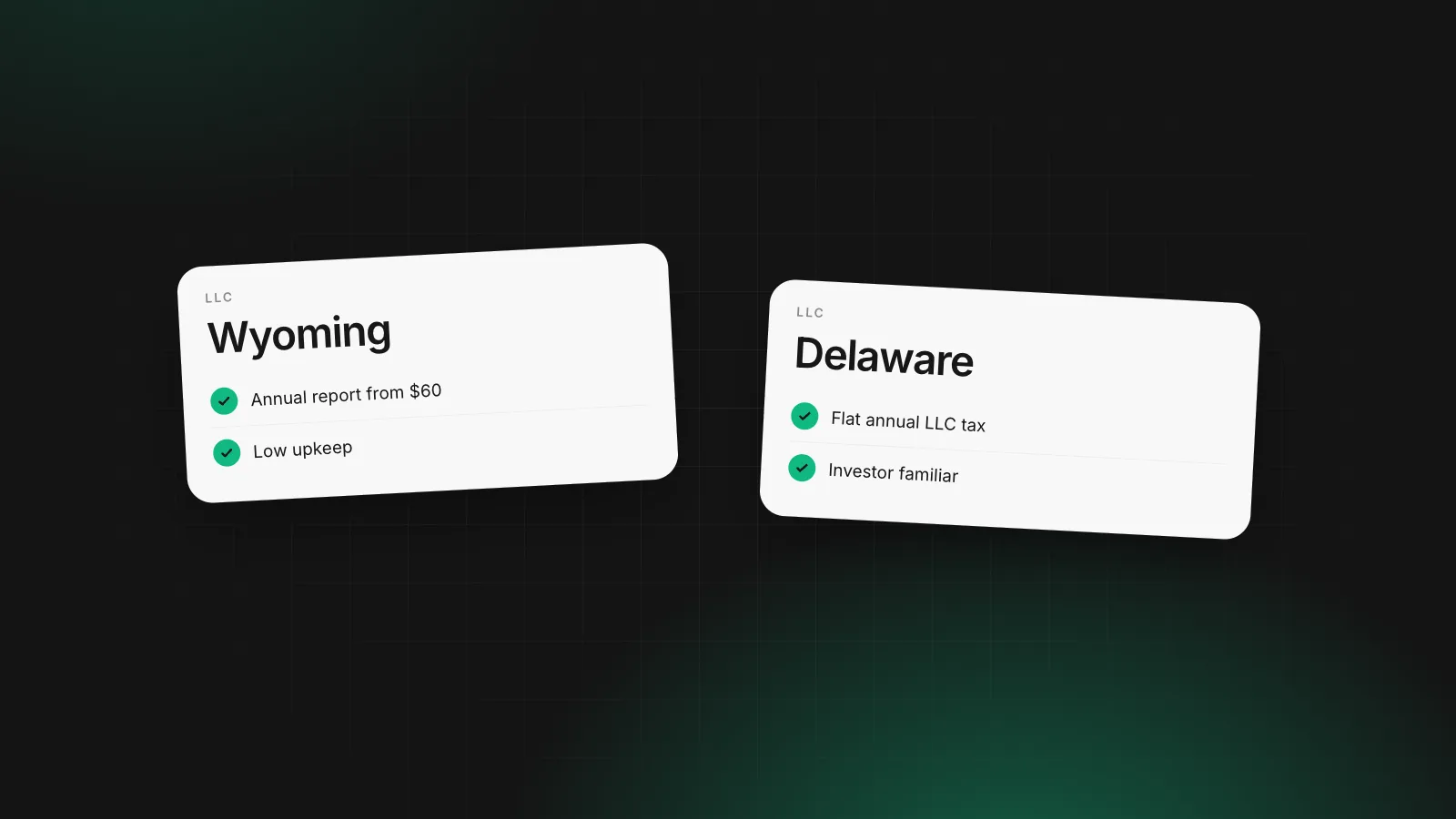
Wyoming, Delaware and New Mexico are popular with non-residents because filing fees and annual costs are low, or because there is no state income tax. For most small companies selling services, the state matters less than people think. Choose one with low annual fees and a reliable registered agent, and write an operating agreement even if you are the only member. Banks ask for it.
Step 2: get an EIN
The Employer Identification Number (EIN) is the company's federal tax ID. Almost every US bank and payment provider asks for it.
- The IRS online application only works if the responsible party has a Social Security Number (SSN) or Individual Taxpayer Identification Number (ITIN). Most non-resident founders have neither.
- Without one, you apply with Form SS-4 by fax or mail. Applicants with no legal residence, principal place of business or office in the US can also call the IRS international line at 267-941-1099 (not toll-free).
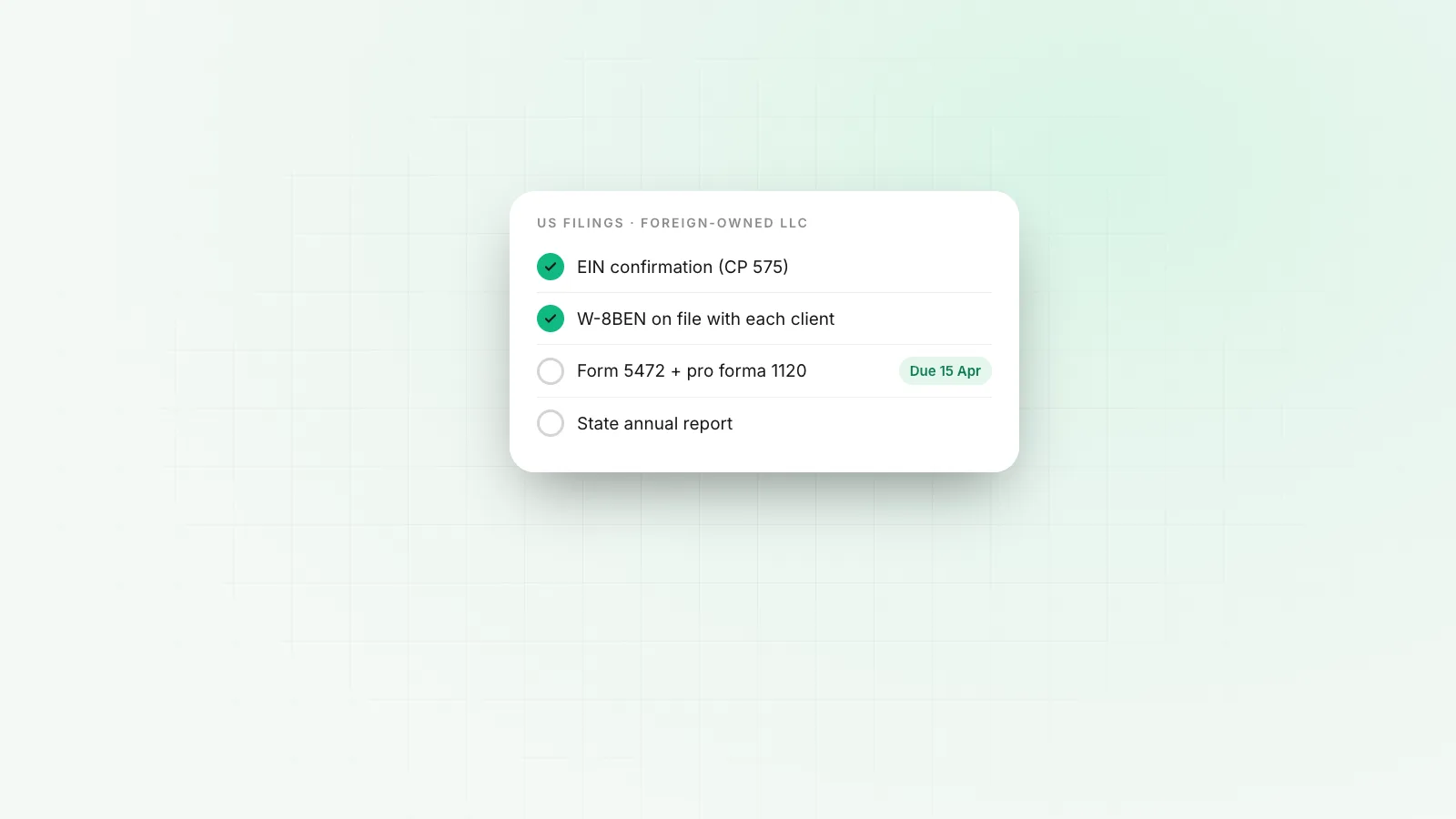
- Keep the confirmation letter the IRS sends (the CP 575, or a 147C letter if you need a copy later). Providers ask for it.
Fax applications typically come back within a few business days. Mail takes weeks. Plan for the EIN before you promise a client a start date.
Step 3: choose where to bank it
There are three routes, and they differ more than the marketing suggests.
| Route | How you open | What to check |
|---|---|---|
| Traditional US bank | Often in person at a branch, sometimes with a US-resident signer | Whether a visit is required, minimum balance, monthly fees, wire fees |
| US fintech business account | Online, with remote ID checks | Which owner nationalities and residences they accept; some only take US residents |
| Multi-currency business account | Online, issues US account and routing numbers in the LLC's name | Whether the details support ACH and wires, which currencies come with the plan, and the FX margin |
Two questions decide most applications:
- Does the provider accept owners who live in your country? Many have a list of supported countries for owners as well as for companies. Ask before you apply.
- Can you show what the business does? A website, a client contract or a first invoice helps a lot. A new LLC with no activity and a vague description is the file most often rejected.
Step 4: the documents to have ready
| Document | Notes |
|---|---|
| Articles of organization (certificate of formation) | From the state filing |
| Operating agreement | Signed; shows members and percentages |
| EIN confirmation letter | CP 575 or 147C |
| Passport for each owner of 25% or more | Valid, all corners visible |
| Proof of residential address for each owner | Dated within the last three months |
| Business description | Products, clients, countries, expected monthly volumes |
| Proof of business address | Where the company actually operates; the registered agent's address often will not do |
The KYB documents guide explains what each of these proves and the mistakes that slow reviews down.
Step 5: the filings non-resident owners miss
Form 5472 every year
A US LLC with a single foreign owner is a "disregarded entity" for income tax, but since 2017 the IRS has treated it as a corporation for one purpose: reporting transactions with its owner. Every year it must file Form 5472 attached to a pro forma Form 1120, even if it had no US income and paid no tax. Money the owner puts in or takes out counts as a reportable transaction.
The penalty for not filing, or filing late, is $25,000 per form, plus more if the IRS sends a notice and it is still not filed. This is the most expensive mistake on the list, and the easiest to avoid.
Beneficial ownership (BOI) reports
Under the Corporate Transparency Act, companies had to report their beneficial owners to FinCEN. An interim final rule published in March 2025 exempted companies formed in the US. A US LLC with non-US owners does not file a BOI report. Banks and payment providers still have to verify your owners when you open an account. That rule did not change.
State annual reports
Most states require an annual report and fee. Missing it can lead to the LLC being dissolved, and a dissolved company's bank account will be closed.
How US clients will treat your LLC
A US client paying a US LLC will usually ask for a tax form. Because a single-member LLC is disregarded, the form normally comes from the owner: a non-US individual owner usually gives a W-8BEN, not a W-9. Getting this right matters, because the wrong form can lead the client to withhold tax. Ask your accountant which form fits your setup.
If your company is registered outside the US and you have not formed an LLC, you may not need one. The guide to getting paid by US clients covers that route.
US LLC or UK Ltd for non-residents?
Founders often compare the two before they form anything.
| US LLC | UK Ltd | |
|---|---|---|
| Who can form it | Anyone, through a registered agent | Anyone, with a UK registered office address |
| Identity checks at formation | None at state level | Since 18 November 2025, directors and people with significant control must verify their identity with Companies House |
| Ownership public? | Usually not, depending on the state | Yes: directors and owners of over 25% are on the public register |
| Tax on profits | Single-member LLC: passed through to the owner; no US tax in many non-resident cases | UK Corporation Tax on profits: 19% for small profits, up to 25% |
| Yearly filings | State annual report; Form 5472 and pro forma 1120 | Annual accounts and confirmation statement at Companies House; company tax return to HMRC |
| Clients see it as | Familiar to US clients and platforms | Familiar in the UK and Europe |
A US LLC suits a founder whose clients and platforms are mostly American. A UK Ltd suits one selling into the UK and Europe who is comfortable with public accounts and UK tax. Neither changes where you are tax resident as a person. Either can receive USD, EUR and GBP once it has a multi-currency business account.
How Rivet fits
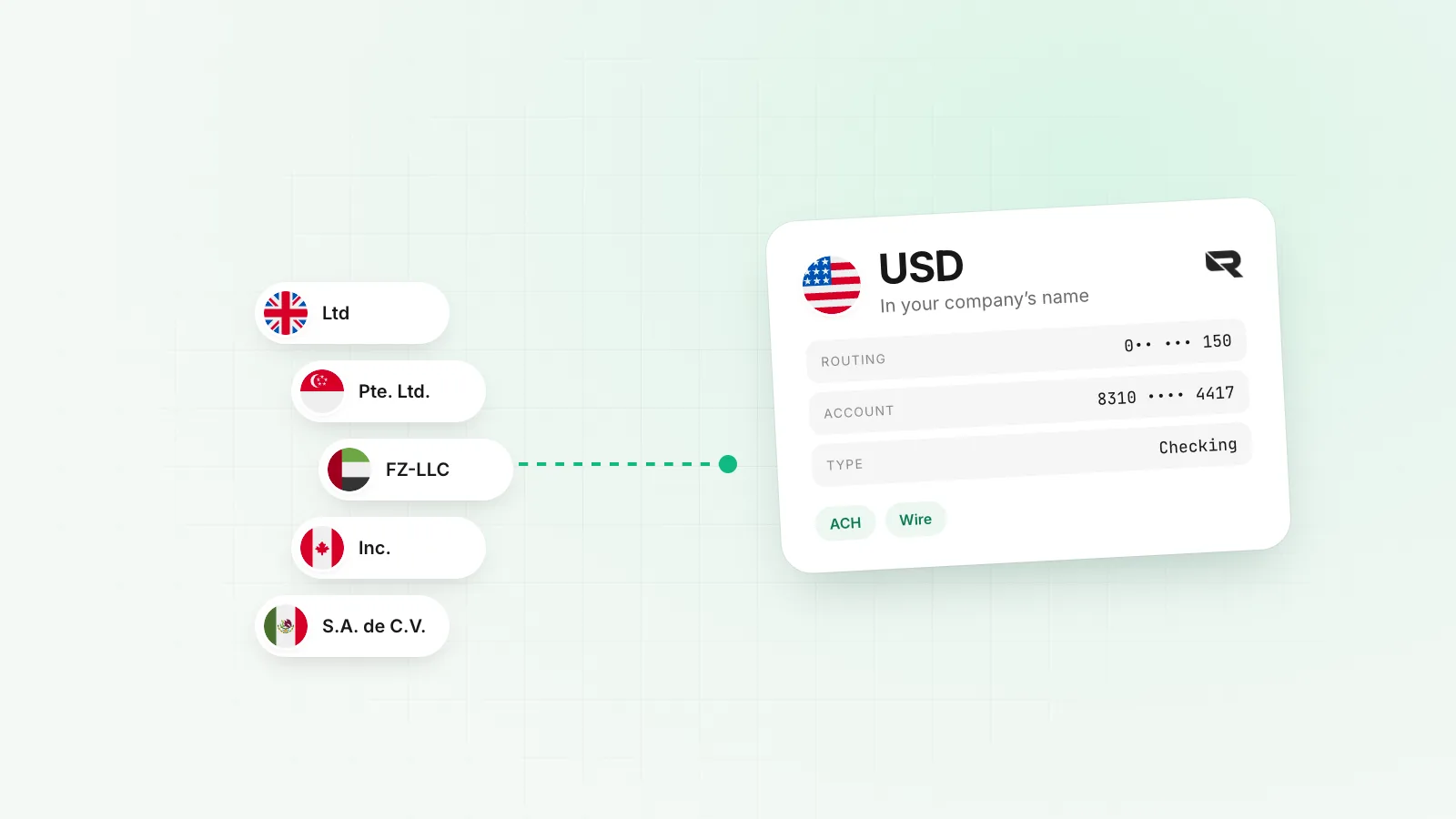
Rivet opens business accounts for registered companies, including US LLCs whose owners live outside the US, where we support the owners' countries. Once the LLC passes verification, the USD account and routing numbers are issued in its name, so a US client pays it by ACH or wire like any American supplier. EUR and GBP details come with the Growth plan. Owners verify remotely; nobody has to visit a branch. A complete file gets a verdict in three business days.
The multi-currency account guide lists what to compare between providers, and Services explains how onboarding works.
Questions people ask
Can a non-US citizen open a business bank account in the US?
Yes, for a US company such as an LLC, as long as the provider accepts owners from your country. Traditional banks often want an in-person visit and a US address. Online business accounts verify owners remotely. In every case the account belongs to the company, and each owner of 25% or more is identified.
Can I open a business account with just an EIN?
An EIN is the company's tax number, and most US providers ask for it, but it is not enough on its own. Expect to provide the articles of organization, the operating agreement, the EIN confirmation letter, and ID plus proof of address for each owner. An SSN or ITIN is not required by every provider.
Do I need a US address for my LLC?
The LLC needs a registered agent with a physical address in the state where it is formed. That address receives legal notices. Many banks and providers will not accept a registered agent's address as the business address, so be ready to show where the business actually operates.
Does a foreign-owned LLC pay US tax?
A single-member LLC is ignored for US income tax by default, so the owner is taxed instead. A non-resident owner with no US trade or business may owe no US income tax, but still has US filings and may owe tax at home. The rules depend on your country and your activity, so ask an accountant who handles cross-border cases.
Is a US LLC or a UK Ltd better for a non-resident founder?
It depends on where your clients are and where you live. A US LLC suits founders selling mostly to US clients and platforms. A UK Ltd is cheaper to keep compliant, is a familiar entity in Europe, and its accounts are public. Either can hold USD, EUR and GBP once it has a business account.
Sources
Rashidatou writes Rivet's guides to how money moves between countries: the payment rails, what each one costs, and the account details a company needs to get paid in another currency. Every figure in Rashidatou's articles is traced to the scheme rulebook, the regulator or the provider's published price list, and those sources are listed at the end.
More from Rashidatou K. →This article is general information, not legal, tax or financial advice. Rules and fees change; check the sources above and the provider’s current terms before you act on them.
- us llc
- non-resident
- ein
- form 5472
- us business account
- uk ltd