Uruguay free zone companies: billing the region and the world from a zona franca
Uruguay's free zones host regional headquarters, shared service centres and logistics companies serving Argentina, Brazil and the wider world. They bill in dollars, reais and pesos, and their clients pay under three different exchange regimes.
- Published
- Reading time
- 2 min read
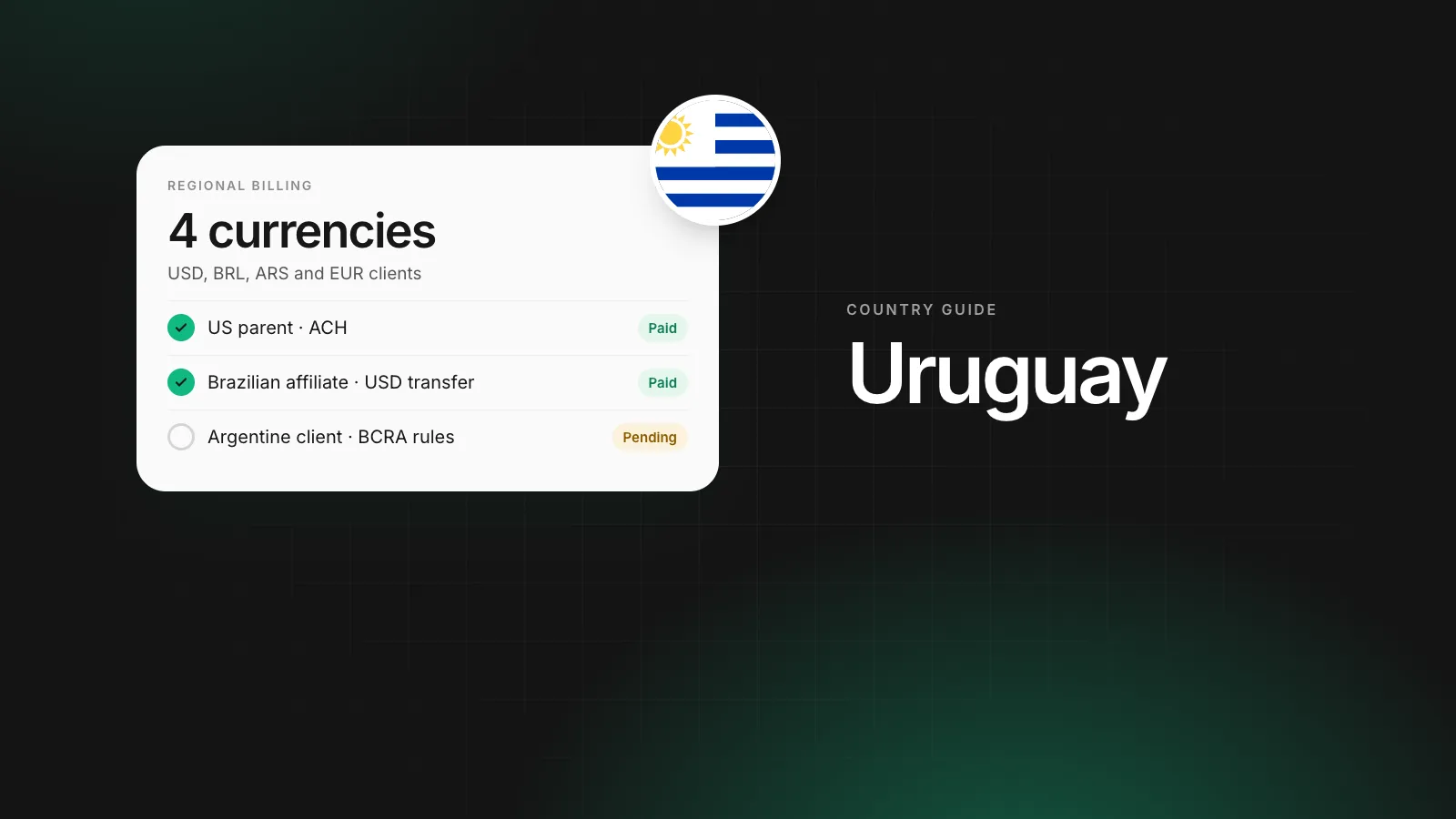
A shared service centre in Zonamerica, outside Montevideo, handles accounting, IT support and customer service for a group's companies in Brazil, Argentina, Chile and the US. It bills each affiliate monthly in dollars. The US parent pays by ACH in a day. The Brazilian affiliate pays through an exchange operation in São Paulo. The Argentine affiliate's payment depends on the BCRA's rules that month.
Why companies use free zones
Uruguay's free zones offer authorised companies a regime with exemptions from most national taxes on activities carried out from the zone, subject to conditions on activity and on employing staff in Uruguay. They host regional headquarters, shared service centres, logistics operators and trading companies.
Billing across the region
Free zone service companies usually invoice in dollars. What differs is how each client pays:
- US and European clients pay by bank transfer, ideally to local details in their own country.
- Brazilian clients pay through a Brazilian exchange operation, with IOF and documentation on their side.
- Argentine clients follow BCRA rules on access to foreign currency. These have eased since 2025, but payments between related companies still face specific conditions.
- Chilean and Peruvian clients pay with fewer constraints, often in dollars.
Agree in each service contract who bears transfer charges and taxes on the payer's side.
Managing currencies
Most free zone companies hold dollars and pay many costs in dollars: software, regional travel, contractors. Uruguayan pesos are needed for local salaries and rent. Converting dollars to pesos on a schedule ahead of payroll, rather than on each receipt, keeps the peso budget steady.
Records
Free zone status depends on meeting the regime's conditions. Keep contracts with each client, invoices, proof of payment and evidence of the activity carried out from the zone.
Where Rivet fits
A Rivet business account accepts registered companies after verification, including Uruguayan free zone companies. Approved companies get US account details in their own name on every plan, euro and sterling details from the Growth plan, and on Scale balances in 30 currencies, reais included. Payments are matched to invoices, and payouts go to 120+ countries. Rivet is not a bank; regulated partner institutions hold the funds.
Questions people ask
What is a Uruguayan free zone?
A designated area where authorised companies operate under a special tax regime, with exemptions from most national taxes on activities carried out from the zone, subject to conditions.
Who can operate in a free zone?
Companies authorised as free zone users, carrying out permitted activities such as services, logistics and trading, with requirements on staffing in Uruguay.
How do Brazilian clients pay?
Usually by international transfer in dollars through a Brazilian exchange operation, which carries Brazilian documentation and IOF on their side.
Are payments from Argentina affected by controls?
Argentine payers follow BCRA rules on access to foreign currency, which have eased since 2025 but still affect some payments, especially between related companies.
Sources
William covers what happens once a company starts moving money: getting the business verified, paying contractors and suppliers abroad, and keeping card spend under control. William writes for the founder or finance lead who has to make it work this week, and links every rule cited to the text it comes from.
More from William Sunjo M. →This article is general information, not legal, tax or financial advice. Rules and fees change; check the sources above and the provider’s current terms before you act on them.
- uruguay
- zona franca
- free zone
- usd
- brl
- regional hub