Swift structured addresses: why wires need a full address from November 2026
International wires now run on ISO 20022, and from November 2026 a free-text address block is no longer enough. If your clients wire you money, give them your address in the right shape so payments are not held.
- Published
- Reading time
- 2 min read
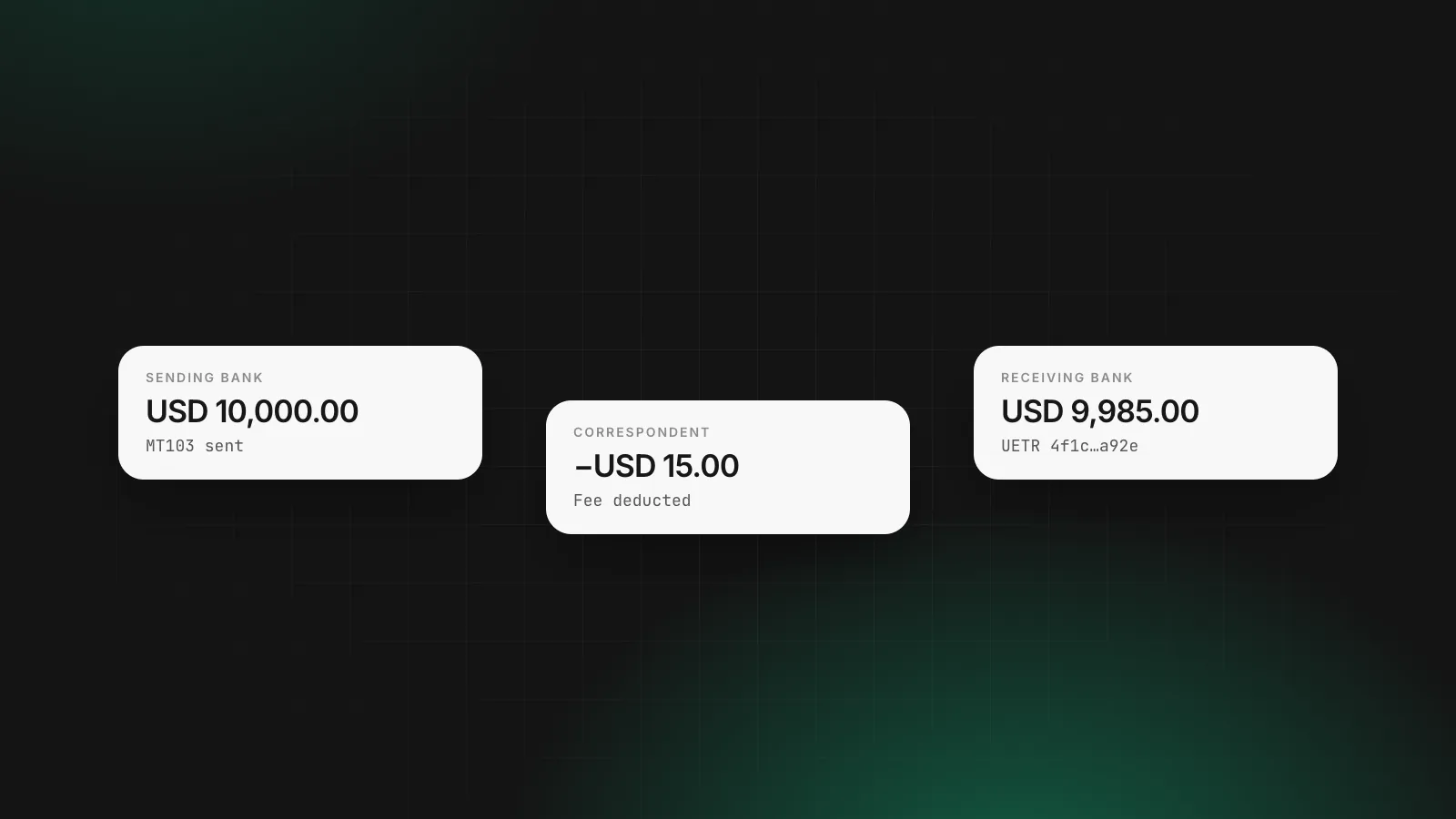
Swift spent several years moving cross-border payments from the old MT message format to ISO 20022. The old payment messages stopped being accepted in November 2025. The next step concerns addresses: from November 2026, a payment can no longer carry the payer's or payee's address as free text only.
This sounds like back-office plumbing, and mostly it is. It touches you because the address your clients' banks put into the message comes from what you gave them.
What changes in November 2026
ISO 20022 messages have separate fields for each part of an address. Under the old format, banks typed the address into a few free-text lines. Swift's rule for cross-border payments is now:
| Address type | Allowed from November 2026 | What it contains |
|---|---|---|
| Fully structured | Yes | Each part in its own field: street, building number, postcode, town, country code |
| Hybrid | Yes | Town and country in their own fields, plus up to two free-text lines |
| Fully unstructured | No | Free-text lines only |
Why banks care
Structured data lets banks screen names and places against sanctions lists automatically. When the address is a blob of text, screening tools produce false matches, and a person has to review the payment. That review is one of the most common reasons an international wire is late. Our article on Swift fees and timing covers the other usual causes.
What to give clients who wire you money
Send your bank details with the address already split up. For example:
| Field | Example |
|---|---|
| Account name | Your exact registered company name |
| Street | Market Street |
| Building number | 1200 |
| Postcode | 94102 |
| Town | San Francisco |
| Country | US |
Use the address your account is registered to, not an office you moved out of. If the name or address in the payment does not match the account, the receiving bank may hold the money while it checks. The USD account details guide explains each line on a typical wire instruction.
What to check if you send wires
- Store each supplier's address in parts in your accounting or payments tool, not as one text box.
- Ask suppliers for town and country at the least, and a postcode where their country uses one.
- Re-check details for suppliers you have paid for years. Old records are often incomplete.
Wires on Rivet
Rivet shows your USD wire details with the address already split into fields, ready to paste into a payer's form. Outgoing payouts ask for each part of the recipient's address. See Payouts.
Questions people ask
What is a structured address in ISO 20022?
An address split into separate fields, such as street name, building number, postcode, town name and country code, in place of free-text lines. It lets banks screen and route payments automatically.
What is a hybrid address?
A format Swift allows alongside fully structured addresses. Town and country must be in their own fields, and up to two lines of free text can carry the rest of the address.
Do I need to do anything if I only receive wires?
Make sure your payers have your full registered address in separate parts, including town and country. Their bank fills the message; if it only has a single text line, it may ask them for more or the payment may slow down.
Does this affect ACH or SEPA payments?
The November 2026 rule is about cross-border Swift payment messages. Domestic schemes set their own rules, although several are moving to ISO 20022 as well.
Sources
Rashidatou writes Rivet's guides to how money moves between countries: the payment rails, what each one costs, and the account details a company needs to get paid in another currency. Every figure in Rashidatou's articles is traced to the scheme rulebook, the regulator or the provider's published price list, and those sources are listed at the end.
More from Rashidatou K. →This article is general information, not legal, tax or financial advice. Rules and fees change; check the sources above and the provider’s current terms before you act on them.
- iso 20022
- swift structured address
- wire transfer details
- cbpr+
- swift 2026