Peruvian importers paying Chinese suppliers as the Chancay port opens new routes
China is Peru's largest trading partner, and the deep-water port at Chancay, opened in November 2024, cut transit times to Asia. More Peruvian importers now buy directly from Chinese factories. Paying them safely is the part that still causes losses.
- Published
- Reading time
- 2 min read
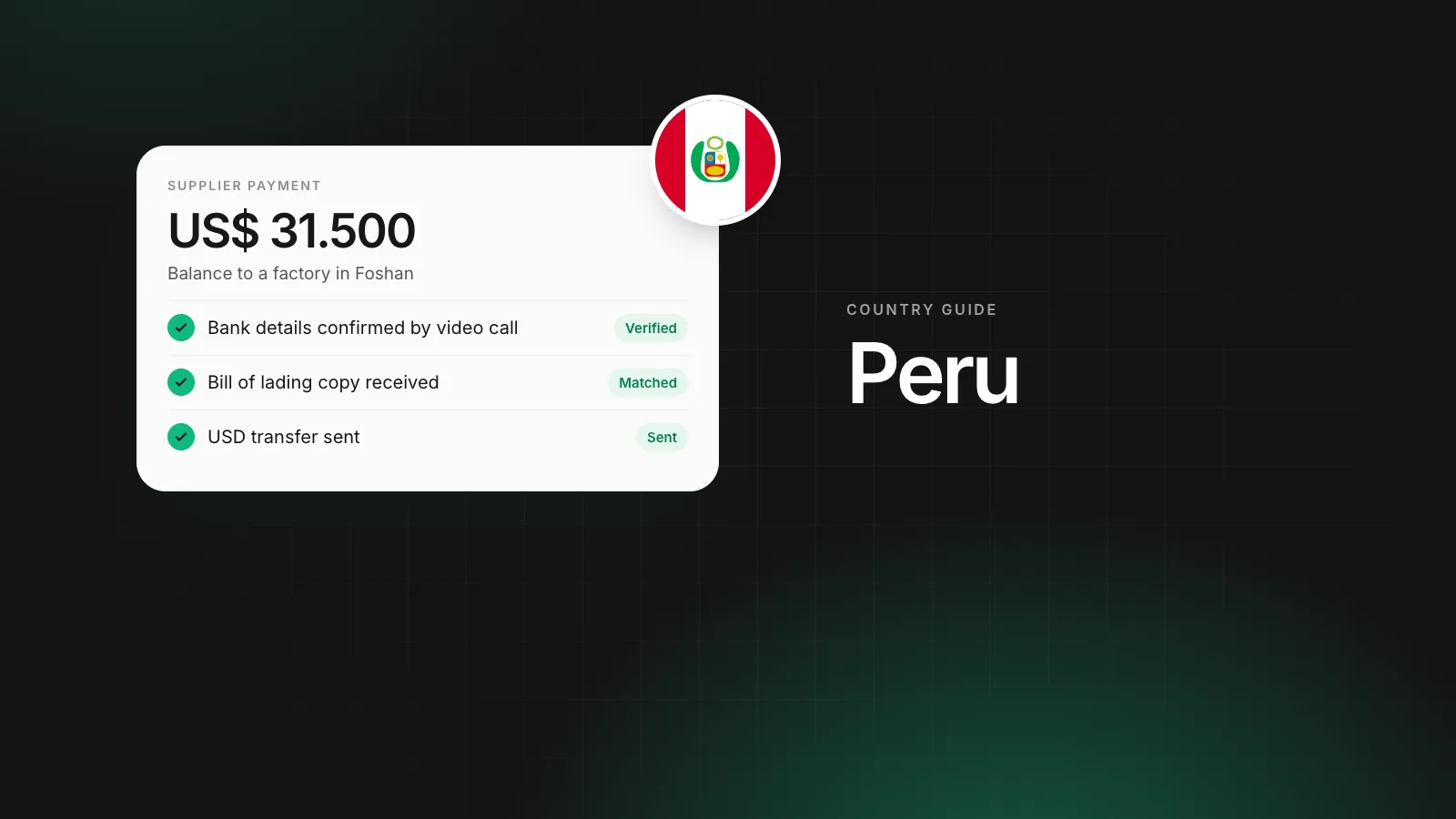
A Lima home appliance distributor used to buy Chinese goods through an importer in Panama. In 2025, after the Chancay port opened direct services to Shanghai, it started buying from factories in Foshan and Ningbo itself. Its margin improved. Then a balance payment of US$31,500 went to an account in a different name after an email from what looked like the factory's sales manager.
A shorter route to China
China is Peru's largest trading partner. The Peru-China free trade agreement, in force since 2010 and upgraded since, reduces duty on many goods that carry a valid certificate of origin. The Chancay port, a deep-water port north of Lima opened in November 2024, offers direct services to Asia with shorter transit times than routes through other ports.
More Peruvian companies now buy directly from Chinese factories instead of through intermediaries.
Currency
Most Chinese factories invoice exports in dollars. Peruvian importers often already hold dollars, since dollars are common in Peruvian business. Some factories offer a lower price in yuan. Compare it with the dollar price after your cost of buying yuan.
Terms
A common structure:
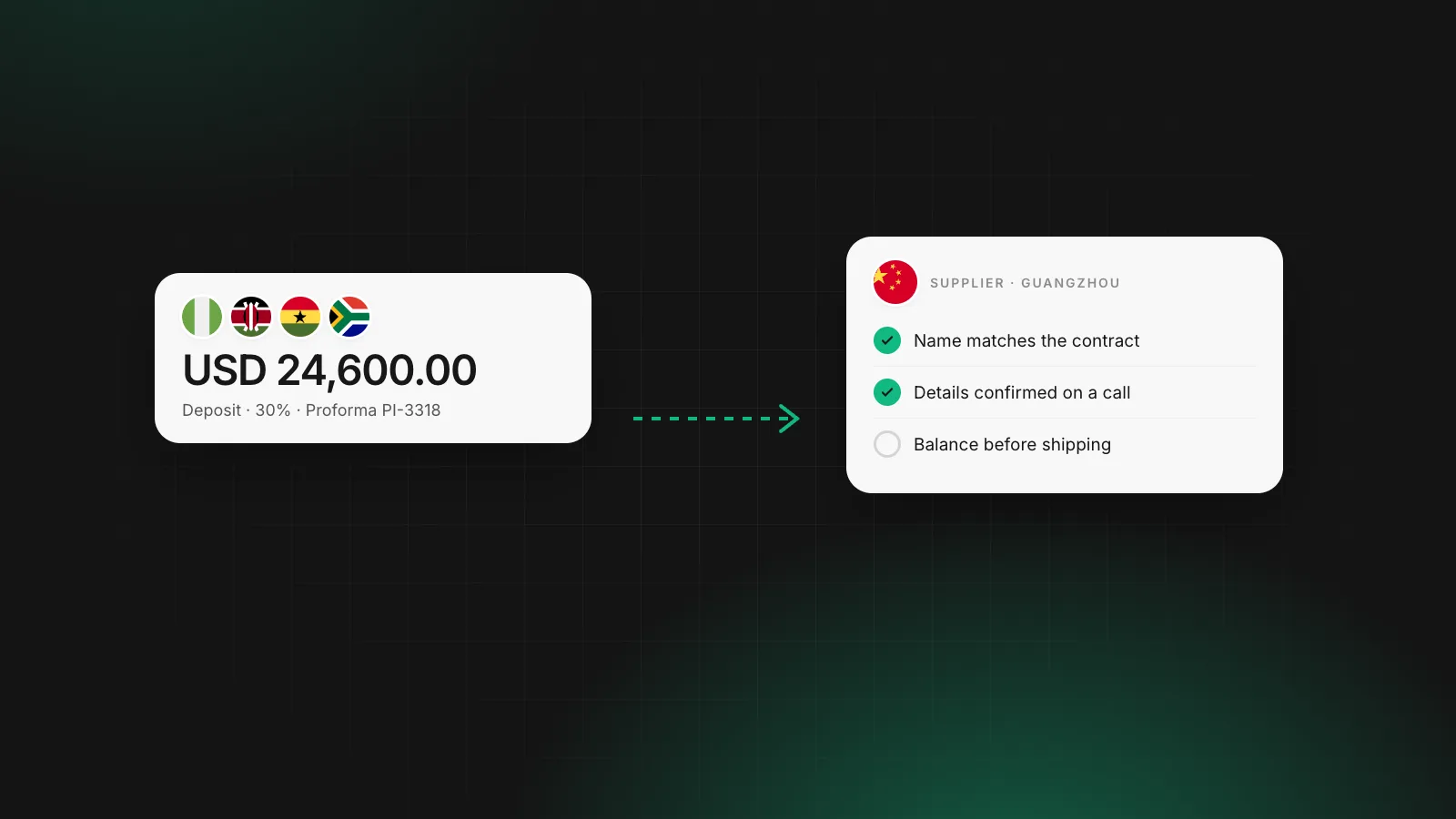
- Deposit of about 30 percent on purchase order.
- Balance against a copy of the bill of lading, once goods are shipped.
For a large first order with a new factory, inspect before shipment and consider a letter of credit.
Fraud checks
Supplier payment fraud usually arrives in a real email thread. Before any payment to a new or changed account:
- check that the account name matches the supplier's legal name,
- be wary of accounts in a different country, such as Hong Kong for a mainland factory, unless the contract says so,
- confirm by video call with a contact you already know,
- require a second person to approve the first payment.
Documents
Your customs broker needs the commercial invoice, packing list, bill of lading and the certificate of origin. Keep payment proof with them.
Paying into Peru: the local rail
| What | Detail |
|---|---|
| Local rail | Transferencias inmediatas through the CCE |
| Run by | Cámara de Compensación Electrónica |
| Settlement | Seconds, 24/7 |
Source: Cámara de Compensación Electrónica. Checked when this guide was last updated; the scheme's own page has the current figures.
Where Rivet fits
A Rivet business account accepts registered companies after verification, including Peruvian companies. It holds dollars on US account details in the company's own name and pays suppliers in 120+ countries, with each payment's rate shown before you confirm. From the Growth plan, payouts can require a second approver. Rivet is not a bank; regulated partner institutions hold the funds.
Questions people ask
Should I pay Chinese suppliers in dollars or yuan?
Most invoice in dollars, which Peruvian importers already hold. Some offer a lower price in yuan; compare it after your conversion cost.
How do I use the Peru-China free trade agreement?
Ask the supplier for a certificate of origin under the agreement, so qualifying goods enter with reduced or no duty.
What payment terms are typical?
A deposit of around 30 percent on order and the balance against a copy of the bill of lading is common. Letters of credit suit large first orders.
How do I avoid supplier payment fraud?
Check that the account name matches the supplier, confirm changes by video call with a known contact, and have a second person approve payments to new details.
Sources
William covers what happens once a company starts moving money: getting the business verified, paying contractors and suppliers abroad, and keeping card spend under control. William writes for the founder or finance lead who has to make it work this week, and links every rule cited to the text it comes from.
More from William Sunjo M. →This article is general information, not legal, tax or financial advice. Rules and fees change; check the sources above and the provider’s current terms before you act on them.
- peru
- china
- importers
- chancay
- usd
- cny