Why is PayPal holding my money? Holds, reserves and limitations
PayPal holds payments for new sellers, after sudden changes in sales, or when a buyer might dispute. A standard hold lasts up to 21 days and often ends sooner once delivery is confirmed. A limitation is different: it restricts the whole account until you resolve it.
- Published
- Reading time
- 2 min read
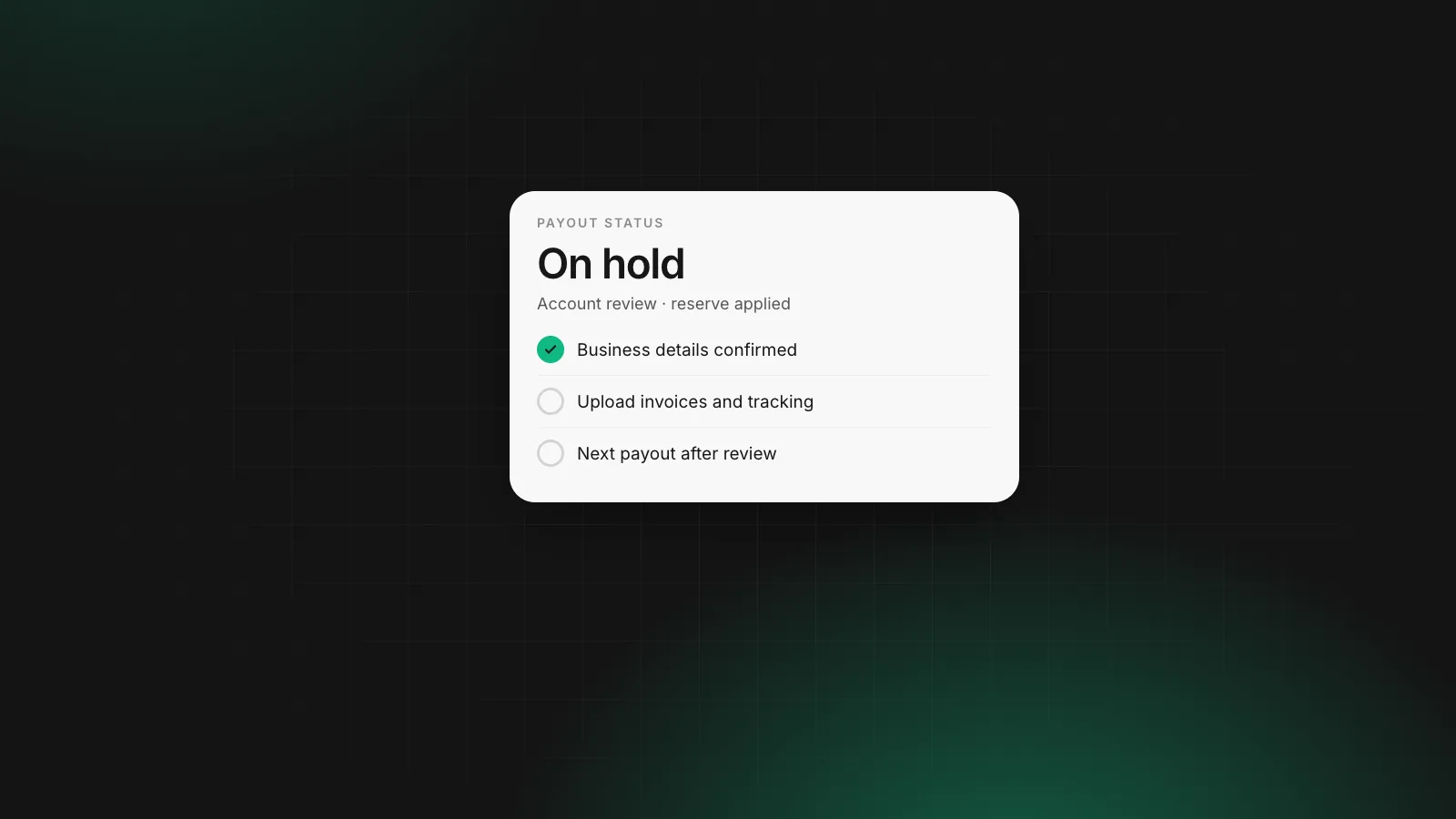
When a payment shows in PayPal but you cannot withdraw it, one of three things is usually happening: a payment hold, a reserve, or an account limitation. They look similar in the dashboard and have different fixes.
What is a PayPal payment hold?
A hold keeps a specific payment as pending for a period, usually up to 21 days. PayPal uses holds to make sure the buyer receives what they paid for before the seller can withdraw. Common triggers:
- You are a new seller, or have little selling history.
- Your sales jumped suddenly, or you started selling something new.
- You sell in a category with more disputes, such as electronics or tickets.
- A buyer opened a dispute or claim.
- Your account has a history of disputes or refunds.
How do you release a hold early?
- Add tracking to the transaction with a carrier PayPal recognises.
- Once delivery is confirmed, PayPal usually releases the funds around three days later.
- For services or digital goods, mark the order as shipped or completed, and keep evidence the customer received it.
- Answer any buyer message promptly, so it does not turn into a claim.
What is a reserve?
A reserve keeps a share of your balance, or a fixed amount, to cover future refunds, chargebacks and fees. PayPal may set a rolling reserve (a percentage of each payment held for a set number of days) or a minimum balance. Reserves are more common for businesses with long delivery times, pre-orders or high dispute rates.
What is an account limitation?
A limitation restricts the account itself. You might not be able to withdraw, send or receive money until you resolve it. PayPal applies limitations when it needs information, such as identity documents, business verification, supplier invoices or proof of delivery, or when it suspects a breach of its policies. Under the user agreement, PayPal can hold funds for up to 180 days after a limitation in some cases.
| Hold | Reserve | Limitation | |
|---|---|---|---|
| Scope | One payment | Part of the balance | Whole account |
| Typical length | Up to 21 days | Set by PayPal | Until resolved, up to 180 days for funds |
| Fix | Tracking, delivery, time | Lower risk over time | Provide requested information |
How do you avoid holds?
- Describe items accurately and show delivery times.
- Ship promptly and add tracking every time.
- Respond to buyers within a day.
- Keep refund and return policies on your site.
- Tell PayPal in advance if you expect a big jump in sales.
What about fees on withdrawals?
PayPal's fees for receiving payments and converting currency add up, especially for international sales. Our article on PayPal business fees breaks them down.
Spreading the risk
A business that depends on one payment provider has nothing to fall back on when funds are held. Many keep a separate business account for direct bank payments from larger clients. Rivet gives registered companies USD, EUR and GBP account details in their own name, so B2B clients can pay by local transfer instead of through a wallet.
Questions people ask
How long does PayPal hold funds?
A payment hold usually lasts up to 21 days. If you add tracking with an approved carrier, the money is often released about three days after the carrier confirms delivery. Account limitations can keep funds for up to 180 days.
Why does PayPal hold money for new sellers?
PayPal has limited history on a new seller, so it holds payments until buyers receive their items and are unlikely to dispute. The holds usually stop once you build a record of sales without problems.
What is the difference between a hold and a limitation?
A hold affects a specific payment for a set period. A limitation affects the account itself, restricting what you can do until you resolve the issue PayPal raised.
Can I withdraw money from PayPal during a hold?
Not the held amount. It shows as pending and becomes available when the hold is released. Other funds in your balance can usually be withdrawn.
Sources
William covers what happens once a company starts moving money: getting the business verified, paying contractors and suppliers abroad, and keeping card spend under control. William writes for the founder or finance lead who has to make it work this week, and links every rule cited to the text it comes from.
More from William Sunjo M. →This article is general information, not legal, tax or financial advice. Rules and fees change; check the sources above and the provider’s current terms before you act on them.
- paypal hold
- paypal holding funds
- paypal reserve
- paypal limitation
- online sellers
- payouts