Paying contractors in Latin America from the US: a country guide
Latin America is the main nearshore talent market for US companies. Each country has its own instant payment system and currency rules, and contractors' preferences differ.
- Published
- Reading time
- 1 min read
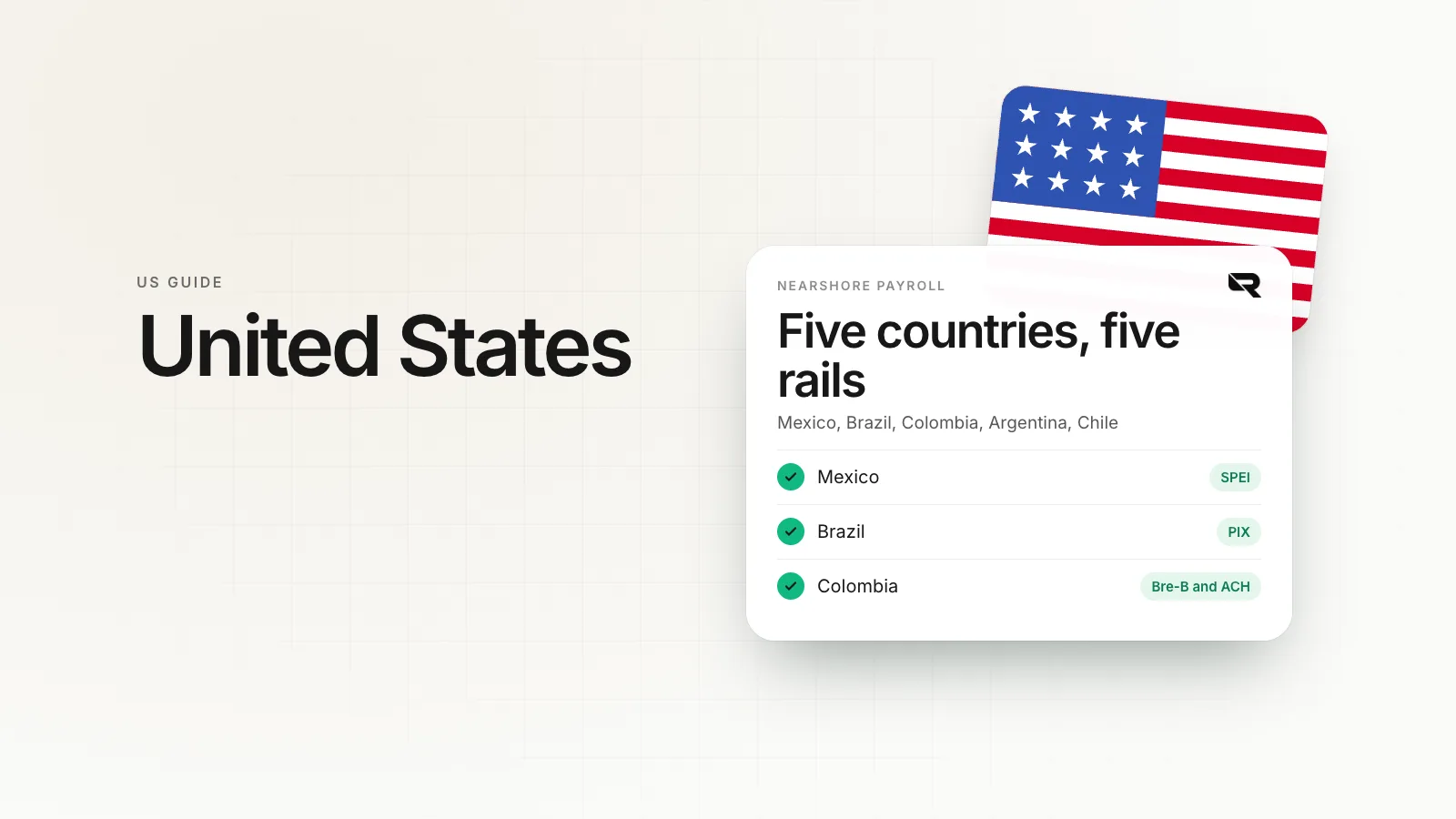
US companies hire across Latin America for time-zone overlap. Paying those teams well means using each country's local rail and respecting what contractors prefer.
By country
| Country | Local rail | Currency preference |
|---|---|---|
| Mexico | SPEI (CLABE) | Mostly MXN; some USD |
| Brazil | PIX, TED | BRL |
| Colombia | Bre-B, ACH Colombia | COP |
| Argentina | Transferencias 3.0 | Often USD |
| Chile | TEF | CLP |
Currency rules on the receiving side
- Brazil: inbound payments pass through an FX contract at the receiving bank, with tax on the exchange in some cases.
- Colombia: inbound foreign currency is declared through the receiving intermediary.
- Argentina: rules have changed often; ask contractors how they want to be paid.
Your side
- Collect a W-8BEN.
- Agree the currency and the payment date in the contract.
- Pay against invoices with the invoice number as the reference.
- Use approvals for the monthly run.
Paying into the United States: the local rail
| What | Detail |
|---|---|
| Local rail | ACH for batch payments; RTP and FedNow for instant transfers |
| Run by | Nacha for ACH; The Clearing House for RTP; the Federal Reserve for FedNow |
| Settlement | Same-day ACH within the business day, standard ACH the next; RTP and FedNow in seconds, 24/7, where both banks take part |
Source: Nacha: Same Day ACH. Checked when this guide was last updated; the scheme's own page has the current figures.
Where Rivet fits
Rivet pays contractors across Latin America and 120+ countries from your USD balance, in local currency on local rails where available, or in USDC/USDT where contractors prefer it and it is allowed. Fee and FX show before you confirm. Rivet is not a bank; regulated partner institutions hold the funds. See MXN business payments and BRL business payments.
Questions people ask
What is the best way to pay contractors in Latin America?
Ask each contractor. Most in Mexico, Brazil and Colombia want local currency on the local rail. Some, especially in Argentina, prefer USD.
What is SPEI?
Mexico's interbank electronic payment system, run by Banco de México. Payments use an 18-digit CLABE.
What is PIX?
Brazil's instant payment system, run by the Banco Central do Brasil. Payments arrive in seconds using a PIX key or account details.
Do I withhold US tax?
Not for non-US persons working entirely outside the US. Collect a W-8BEN.
Sources
Alexia compares the accounts, cards and payment tools companies weigh before they switch, and writes Rivet's market guides for founders in a specific country. Prices in Alexia's comparisons come from each provider's own pricing page on the date given in the article, rules come from the regulator or tax authority that sets them, and every source is listed at the end.
More from Alexia M. →This article is general information, not legal, tax or financial advice. Rules and fees change; check the sources above and the provider’s current terms before you act on them.
- pay contractors in latin america
- nearshore
- mexico spei
- brazil pix
- colombia
- us