Paraguayan exporters selling to Brazil and Argentina: dollars, reais and guaraníes
Brazil and Argentina are Paraguay's closest markets and its most complicated payers. Brazilian buyers pay through exchange operations, Argentine ones under BCRA rules. Paraguayan exporters mostly contract in dollars to keep it manageable.
- Published
- Reading time
- 1 min read
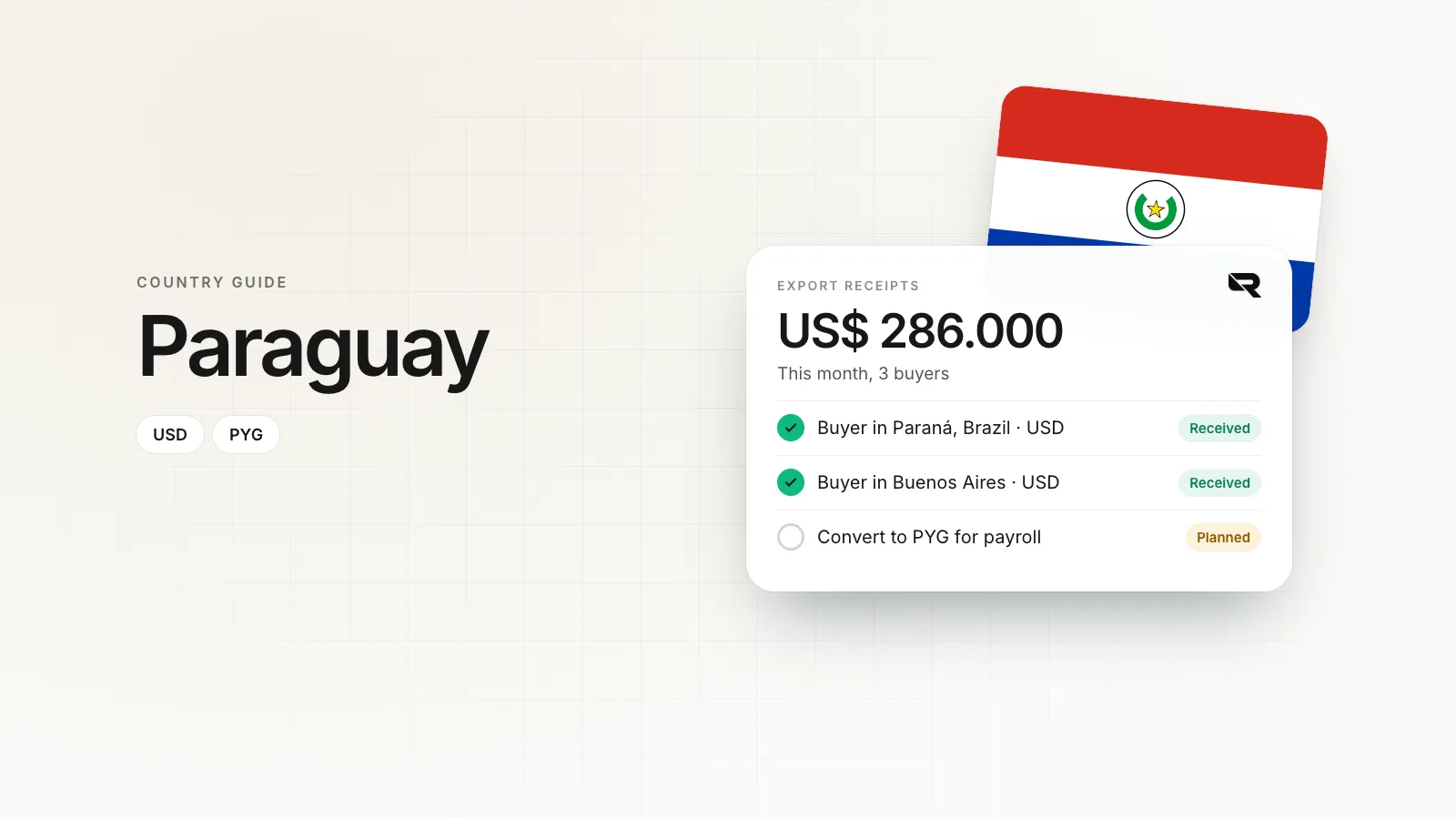
A Ciudad del Este manufacturer sells textiles to retailers in Paraná, Brazil, and in Buenos Aires. It invoices both in dollars. The Brazilian buyer's payments arrive steadily once its bank processes the exchange operation. The Argentine buyer's arrive when the BCRA's rules allow, which has become faster since 2025 but still varies. Wages, rent and local suppliers in Paraguay are paid in guaraníes.
Dollars as the common ground
Paraguay sits between two large economies with volatile currencies. Contracting in reais or Argentine pesos would put those swings into every margin. Dollars give exporters a stable reference, and buyers in both countries are used to paying in them.
How Brazilian buyers pay
A Brazilian importer pays a Paraguayan supplier through a foreign exchange operation at a Brazilian bank or exchange institution. It converts reais to dollars, pays IOF on the exchange and provides documents such as the import declaration. The payment usually arrives within days once the documents are in order.
How Argentine buyers pay
Argentine importers access foreign currency under BCRA rules. Those rules eased significantly from 2025, removing many staggered payment timelines, but documentation requirements and some conditions remain. Agree deposits and terms with Argentine buyers that reflect how quickly they can actually pay.
Guaraní costs
Paraguay has a liberal exchange regime, and companies hold dollars freely. Converting dollars to guaraníes on a schedule ahead of payroll, rather than on each receipt, steadies the local budget and lets you choose the rate.
Where Rivet fits
A Rivet business account accepts registered companies after verification, including Paraguayan companies. Approved companies get US account details in their own name on every plan, euro and sterling details from the Growth plan, and on Scale balances in 30 currencies. Dollars can be held, used to pay suppliers in 120+ countries or paid out to a Paraguayan bank, at a rate shown before you confirm. Rivet is not a bank; regulated partner institutions hold the funds.
Questions people ask
Why do Paraguayan exporters invoice in dollars?
Dollars avoid exposure to the real and the Argentine peso, both of which have moved sharply, and are accepted by buyers on both sides.
How do Brazilian buyers pay Paraguayan suppliers?
Through a foreign exchange operation at a Brazilian institution, which converts reais to dollars, applies IOF and requires documents.
Do Argentine buyers still face restrictions?
Argentina eased many controls from 2025, but importers still follow BCRA rules on payments, which can affect timing.
Can Paraguayan companies hold dollars?
Yes. Paraguay does not restrict foreign currency holdings, and dollar accounts are common.
Sources
Rashidatou writes Rivet's guides to how money moves between countries: the payment rails, what each one costs, and the account details a company needs to get paid in another currency. Every figure in Rashidatou's articles is traced to the scheme rulebook, the regulator or the provider's published price list, and those sources are listed at the end.
More from Rashidatou K. →This article is general information, not legal, tax or financial advice. Rules and fees change; check the sources above and the provider’s current terms before you act on them.
- paraguay
- exports
- brazil
- argentina
- usd
- pyg