Paraguay's maquila regime: invoicing foreign parent companies and getting paid
Paraguay has drawn manufacturers, many from Brazil, with its maquila regime: production for export taxed at a single 1 percent on the value added in Paraguay. A maquiladora's main client is usually its foreign parent, and the invoicing and payment flow between them is what auditors look at.
- Published
- Reading time
- 1 min read
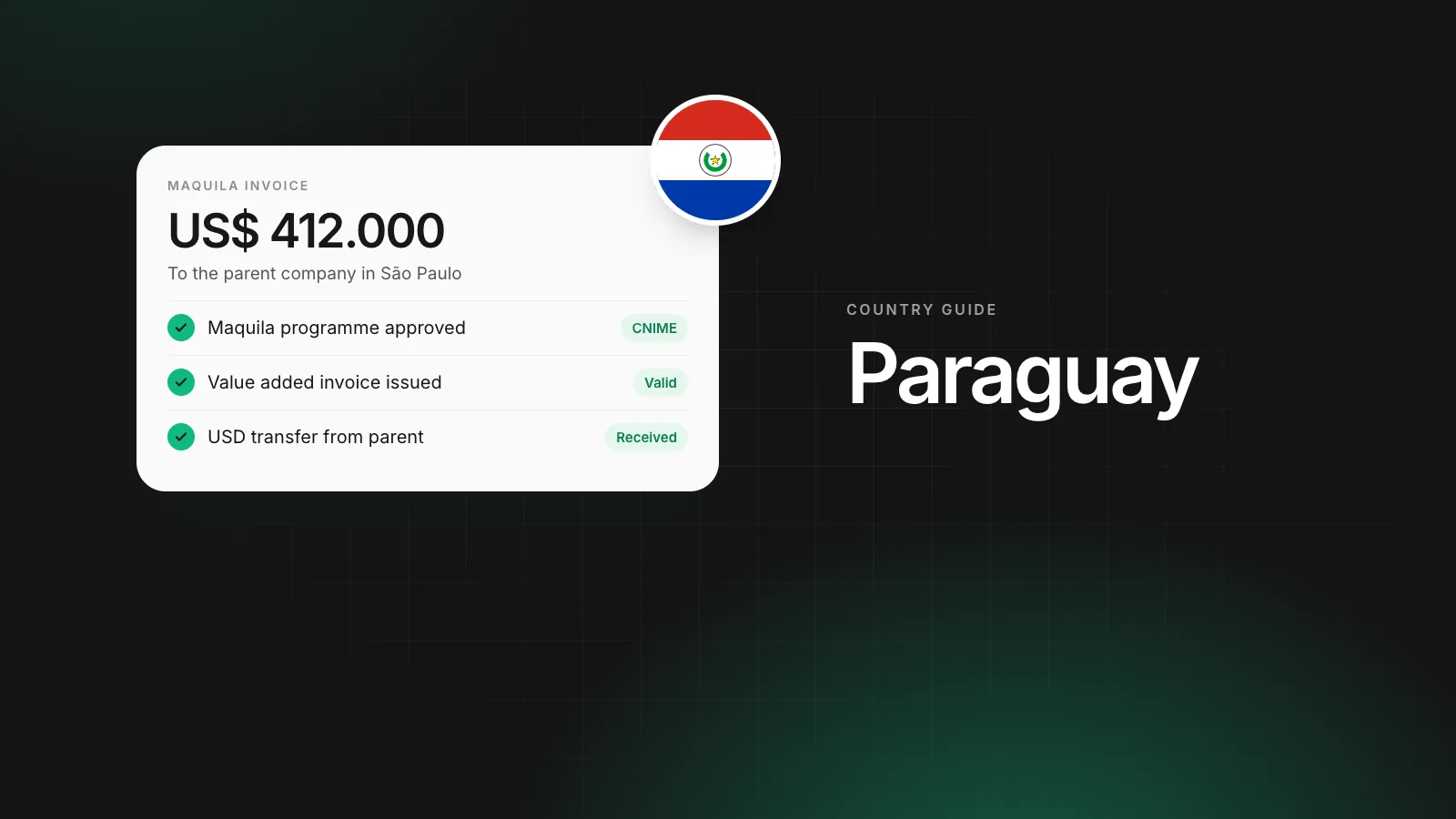
A Brazilian auto parts group opens a plant near Asunción under Paraguay's maquila regime. The Paraguayan company assembles wiring harnesses from components the parent supplies and ships them back to Brazil. It invoices the parent for the work, in dollars, and pays a single 1 percent tax on the value added. Its auditors check that every invoice matches the approved programme.
How the maquila regime works
Under Paraguay's maquila law, a company can produce goods or services for export under contract with a foreign company, within a programme approved by the authorities. The National Council of Maquiladora Industries (CNIME) reviews and approves programmes.
The main benefit is a single tax of 1 percent on the value added in Paraguay, replacing most other taxes on the maquila activity. Inputs brought in for the programme can enter under suspended duties.
Invoicing the parent
The maquiladora invoices the foreign parent for its work, usually in dollars, under the terms of the maquila contract. The invoice must reflect the programme: the operations, quantities and value added. Mismatches between invoices, customs records and the programme are the main audit risk.
Getting paid
The parent pays from its own country, through that country's exchange system. A Brazilian parent pays through an exchange operation, with IOF and documents on its side. Agree payment terms in the maquila contract that fit the parent's processes, so the Paraguayan company has steady dollars for payroll.
Local costs
Wages, utilities and local services are paid in guaraníes. Converting dollars on a schedule ahead of payroll keeps the budget predictable.
Where Rivet fits
A Rivet business account accepts registered companies after verification, including Paraguayan companies operating under the maquila regime. Approved companies get US account details in their own name on every plan and euro and sterling details from the Growth plan, can hold dollars, and can pay suppliers in 120+ countries. Rivet is not a bank; regulated partner institutions hold the funds.
Questions people ask
What is a maquiladora in Paraguay?
A company producing goods or services for export under a contract with a foreign company, within a programme approved under the maquila law.
What tax does a maquiladora pay?
A single tax of 1 percent on the value added in Paraguay, or on the invoice value as defined in the law, in place of most other taxes on the maquila activity.
Can a maquiladora sell in Paraguay?
Only within limits set by the regime. Most output must be exported.
How do foreign parents pay?
Usually by dollar transfer from the parent's country, through that country's exchange system, for example a Brazilian exchange operation.
Sources
William covers what happens once a company starts moving money: getting the business verified, paying contractors and suppliers abroad, and keeping card spend under control. William writes for the founder or finance lead who has to make it work this week, and links every rule cited to the text it comes from.
More from William Sunjo M. →This article is general information, not legal, tax or financial advice. Rules and fees change; check the sources above and the provider’s current terms before you act on them.
- paraguay
- maquila
- manufacturing
- exports
- usd
- brazil