New Zealand exporters collecting dollars, euros and pounds
A Marlborough winery sells to Sydney, London and California. A Wellington software firm bills Seattle and Melbourne. Both are paid in currencies other than the New Zealand dollar. Converting every payment on arrival lets one day's rate decide each margin.
- Published
- Reading time
- 2 min read
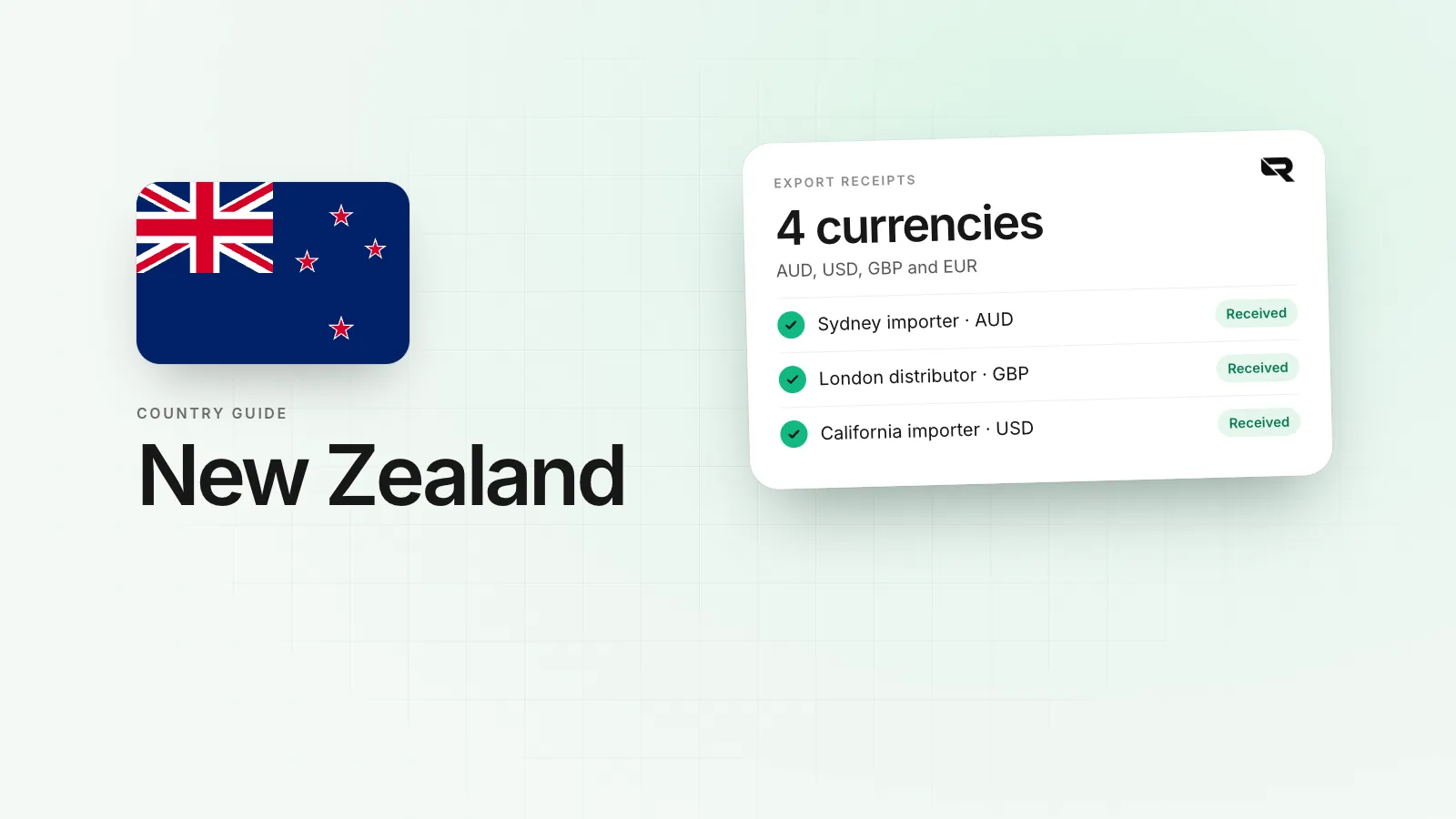
A Marlborough winery ships to an importer in Sydney, a distributor in London and a wine merchant in California. Each pays in its own currency. Into a New Zealand dollar account, each payment is converted on the day it arrives at the bank's rate. In a year when the Kiwi rose against the pound, the London sales were worth noticeably less than budgeted.
Many markets, many currencies
New Zealand's exporters sell across the Pacific and beyond:
- Australia in Australian dollars,
- the US in US dollars,
- the UK in pounds,
- Europe in euros.
Hold, then convert
Receiving foreign currency into matching balances, then converting on a schedule ahead of payroll and grower payments, spreads the exchange rate risk across the year. Pay costs in those currencies from the balances directly: freight, marketing abroad, trade fairs.
Larger exporters add forward contracts for predictable NZD needs.
GST
Exports of goods, and many services supplied to non-residents outside New Zealand, are zero-rated for GST when the conditions are met. Keep export documents and evidence of the buyer's location.
Faster foreign payments
Buyers abroad pay fastest on their own rails: Faster Payments in the UK, ACH in the US, SEPA in Europe. Local details in your company's name let them pay as they pay domestic suppliers.
Paying into New Zealand: the local rail
| What | Detail |
|---|---|
| Local rail | Interbank transfers through the Settlement Before Interchange system |
| Run by | Payments NZ, settled at the Reserve Bank |
| Settlement | Within the hour, every day of the year since 2023 |
Source: Payments NZ. Checked when this guide was last updated; the scheme's own page has the current figures.
Where Rivet fits
A Rivet business account gives a New Zealand company US account details on every plan and sterling and euro details from the Growth plan, in its own name, and on Scale balances in 30 currencies, including Australian and New Zealand dollars. Balances can be held, used to pay suppliers in 120+ countries, or converted at a rate shown before you confirm. Rivet is not a bank; regulated partner institutions hold the funds.
Questions people ask
Which currencies do NZ exporters receive?
Commonly Australian dollars, US dollars, pounds and euros, depending on the market.
Should exporters convert on arrival?
Converting everything on arrival ties margins to the rate on each day. Holding and converting on a schedule spreads the risk.
Is GST charged on exports?
Exports of goods and many services to non-residents are zero-rated for GST when the conditions are met.
How do UK and US buyers pay fastest?
Sterling details let UK buyers pay by Faster Payments; US details let US buyers pay by ACH.
Sources
Rashidatou writes Rivet's guides to how money moves between countries: the payment rails, what each one costs, and the account details a company needs to get paid in another currency. Every figure in Rashidatou's articles is traced to the scheme rulebook, the regulator or the provider's published price list, and those sources are listed at the end.
More from Rashidatou K. →This article is general information, not legal, tax or financial advice. Rules and fees change; check the sources above and the provider’s current terms before you act on them.
- new zealand
- exports
- usd
- aud
- gbp
- nzd