New Zealand companies paying overseas contractors: when NRCT applies and when it does not
A Wellington company paying a designer in Manila for work done in Manila has no NRCT to deduct. Paying an Australian engineer who comes to Auckland to commission equipment may be different. Non-resident contractors' tax depends on where the work happens.
- Published
- Reading time
- 2 min read
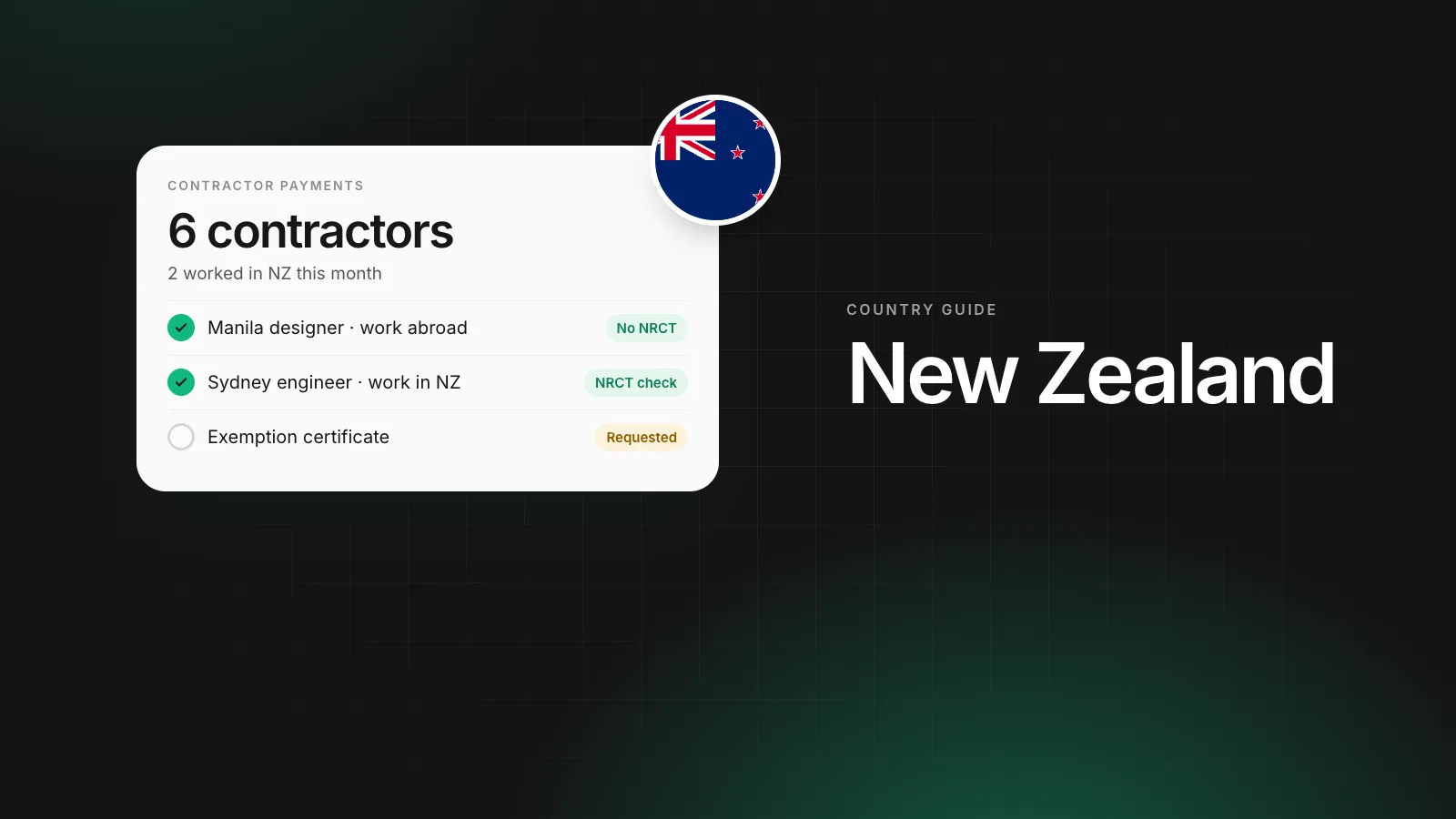
An Auckland food processing company hires a Sydney engineering firm to commission a new production line on site for three weeks, and a designer in Manila to redo its packaging remotely. The Manila designer's invoice is paid in pesos with nothing deducted. The Sydney firm's invoice triggers a non-resident contractors' tax check, because the work happened in New Zealand.
What NRCT is
Non-resident contractors' tax (NRCT) is a withholding tax on contract payments to non-residents for work or services performed in New Zealand. The payer deducts it and pays it to Inland Revenue.
Rates
The standard rate is 15 percent where the contractor provides a tax code declaration. Higher rates apply without one.
Exemptions
Non-resident contractors can apply to Inland Revenue for a certificate of exemption, often granted where a double tax agreement means they have no New Zealand tax liability, for example a contractor without a permanent establishment in New Zealand and staying under treaty time limits. With a certificate, the payer deducts no NRCT. Thresholds also apply for small or short engagements.
Work done abroad
Payments to contractors for work performed wholly outside New Zealand are generally outside NRCT. Remote design, development and consulting done from Manila, Bengaluru or Buenos Aires usually fall here.
Records
Keep contracts, invoices, evidence of where the work was done, and payment records with the rate used.
Paying contractors
Pay contractors abroad in their own currency on local rails where possible, so they receive the agreed amount.
Paying into New Zealand: the local rail
| What | Detail |
|---|---|
| Local rail | Interbank transfers through the Settlement Before Interchange system |
| Run by | Payments NZ, settled at the Reserve Bank |
| Settlement | Within the hour, every day of the year since 2023 |
Source: Payments NZ. Checked when this guide was last updated; the scheme's own page has the current figures.
Where Rivet fits
Rivet does not calculate or file NRCT. A Rivet business account pays contractors in 120+ countries in local currency where available, with bulk payouts, rates shown before you confirm and, from the Growth plan, second approvals. Rivet is not a bank; regulated partner institutions hold the funds.
Questions people ask
When does NRCT apply?
When a New Zealand payer makes a contract payment to a non-resident contractor for work or services performed in New Zealand, subject to thresholds and exemptions.
What rate applies?
Generally 15 percent where the contractor gives a tax code declaration, and higher rates where they do not.
Can contractors get an exemption?
Yes. Inland Revenue can issue a certificate of exemption, for example where a treaty means the contractor has no NZ tax liability.
Does NRCT apply to remote work done abroad?
Generally no, because the work is not performed in New Zealand.
Sources
William covers what happens once a company starts moving money: getting the business verified, paying contractors and suppliers abroad, and keeping card spend under control. William writes for the founder or finance lead who has to make it work this week, and links every rule cited to the text it comes from.
More from William Sunjo M. →This article is general information, not legal, tax or financial advice. Rules and fees change; check the sources above and the provider’s current terms before you act on them.
- new zealand
- nrct
- overseas contractors
- ird
- withholding
- payouts