Paying suppliers in China and Southeast Asia from a Dutch trading company
Rotterdam handles more Asian imports than any port in Europe, and many of the companies behind them are small Dutch BVs. Paying the factory is a currency decision, a fraud check and a document trail, in that order.
- Published
- Reading time
- 2 min read
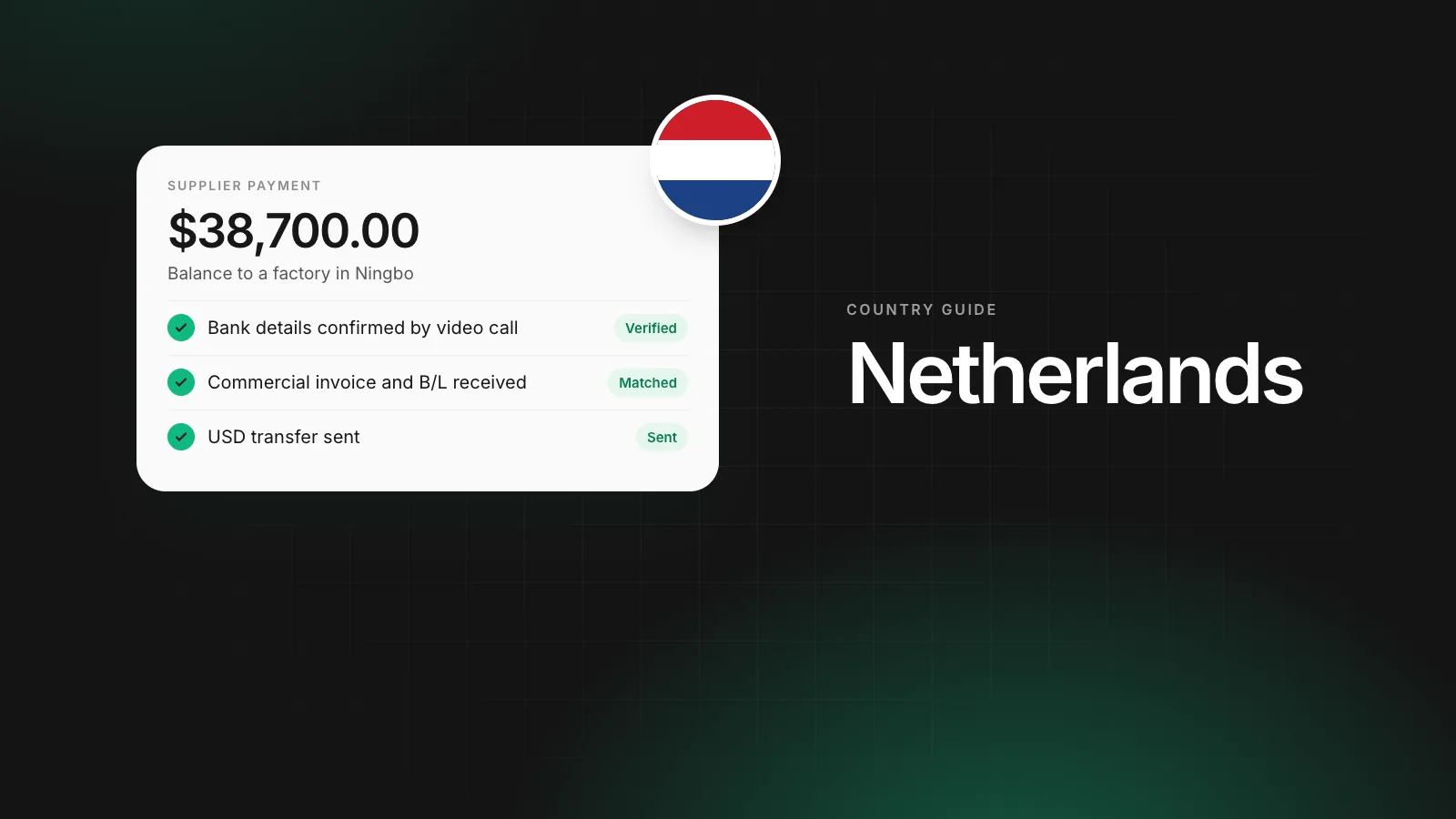
A Breda homeware brand orders a container of ceramics from a factory near Ningbo every six weeks. The invoice says $54,000, with 30 percent due on order and the balance when the goods ship. The brand's euro account converts each payment at the bank's rate, and once, a convincing email asked for the balance to go to "our new Hong Kong account". It went.
Dollars, yuan or dong
Most factories in China, Vietnam and Indonesia invoice exports in US dollars. Some, especially in China, will quote in yuan, sometimes at a slightly better price because it saves them converting.
Compare the two prices with the cost of each conversion on your side. If you sell in euros and buy in dollars, every order means converting euros to dollars. Doing that at a bank's margin, one payment at a time, adds up over a year. Holding a dollar balance and converting in larger amounts when the rate suits you gives you more control.
Payment structure
A common pattern for repeat suppliers:
- Deposit: 30 percent on purchase order, so the factory can buy materials.
- Balance: 70 percent against a copy of the bill of lading, so you pay once goods are on the ship.
For a first order with a new factory, inspect before shipment, and consider a letter of credit for large amounts.
The fraud check
Supplier payment fraud usually starts with a real email thread. Someone gains access to the supplier's mailbox, or registers a lookalike domain, and sends an invoice with new bank details. The tone, the order number and the signature all look right.
A few rules prevent most of it:
- The account name must match the supplier on your contract.
- A new account in another country or another name is a red flag, however reasonable the explanation.
- Confirm any change on a call or video call with a contact you already know, using contact details you already hold.
- Require a second person to approve the first payment to new details.
Documents for customs
Your customs broker files the import declaration. They need the commercial invoice, packing list, bill of lading and any certificates for preference or product rules. Keep payment proof with them; auditors and banks may ask how the invoice was paid. Our guide to paying suppliers in China covers the Chinese side in detail.
Paying into the Netherlands: the local rail
| What | Detail |
|---|---|
| Local rail | SEPA Instant Credit Transfer |
| Run by | European Payments Council scheme, run by each bank; Dutch banks send nearly all domestic transfers instantly |
| Settlement | Under ten seconds, 24/7 |
| Published fee | By the EU Instant Payments Regulation, no more than the bank charges for a standard SEPA transfer |
Source: European Payments Council: SEPA Instant Credit Transfer. Checked when this guide was last updated; the scheme's own page has the current figures.
Where Rivet fits
A Rivet business account lets a Dutch BV receive and hold US dollars on US account details in its own name, convert euros to dollars at a rate shown before confirming, and pay suppliers in 120+ countries. From the Growth plan, payouts can require a second approver, which is the simplest control against changed bank details. Rivet is not a bank; regulated partner institutions hold the funds.
Questions people ask
Should I pay Chinese suppliers in dollars or yuan?
Most invoice in dollars and are used to receiving them. Some will quote a lower price in yuan. Compare the two prices, including what each conversion costs you.
How do I check a supplier's bank account is genuine?
The account name should match the company on the contract. Confirm details on a video call with a contact you already know, and be wary of accounts in a different country or name from the supplier's.
What documents does Dutch customs need?
The commercial invoice, packing list, bill of lading or air waybill, and certificates such as origin certificates where a preference or product rule applies. Your customs broker files the import declaration.
Is a letter of credit worth it?
For a large first order with a new factory, a letter of credit can protect both sides. For repeat orders with trusted suppliers, deposit and balance terms are simpler and cheaper.
Sources
Rashidatou writes Rivet's guides to how money moves between countries: the payment rails, what each one costs, and the account details a company needs to get paid in another currency. Every figure in Rashidatou's articles is traced to the scheme rulebook, the regulator or the provider's published price list, and those sources are listed at the end.
More from Rashidatou K. →This article is general information, not legal, tax or financial advice. Rules and fees change; check the sources above and the provider’s current terms before you act on them.
- netherlands
- importers
- china suppliers
- vietnam
- usd payments
- trade