Banking several companies: accounts, intercompany transfers and clean books
A US LLC for clients, a UK company for Europe, a holding company above both. Each needs its own bank account, and every transfer between them needs a reason on paper. Here is how to keep a multi-entity setup clean.
- Published
- Reading time
- 2 min read
Founders working across borders often end up with more than one company. A US LLC to sign American clients, a UK limited company for European work, perhaps a holding company that owns both. Each structure has good reasons. The banking side only works if each company is kept separate and every transfer between them has a paper trail.
One entity, one account
Every company needs accounts in its own legal name. When one company's clients pay into another company's account, three things break:
- The books of both companies are wrong.
- Tax filings in each country are built on the wrong income.
- Limited liability gets weaker, because the companies are not acting as separate persons.
Banks also flag third-party payments during reviews. Money for Company A arriving in Company B's account is a classic trigger. See why business accounts get closed.
Name every intercompany transfer
Before money moves between group companies, decide what it is:
| Transfer type | Document | Example |
|---|---|---|
| Payment for services | Intercompany agreement plus invoice | UK Ltd invoices US LLC for design work |
| Loan | Loan agreement with interest and term | Holding company lends to a new subsidiary |
| Capital contribution | Board or member resolution | Parent funds a subsidiary's start-up costs |
| Dividend or distribution | Resolution, after profits are confirmed | Subsidiary pays its parent |
Use a payment reference that points to the document: "INV-UK-0042" or "Loan 2026-01".
Write an intercompany agreement
A short contract between group companies, signed before work flows, covering what is provided, how it is priced, invoicing frequency and payment terms. It is the document you show a bank, an auditor or a tax authority when asked why money moved.
Prices at arm's length
Tax authorities expect related companies to deal with each other at prices independent companies would agree, under transfer pricing rules based on the OECD guidelines. A common simple approach for service companies is cost plus a margin. Formal documentation rules vary by size and country, so ask an adviser once the group has real volume.
Verification for each entity
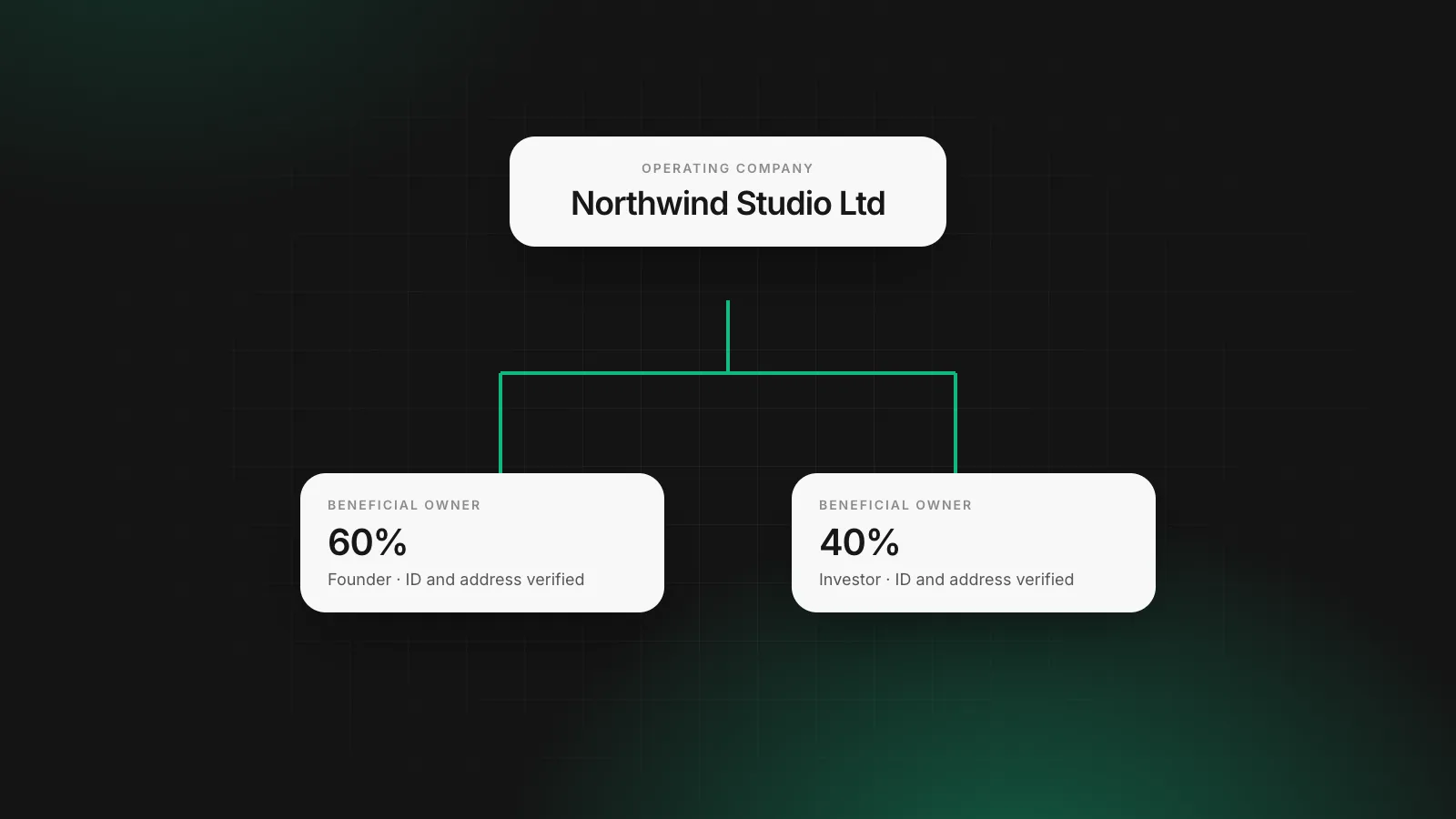
Each company goes through business verification on its own. Providers will ask how the companies relate. Have a group chart showing every entity, ownership percentages and the people at the top. The beneficial owner guide explains what reviewers look for.
Habits that keep it clean
- Reconcile intercompany balances monthly. What A says B owes should match what B says it owes A.
- Settle intercompany invoices on their terms. Balances that pile up for years look like hidden loans.
- Keep each company's cards separate as well as its accounts.
- Hold each entity's currency where it earns, so transfers do not force a conversion.
Several companies on Rivet
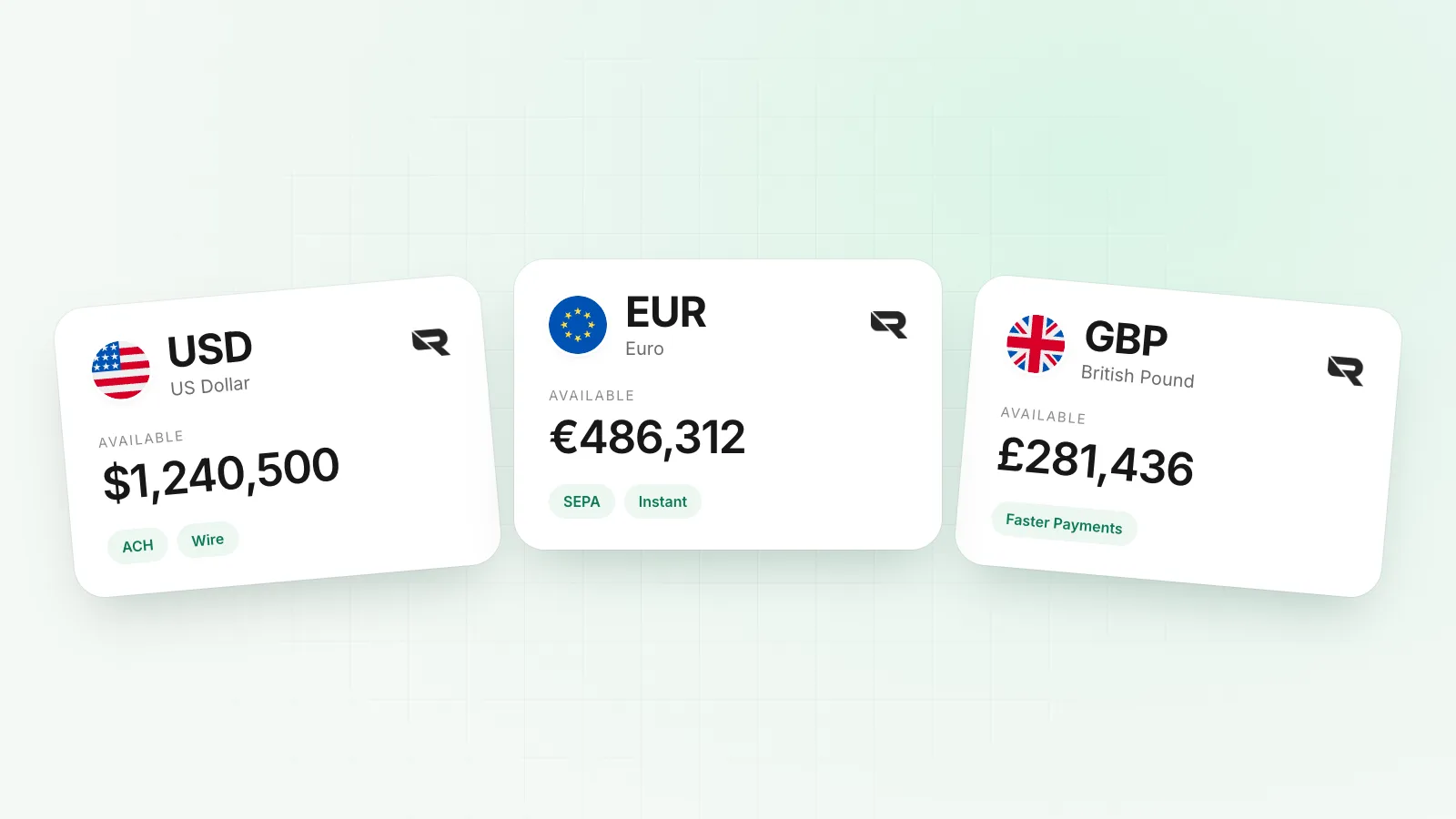
Rivet verifies and opens accounts per company, each in its own legal name with its own balances and cards. See Bank accounts.
Questions people ask
Can two companies share one bank account?
They should not. Each company is a separate legal person with its own tax filings. Mixing their money makes the accounts unreliable, can weaken limited liability, and is likely to be flagged in a bank's review.
How do I move money between my companies?
Decide what the transfer is first: payment for services on an invoice, a loan under a loan agreement, an equity contribution, or a dividend from a subsidiary to its parent. Then pay from one company's account to the other's with a reference that matches the document.
What is an intercompany agreement?
A contract between companies in the same group that sets what one provides to the other and at what price, such as management services, software licences or loans. It is the evidence for intercompany payments.
Do I need transfer pricing documentation as a small group?
Requirements depend on the countries and the size of the group. The principle applies everywhere: prices between related companies should match what independent companies would agree. Keep at least a short note on how each price was set.
Sources
William covers what happens once a company starts moving money: getting the business verified, paying contractors and suppliers abroad, and keeping card spend under control. William writes for the founder or finance lead who has to make it work this week, and links every rule cited to the text it comes from.
More from William Sunjo M. →This article is general information, not legal, tax or financial advice. Rules and fees change; check the sources above and the provider’s current terms before you act on them.
- multi-entity banking
- intercompany transfers
- holding company bank account
- intercompany loan
- group structure