Mexican exporters and nearshoring suppliers: collecting dollars and paying in pesos
US companies moving supply chains closer to home have made Mexico their largest trading partner. Mexican suppliers now invoice more in dollars than ever, while paying staff and local suppliers in pesos. How the dollars arrive and when they become pesos shapes margins.
- Published
- Reading time
- 2 min read
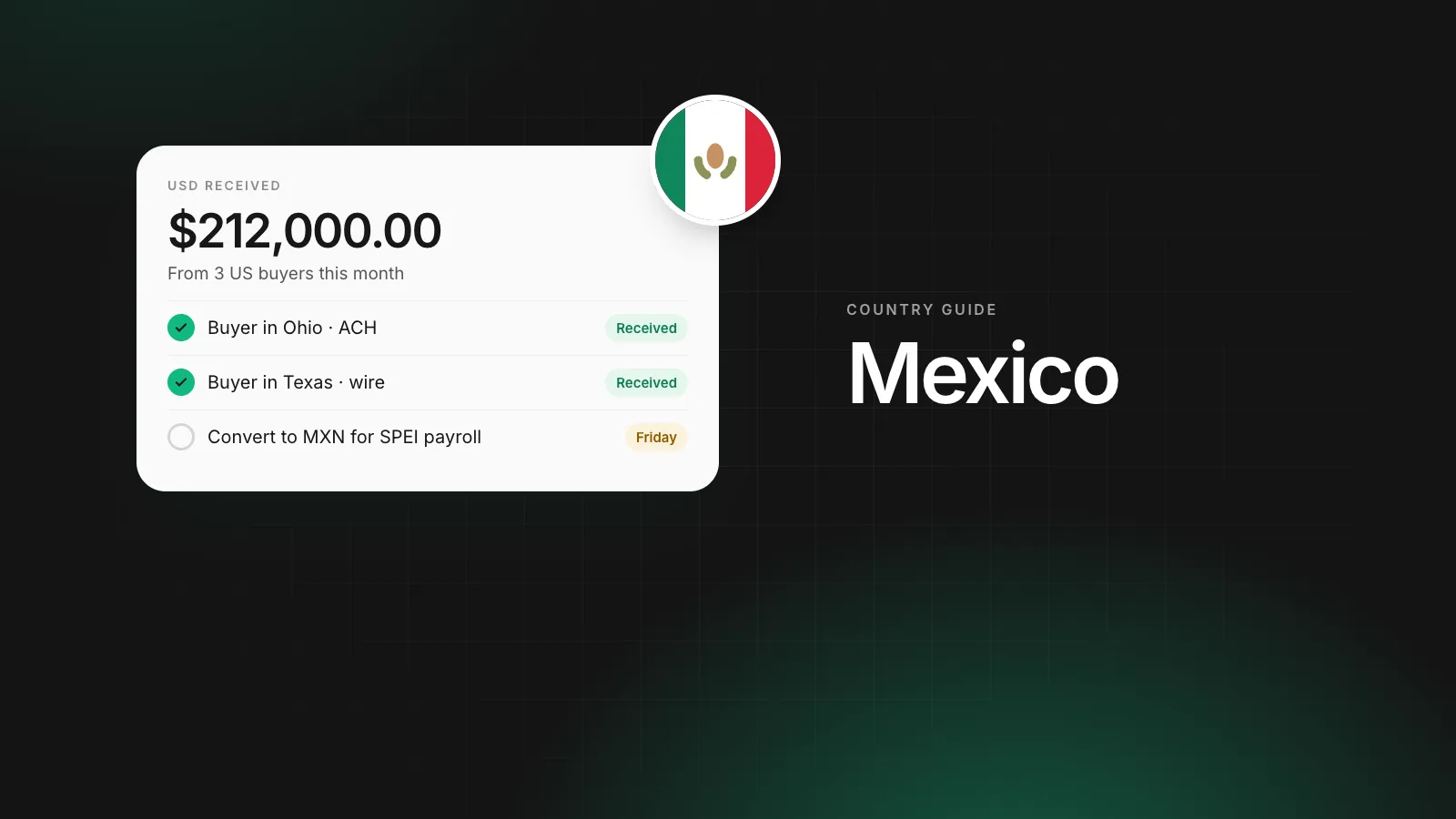
A Querétaro auto parts supplier won two new US customers after they moved production from Asia. Both pay in dollars, one by wire to the supplier's Mexican bank, one by ACH to US details. The supplier pays 400 workers weekly in pesos by SPEI, and its steel comes from a Mexican mill priced in pesos. Between receipt and payroll, the peso moved 3 percent.
Dollars in, pesos out
Nearshoring has made Mexico the largest trading partner of the US, and created a wave of new Mexican suppliers to American buyers. Their revenue is mostly in dollars; most of their costs, wages, local inputs, energy and taxes, are in pesos.
That mismatch is normal. What makes it expensive is converting every dollar receipt into pesos the day it arrives, at the bank's rate, and buying dollars back for imported inputs a week later.
How US buyers pay
US buyers can wire dollars to a Mexican account. Many accounts payable teams handle cross-border wires manually, so they are paid in batches and often late. Some deduct the intermediary fee from the supplier.
US account details in the Mexican company's own name let the buyer pay by ACH, like any domestic vendor. The amount arrives in full, on time, with a reference.
Hold dollars, plan the peso conversion
- Receive dollars and keep them as dollars.
- Pay dollar-priced inputs, such as imported components, US freight or software, from that balance.
- Convert a planned amount to pesos ahead of each payroll, at a rate you see before confirming.
The peso can move several percent in a week. Planning conversions does not predict the rate, but it means the result comes from a decision rather than from which day a buyer happened to pay.
SPEI for the peso side
Once converted, pesos move through SPEI, Banco de México's real-time system, around the clock. Weekly payroll and local suppliers can be paid the same day.
Paying into Mexico: the local rail
| What | Detail |
|---|---|
| Local rail | SPEI |
| Run by | Banco de México |
| Settlement | Seconds, 24/7 |
Source: Banco de México: SPEI. Checked when this guide was last updated; the scheme's own page has the current figures.
Where Rivet fits
A Rivet business account accepts registered companies after verification, including Mexican companies. Approved companies get US account details in their own name on every plan, for ACH and wires, and can pay out in pesos and other currencies to 120+ countries. Dollars can be held or converted at a rate shown before you confirm. Rivet is not a bank; regulated partner institutions hold the funds.
Questions people ask
Can Mexican companies hold US dollars?
Yes. Mexican legal entities can hold dollar accounts in Mexico and accounts abroad, subject to reporting rules.
Why do US buyers pay late?
Many treat cross-border wires as a separate manual process. US account details let them pay by ACH as they pay domestic vendors.
How should Mexican exporters manage peso risk?
Match dollar costs to dollar revenue, convert a planned amount ahead of payroll, and consider forwards for large, predictable peso needs.
Does USMCA affect payment?
USMCA affects tariffs and origin. It does not change how buyers pay, but meeting its origin rules keeps your goods competitive.
Sources
Rashidatou writes Rivet's guides to how money moves between countries: the payment rails, what each one costs, and the account details a company needs to get paid in another currency. Every figure in Rashidatou's articles is traced to the scheme rulebook, the regulator or the provider's published price list, and those sources are listed at the end.
More from Rashidatou K. →This article is general information, not legal, tax or financial advice. Rules and fees change; check the sources above and the provider’s current terms before you act on them.
- mexico
- nearshoring
- exports
- usd
- mxn
- spei