Mexican companies invoicing foreign clients: CFDI 4.0, the generic RFC and export complements
In Mexico an invoice is a CFDI: an XML file validated and stamped through the SAT's system. Invoices to foreign clients are CFDIs too, with the generic foreign RFC, an export key and, for goods, the foreign trade complement. The foreign client just receives a PDF.
- Published
- Reading time
- 2 min read
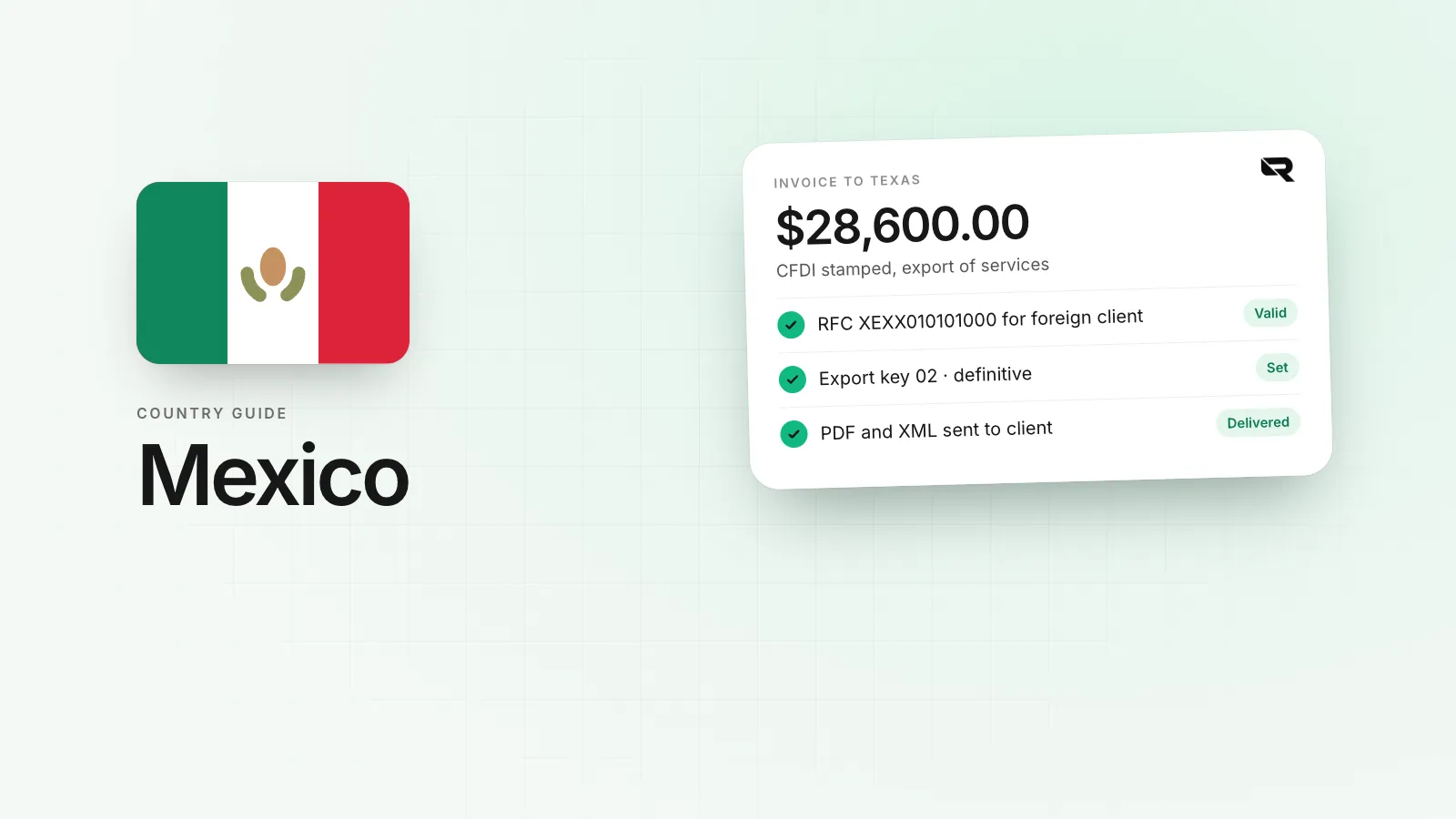
A Guadalajara software company bills a client in Dallas $28,600 a month. Each invoice is a CFDI 4.0, an XML file stamped by its PAC and registered with the SAT within seconds. The Dallas client receives a PDF and the XML, and has no idea what either means. What it cares about is how to pay.
Every invoice is a CFDI
In Mexico an invoice is a Comprobante Fiscal Digital por Internet (CFDI). The issuer creates the XML, an authorised certification provider (PAC) validates and stamps it, and the SAT receives it. CFDI 4.0 has been mandatory since 2023.
That applies to foreign clients too. A PDF from a template, without a stamped CFDI behind it, is not a valid invoice for Mexican tax.
Fields for a foreign client
- RFC: the generic foreign RFC XEXX010101000.
- Foreign tax ID: the client's tax number in its country, such as a US EIN, and its country of residence.
- Export key: for example, 02 for a definitive export.
- Currency and rate: if invoiced in dollars, the CFDI states the currency and the exchange rate, normally the Banco de México rate published in the Official Gazette.
Services and IVA
Some services exported to foreign residents are taxed at 0 percent IVA when they are used abroad and meet the IVA law's conditions. Software development and certain technical services often qualify. Confirm with your accountant how your services are treated before setting the IVA on the CFDI.
Goods: the foreign trade complement
For definitive exports of goods, the CFDI includes the foreign trade complement, with tariff codes, quantities, values and the recipient's details. The data must match the export declaration (pedimento). Mismatches are a common reason for SAT questions and delayed IVA refunds.
The payment side
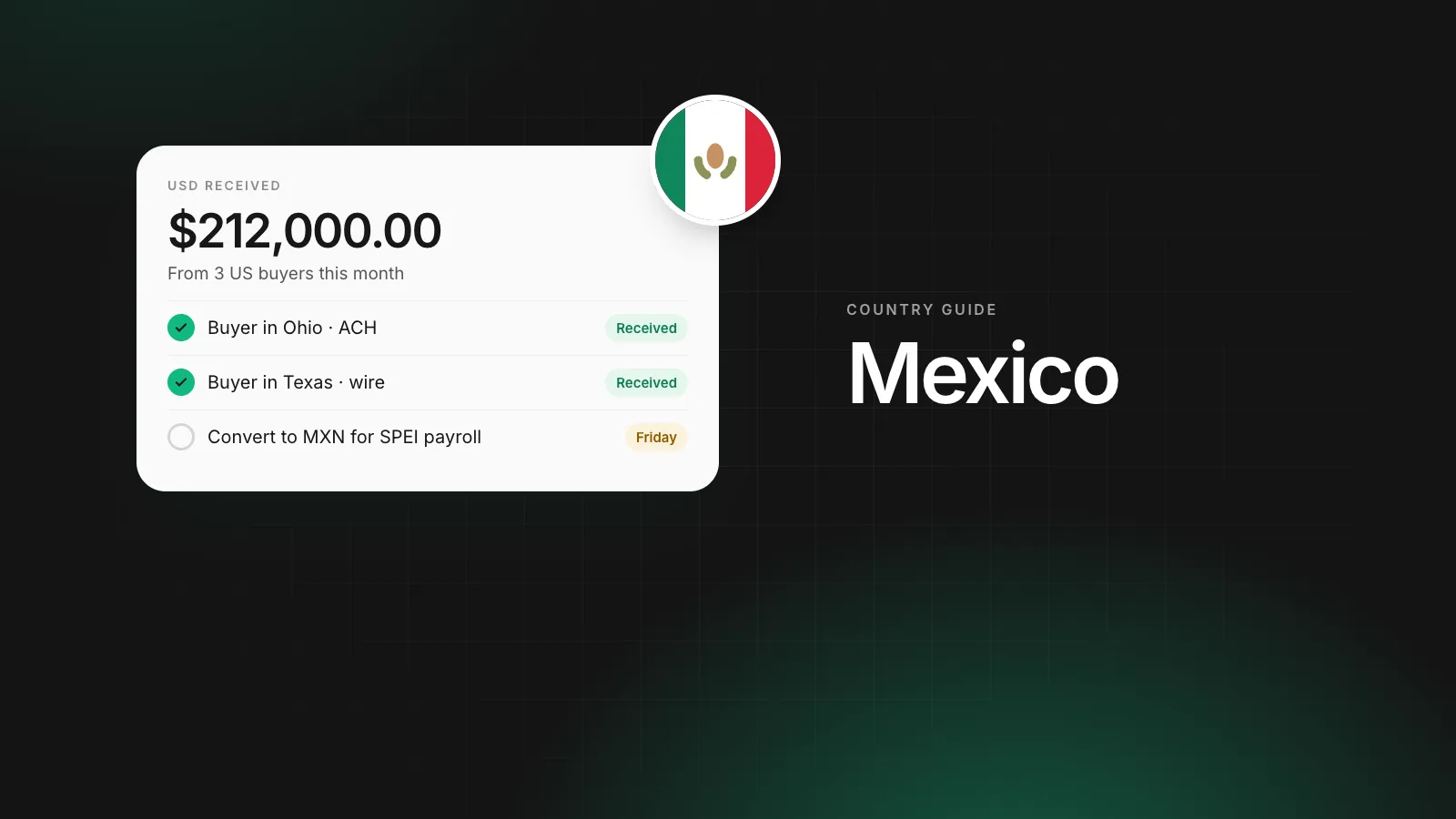
A Dallas client asked to pay a Mexican account sends an international wire, which can take days and lose an intermediary fee. US account details in your company's own name let the client pay by ACH, in full. You can hold the dollars for dollar costs or convert to pesos for payroll when you choose.
Paying into Mexico: the local rail
| What | Detail |
|---|---|
| Local rail | SPEI |
| Run by | Banco de México |
| Settlement | Seconds, 24/7 |
Source: Banco de México: SPEI. Checked when this guide was last updated; the scheme's own page has the current figures.
Where Rivet fits
Rivet does not stamp CFDIs; your PAC does. A Rivet business account accepts registered companies after verification, including Mexican companies. Approved companies get US account details in their own name on every plan, euro and sterling details from the Growth plan, and payouts to 120+ countries, with payments matched to invoices and conversions at a rate shown before you confirm. Rivet is not a bank; regulated partner institutions hold the funds.
Questions people ask
What RFC goes on a CFDI to a foreign client?
The generic foreign RFC XEXX010101000, together with the client's foreign tax identification number and country of residence.
Do services to foreign clients carry IVA?
Certain services exported to foreign residents can be taxed at 0 percent under the IVA law when they are used abroad. Check the conditions for your service with your accountant.
When is the foreign trade complement required?
For CFDIs covering definitive exports of goods. It holds customs and product data that must match the export declaration (pedimento).
Can a CFDI be issued in dollars?
Yes. The currency and exchange rate are stated on the CFDI, using the rate published by Banco de México in the Official Gazette.
Sources
William covers what happens once a company starts moving money: getting the business verified, paying contractors and suppliers abroad, and keeping card spend under control. William writes for the founder or finance lead who has to make it work this week, and links every rule cited to the text it comes from.
More from William Sunjo M. →This article is general information, not legal, tax or financial advice. Rules and fees change; check the sources above and the provider’s current terms before you act on them.
- mexico
- cfdi 4.0
- sat
- exports
- generic rfc
- foreign clients