Maltese companies paying remote contractors abroad: VAT, status and records
Malta's labour market is small, so its tech and service companies hire contractors well beyond the island. Paying them is straightforward once the reverse charge, the status question and the records are in order.
- Published
- Reading time
- 2 min read
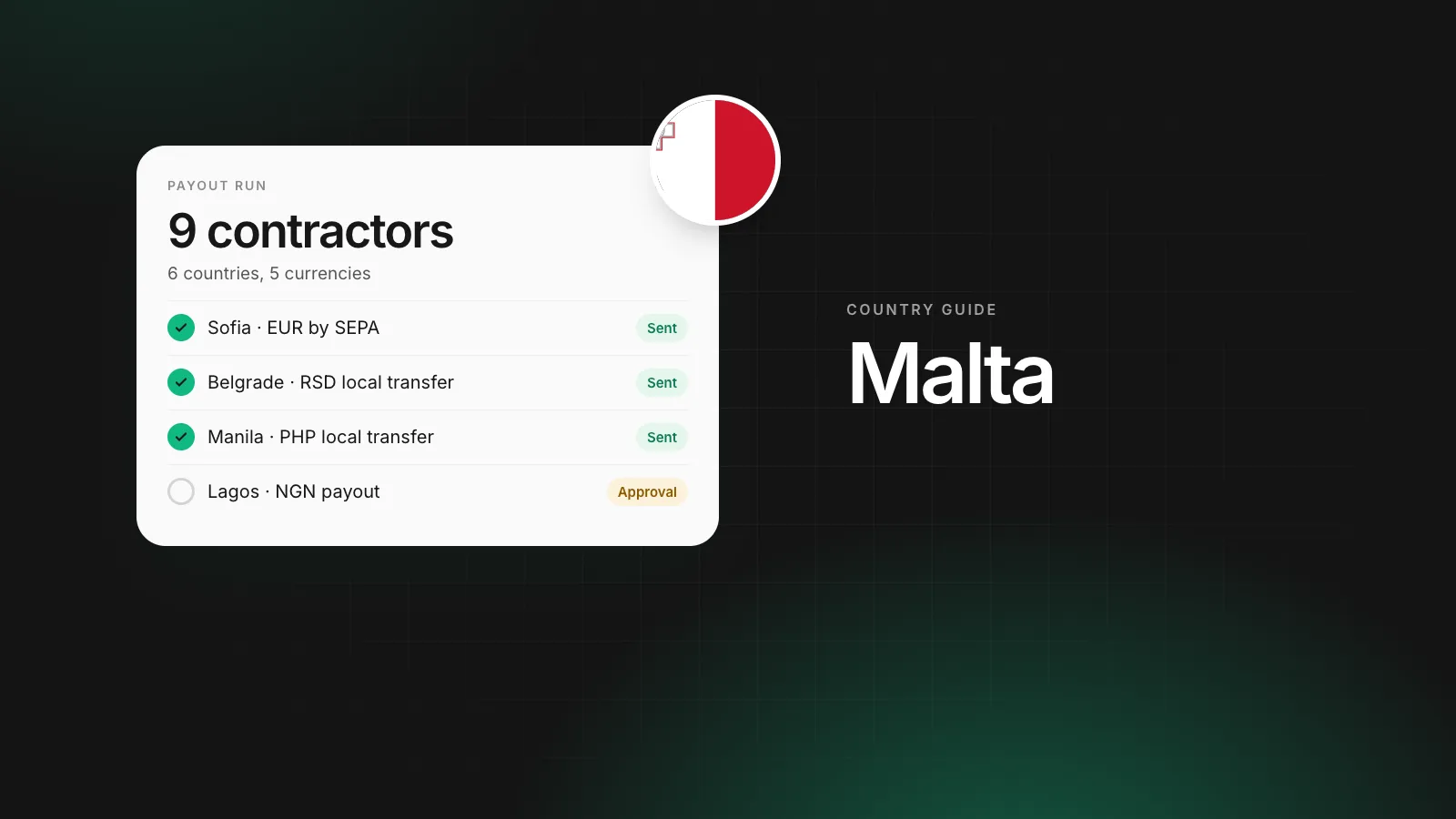
A Valletta software company has 20 staff on the island and nine contractors elsewhere: in Sofia, Belgrade, Manila, Lagos and Lisbon. Malta's job market is tight, so contractors fill gaps in engineering and design. The finance manager pays them monthly, and every payment raises the same three questions.
VAT: the reverse charge
When a Maltese company buys services from a contractor abroad, VAT usually shifts to it under the reverse charge. The contractor's invoice should carry no Maltese VAT. The company accounts for the VAT in its return and, if entitled to full recovery, deducts it in the same return. EU contractors show their VAT number where they have one.
Status
Malta, like most countries, distinguishes self-employment from employment by the facts. A contractor who works full time for one company, follows its schedule and sits in its team looks like an employee. The contractor's own country may reach the same conclusion and expect social contributions.
Contracts that set deliverables, contractors who use their own equipment and set their own hours, and freedom to work for other clients are the usual safeguards.
Records
For each payment keep:
- The signed agreement.
- The invoice, with the contractor's name, address, service, date and amount.
- Proof of payment showing the amount, currency and rate used.
The Commissioner for Revenue can ask for all three to support the deduction.
Currency
Contractors in Sofia and Lisbon receive euros by SEPA. Elsewhere:
- Serbia: dinars to a local account avoid conversion by the contractor's bank.
- Philippines: pesos to a bank account or e-wallet.
- Nigeria: naira to a local account, or dollars where the contractor prefers and local rules allow.
A euro SWIFT transfer forces the contractor's bank to convert, often with a receiving fee. Local currency on a local rail lands the invoiced amount.
Paying into Malta: the local rail
| What | Detail |
|---|---|
| Local rail | SEPA Instant Credit Transfer |
| Run by | European Payments Council scheme, run by each bank |
| Settlement | Under ten seconds, 24/7 |
| Published fee | By the EU Instant Payments Regulation, no more than the bank charges for a standard SEPA transfer |
Source: European Payments Council: SEPA Instant Credit Transfer. Checked when this guide was last updated; the scheme's own page has the current figures.
Where Rivet fits
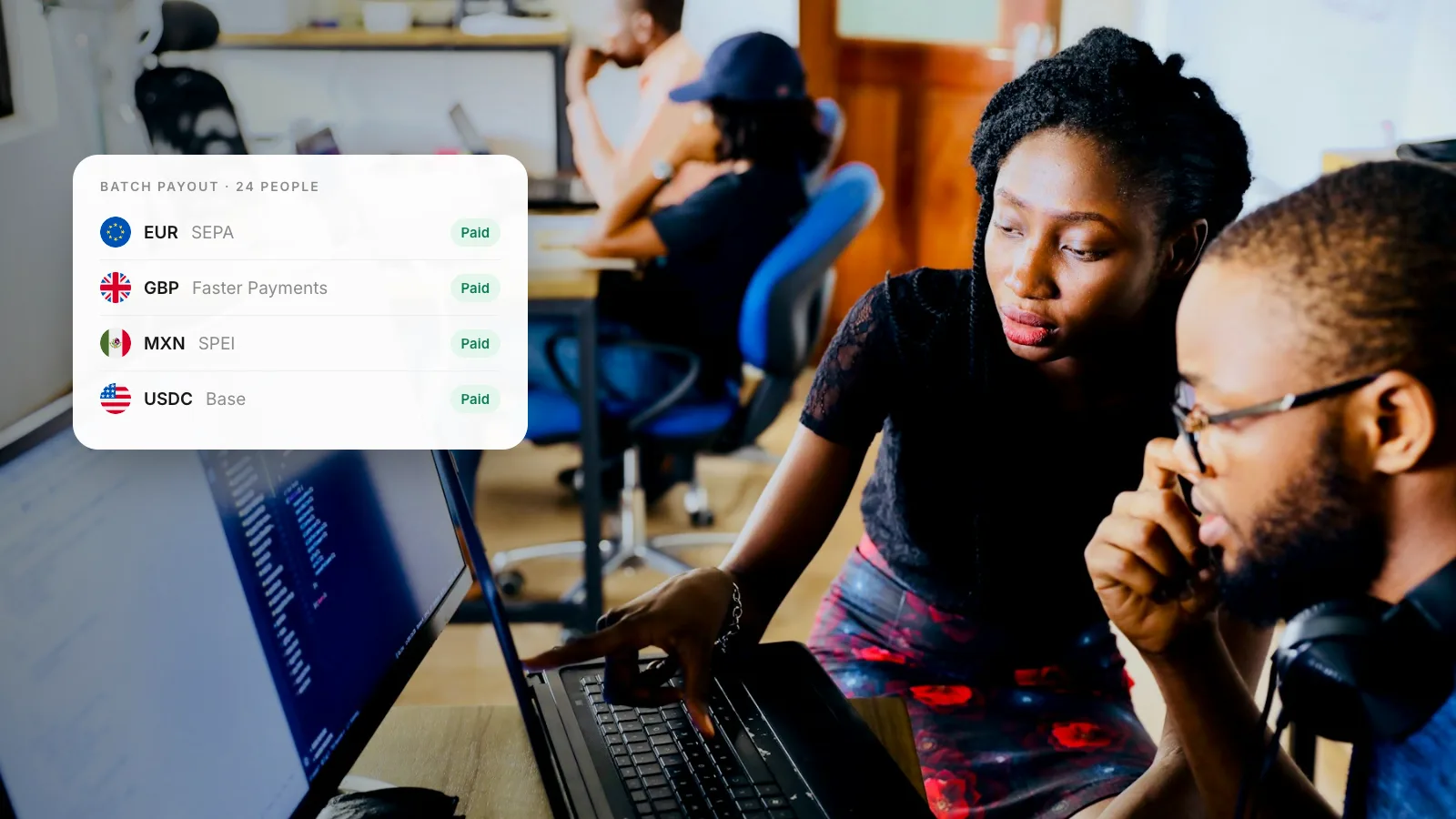
A Rivet business account pays contractors in 120+ countries, on local rails where available, from euro, dollar and other balances. Bulk payouts send the month's invoices together, each payment shows its rate before you confirm, and from the Growth plan a second approver can be required. Rivet is not a bank; regulated partner institutions hold the funds.
See also how to pay international contractors.
Questions people ask
Does a Maltese company pay VAT on a foreign contractor's invoice?
Under the reverse charge, the Maltese company accounts for the VAT and, if fully entitled, deducts it in the same return. The contractor's invoice should not include Maltese VAT.
Can a remote contractor be treated as an employee?
Yes, if the facts look like employment: fixed hours, integration into the team, one client and no own business. The contractor's country may apply its own tests.
Should I pay contractors in euros?
In the euro area, yes, by SEPA. Elsewhere, local currency usually leaves the contractor with more, because their bank does not convert and charge.
What if a contractor changes bank details?
Confirm the change by video call or phone with the contractor, never by email alone, and require a second approval for the first payment to the new account.
Sources
William covers what happens once a company starts moving money: getting the business verified, paying contractors and suppliers abroad, and keeping card spend under control. William writes for the founder or finance lead who has to make it work this week, and links every rule cited to the text it comes from.
More from William Sunjo M. →This article is general information, not legal, tax or financial advice. Rules and fees change; check the sources above and the provider’s current terms before you act on them.
- malta
- contractors
- reverse charge
- employment status
- payouts
- records