Dollar revenue, euro costs: managing currency risk at an Irish SaaS company
Many Irish software companies sell in dollars and pay staff, rent and Revenue in euros. When the euro strengthens, the same customer base buys fewer salaries. A few habits reduce how much that matters.
- Published
- Reading time
- 2 min read
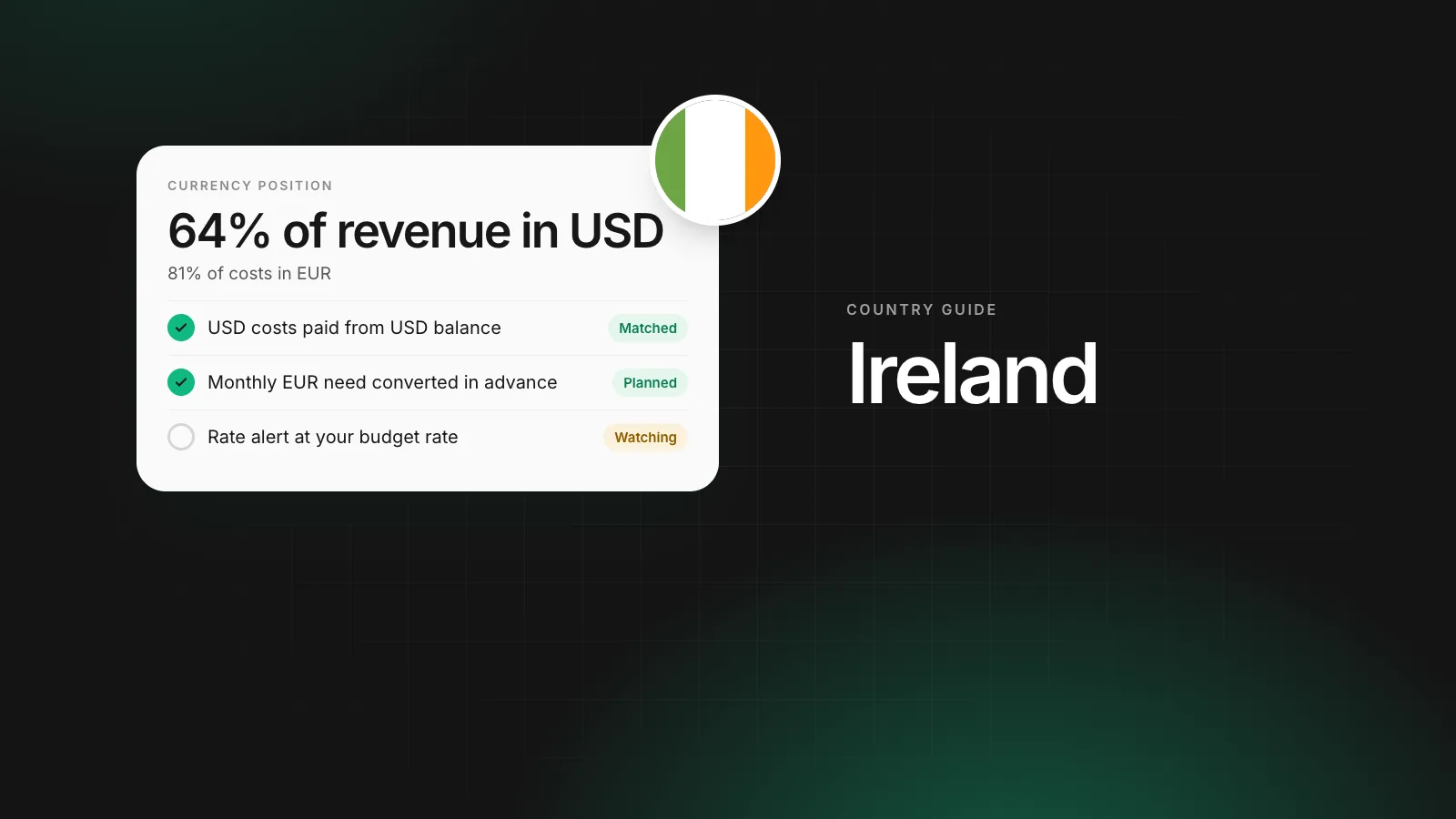
A Dublin software company bills most customers in dollars. Its biggest costs, salaries for 30 people in Dublin and Cork, rent and payroll taxes, are in euros. In a year when the euro gains 8 percent on the dollar, the same subscription base pays for 8 percent fewer euros of payroll. Nothing changed in the product or the pipeline.
Measure the exposure first
Take the last twelve months and split revenue and costs by currency. A typical pattern for an Irish SaaS company:
- Revenue: 60 to 70 percent dollars, the rest euros and sterling.
- Costs: 80 percent or more euros, with dollar costs for cloud hosting, US software tools and ads.
Net dollar exposure is dollar revenue minus dollar costs. That figure, multiplied by a 5 or 10 percent rate move, tells you what a bad year for the currency costs you. If the answer is smaller than a month of one salary, you can stop here. If it is larger, keep reading.
Match before you hedge
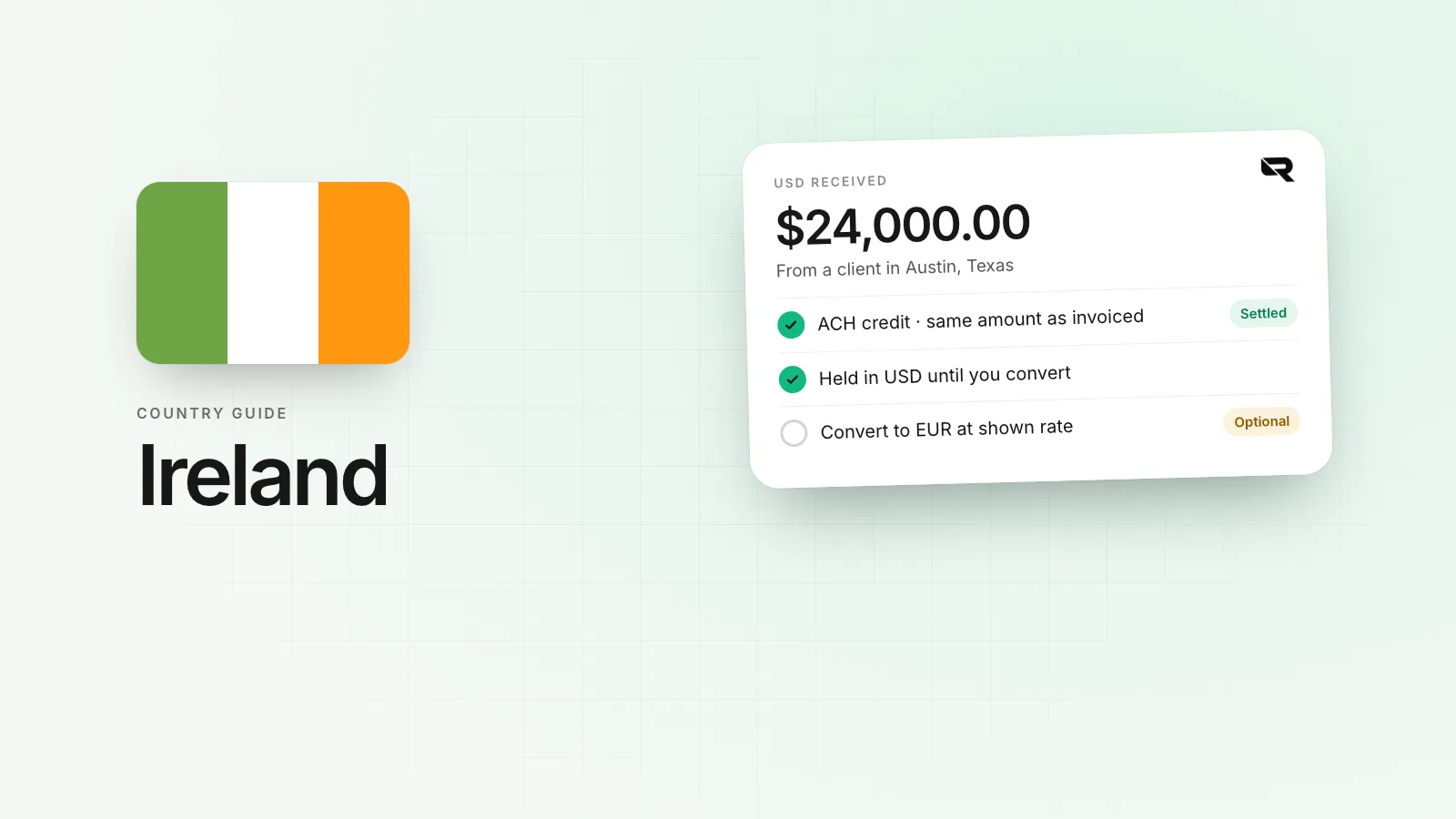
The cheapest risk reduction is matching: pay dollar costs from dollar revenue. Cloud bills, US contractors, conferences, advertising and software licences are usually priced in dollars. Paying them from a dollar balance means that slice of revenue never gets converted, and never gets converted back.
This needs an account that holds dollars and pays from them. If every dollar lands in a euro account, the bank converts it on arrival and you buy dollars again to pay AWS, paying a margin twice.
Convert on a schedule
The remaining dollars need to become euros for payroll. Converting everything the day it arrives gives you whatever the rate is that day. Converting a fixed amount each month, a week or two before payroll, averages the rate over the year and makes the euro budget predictable.
Some finance teams add a rule: if the rate reaches the budget rate early, convert the next month's need then.
When forwards make sense
A forward contract fixes a rate today for a conversion on a future date. It removes uncertainty for a known amount, such as six months of payroll, and it removes the upside if the dollar strengthens. For a company whose euro need is large and steady, that trade can be worth it. Our explainer on FX forward contracts covers how they work and what they cost.
Paying into Ireland: the local rail
| What | Detail |
|---|---|
| Local rail | SEPA Instant Credit Transfer |
| Run by | European Payments Council scheme, run by each bank |
| Settlement | Under ten seconds, 24/7 |
| Published fee | By the EU Instant Payments Regulation, no more than the bank charges for a standard SEPA transfer |
Source: European Payments Council: SEPA Instant Credit Transfer. Checked when this guide was last updated; the scheme's own page has the current figures.
Where Rivet fits
A Rivet business account lets an Irish company receive dollars on US account details in its own name, keep them in a dollar balance, pay dollar costs from it with company cards or payouts, and convert to euros when it chooses at a rate shown before confirming. From the Growth plan the account adds euro details with an IBAN, so the converted funds sit in the same place payroll runs from. Rivet is not a bank; regulated partner institutions hold the funds.
Questions people ask
How do I measure my company's currency risk?
List twelve months of revenue and costs by currency. The difference between dollar revenue and dollar costs is your net exposure. Multiply it by a plausible rate move, say 5 or 10 percent, to see what a swing would cost.
Should a small SaaS company hedge?
Most start by matching: paying dollar costs in dollars and converting only the surplus on a schedule. Forward contracts make sense once the euro need is large and predictable enough that a 5 percent move would hurt.
Can an Irish company price in euros instead?
It can, but US buyers expect dollar pricing and may buy less. Some companies price in dollars for the US and euros for Europe to keep both sides natural.
Sources
Rashidatou writes Rivet's guides to how money moves between countries: the payment rails, what each one costs, and the account details a company needs to get paid in another currency. Every figure in Rashidatou's articles is traced to the scheme rulebook, the regulator or the provider's published price list, and those sources are listed at the end.
More from Rashidatou K. →This article is general information, not legal, tax or financial advice. Rules and fees change; check the sources above and the provider’s current terms before you act on them.
- ireland
- saas
- fx risk
- usd revenue
- eur costs
- treasury