Irish companies paying UK suppliers after Brexit: sterling, VAT and customs
Since 2021, goods from Great Britain are imports into Ireland with customs and VAT, while Northern Ireland follows EU goods rules. Paying in sterling is the other cost to manage.
- Published
- Reading time
- 1 min read
The UK is still one of Ireland's largest trading partners. Since Brexit, buying from a supplier in Great Britain means customs and import VAT on goods, and a sterling payment that many Irish companies route through SWIFT.
Goods, services and Northern Ireland
| Supply | Rule |
|---|---|
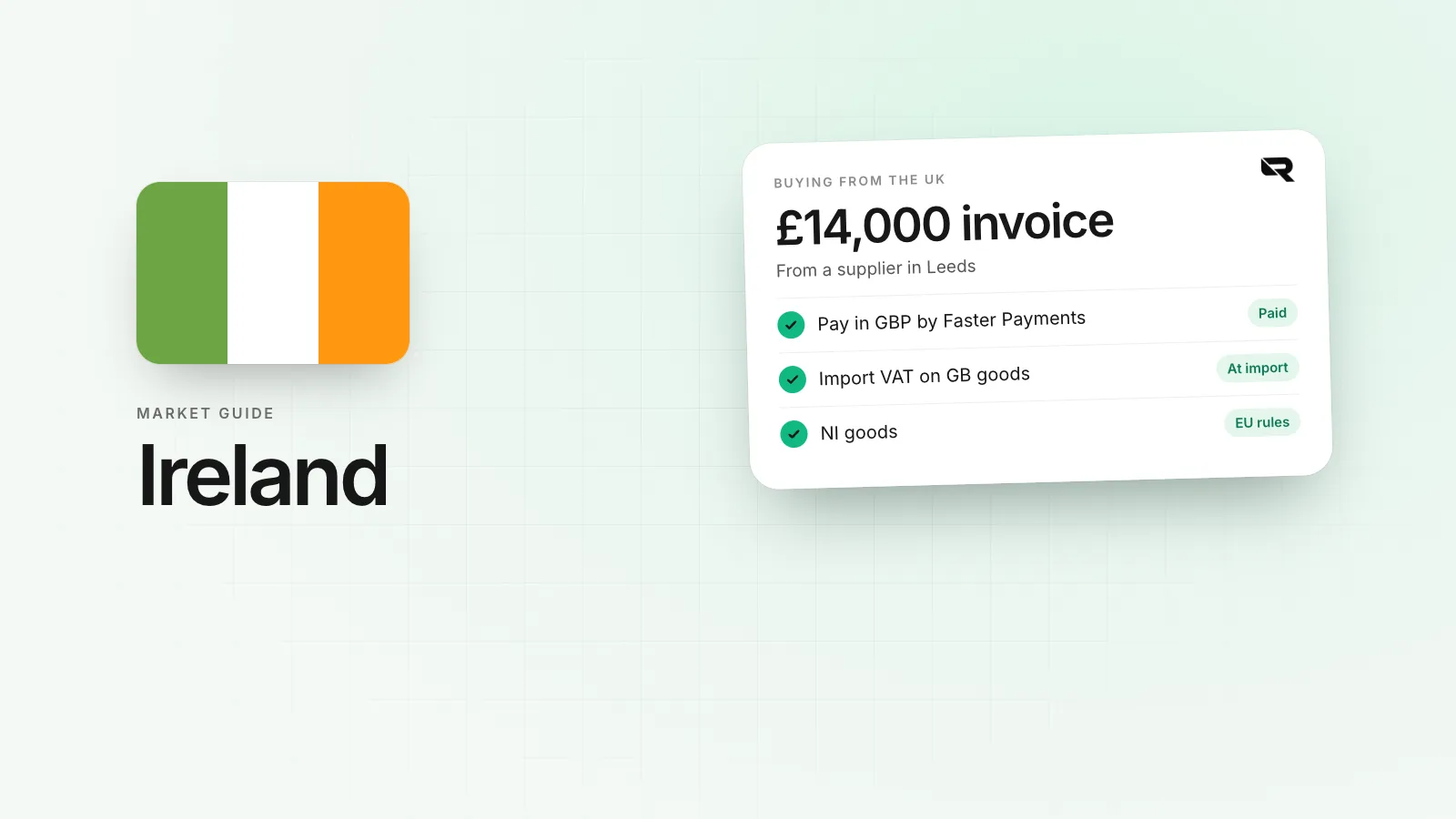
| Goods from Great Britain | Import: customs declaration, possible duty, import VAT (postponed accounting available) |
| Goods from Northern Ireland | EU goods rules, no customs between NI and Ireland |
| B2B services from UK businesses | Reverse charge by the Irish company |
Paying the supplier
A Dublin retailer pays a Leeds supplier £14,000. Sent from a euro account by SWIFT, it carries a fee and the bank's margin, and may lose an intermediary fee. Sent in sterling on Faster Payments, it arrives the same day in full.
Holding sterling
Irish companies that also sell to the UK can hold sterling receipts and pay UK suppliers from them. Those that do not can convert in planned amounts at a known rate.
Records
Keep the customs entry, the invoice and the payment together. Revenue may ask for all three to support the VAT treatment.
Paying into Ireland: the local rail
| What | Detail |
|---|---|
| Local rail | SEPA Instant Credit Transfer |
| Run by | European Payments Council scheme, run by each bank |
| Settlement | Under ten seconds, 24/7 |
| Published fee | By the EU Instant Payments Regulation, no more than the bank charges for a standard SEPA transfer |
Source: European Payments Council: SEPA Instant Credit Transfer. Checked when this guide was last updated; the scheme's own page has the current figures.
Where Rivet fits
Rivet gives Irish companies GBP details with a sort code and EUR details on Growth, plus USD on every plan, and pays UK suppliers on Faster Payments from a sterling balance. Rivet is not a bank; regulated partner institutions hold the funds. See postponed VAT accounting and pay EU suppliers from the UK.
Questions people ask
Do I pay VAT on goods from the UK?
On goods from Great Britain, import VAT applies at import, and Irish companies can use postponed accounting where eligible. Goods from Northern Ireland follow EU rules.
Do I pay VAT on UK services?
Generally the Irish company accounts for Irish VAT under the reverse charge on B2B services from UK businesses.
Should I pay UK suppliers in sterling?
Usually yes. Paying in euros pushes conversion onto the supplier's bank, which often shows up in the price.
What is postponed accounting?
A scheme that lets VAT-registered importers account for import VAT in their VAT return instead of paying at the border.
Sources
Alexia compares the accounts, cards and payment tools companies weigh before they switch, and writes Rivet's market guides for founders in a specific country. Prices in Alexia's comparisons come from each provider's own pricing page on the date given in the article, rules come from the regulator or tax authority that sets them, and every source is listed at the end.
More from Alexia M. →This article is general information, not legal, tax or financial advice. Rules and fees change; check the sources above and the provider’s current terms before you act on them.
- ireland uk suppliers
- brexit
- gbp payments
- import vat
- northern ireland
- customs