Indonesian exporters selling to the US after the 2025 tariff changes
In 2025 the US and Indonesia agreed a tariff of 19 percent on most Indonesian goods, lower than the rate first announced. For exporters of shoes, garments, furniture and electronics, that reset prices with American buyers. Payment terms and currency matter more when margins are thinner.
- Published
- Reading time
- 2 min read
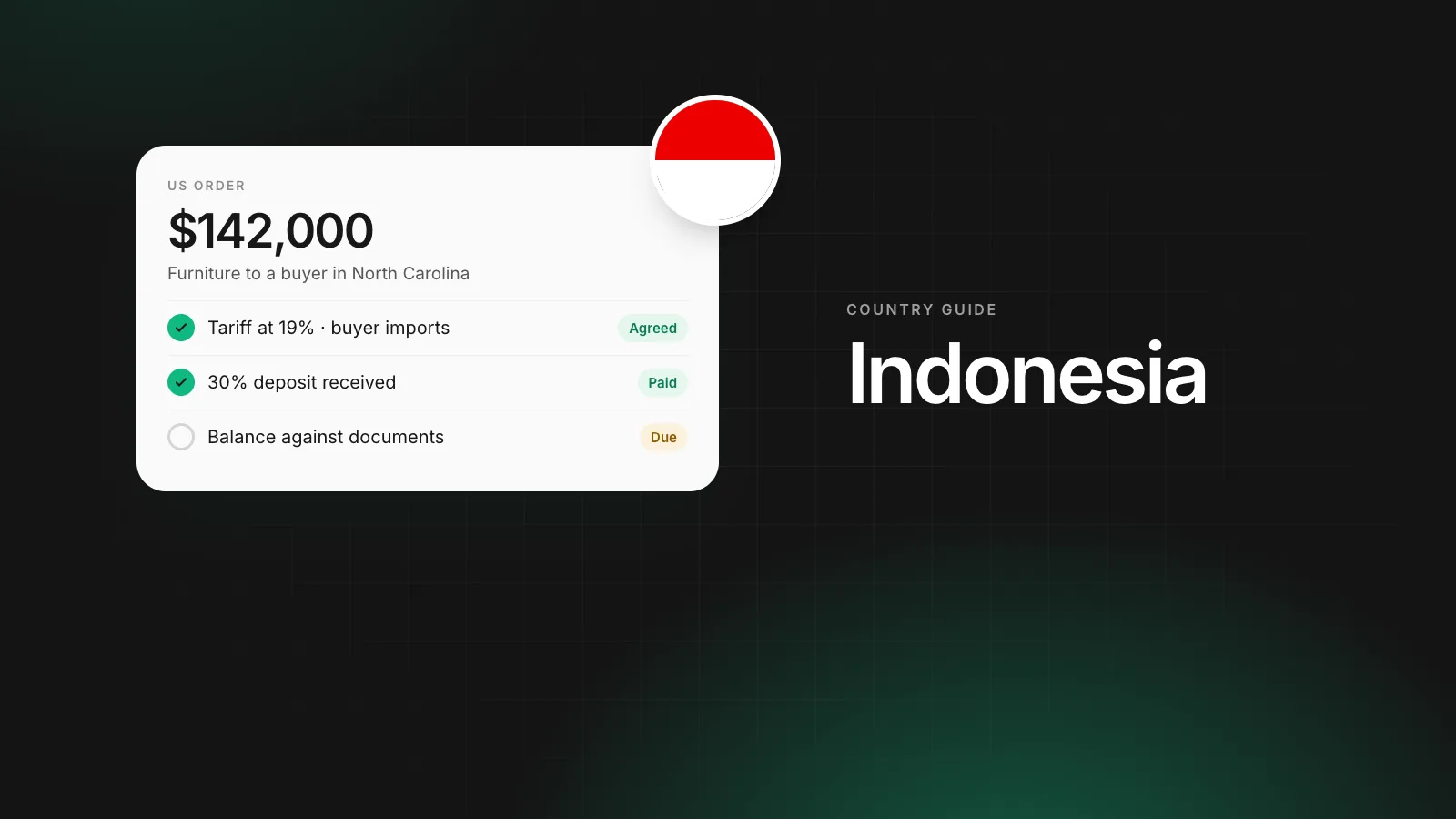
A Jepara teak furniture maker sells to a retailer in North Carolina. In early 2025 the buyer paused orders while US tariffs on Indonesian goods were uncertain. After the two countries agreed a 19 percent rate for most goods, orders resumed, but the buyer asked to share the cost. The exporter's margin is thinner and its payment terms now matter more.
The tariff
Under the 2025 arrangement between the US and Indonesia, most Indonesian goods entering the US face a 19 percent tariff, below the rate initially announced. Some products follow other rules. Your HS code decides; confirm it with a customs broker.
Who pays
The duty is paid to US Customs by the importer of record:
- FOB or FCA: usually the US buyer.
- DDP: the seller, which then needs a US importer arrangement.
Most Indonesian exporters sell FOB. Price negotiations now often include how the tariff is shared.
Terms when margins are thin
Ocean shipments take weeks, and US customs can hold goods. Protect cash flow with:
- Deposits of 30 percent or more on order.
- Balance against shipping documents, or within a short period after arrival.
- Letters of credit for new or large buyers.
Proceeds and DHE
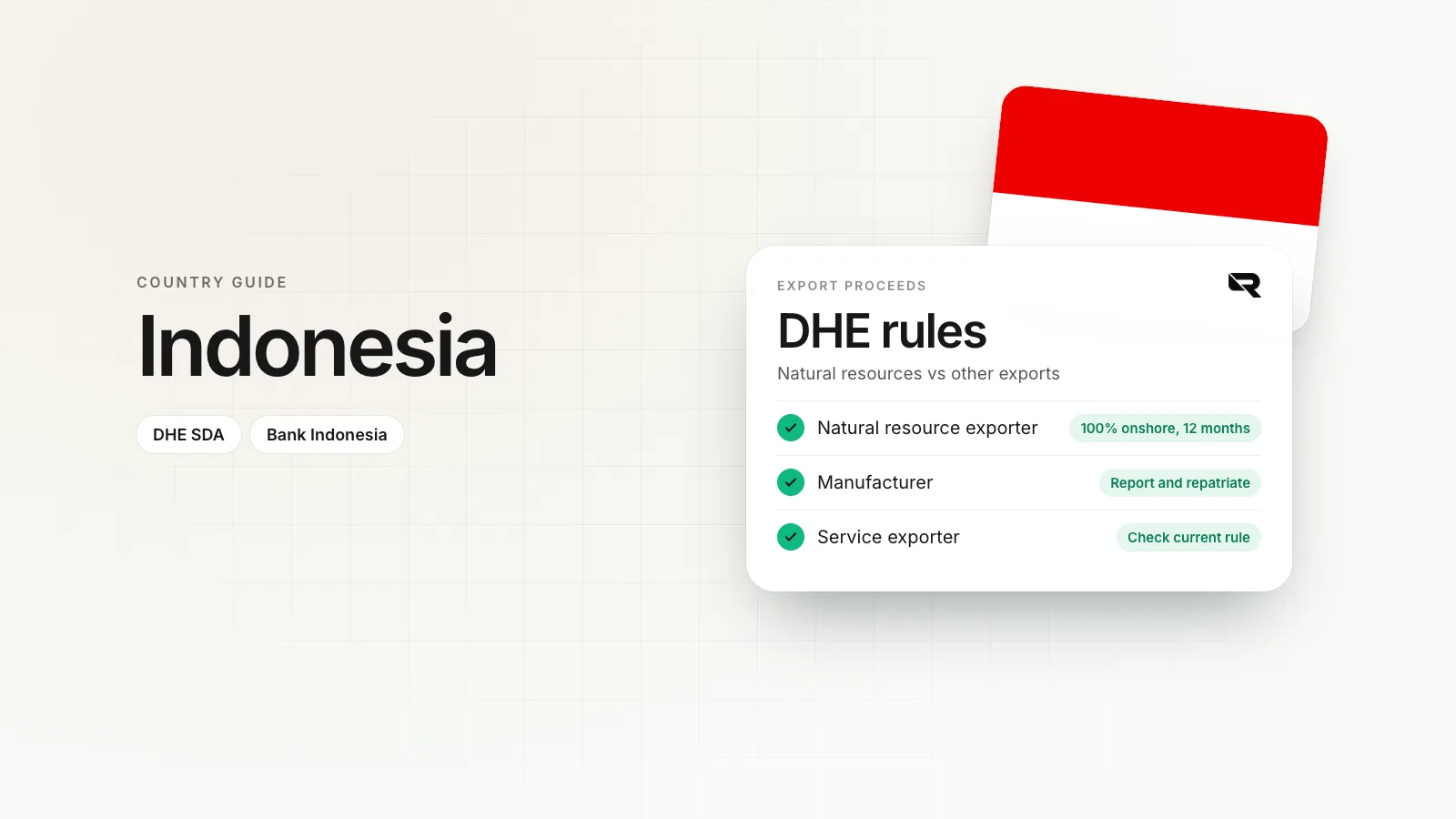
Export proceeds come into Indonesia and are reported through banks under Bank Indonesia's DHE rules. Manufacturers are outside the 100 percent retention rule that applies to natural resource exporters, but still repatriate and report.
Paying into Indonesia: the local rail
| What | Detail |
|---|---|
| Local rail | BI-FAST |
| Run by | Bank Indonesia |
| Settlement | Seconds, 24/7 |
| Published fee | Capped by Bank Indonesia at Rp2,500 per transfer for the customer |
Source: Bank Indonesia: BI-FAST. Checked when this guide was last updated; the scheme's own page has the current figures.
Where Rivet fits
Rivet opens business accounts for registered companies after verification. Indonesia-registered exporters must bring proceeds into Indonesia, so check with your bank before receiving funds abroad. Where available, Rivet's payouts can deliver rupiah to Indonesian bank accounts from partners abroad who bank with Rivet. Rivet is not a bank; regulated partner institutions hold the funds.
See how tariffs get paid.
Questions people ask
What tariff applies to Indonesian goods in the US?
Under the 2025 arrangement, most Indonesian goods face a 19 percent tariff, with some products treated differently. Check your HS code with a customs broker.
Who pays the US tariff?
The importer of record. On FOB or FCA terms that is usually the US buyer; on DDP terms it is the seller.
How can exporters protect margins?
Negotiate who bears the tariff, keep pricing in dollars, take deposits and use letters of credit for large or new buyers.
Do Indonesian exporters need to bring US proceeds home?
Yes. Export proceeds are brought into Indonesia and reported under Bank Indonesia's DHE rules.
Sources
Rashidatou writes Rivet's guides to how money moves between countries: the payment rails, what each one costs, and the account details a company needs to get paid in another currency. Every figure in Rashidatou's articles is traced to the scheme rulebook, the regulator or the provider's published price list, and those sources are listed at the end.
More from Rashidatou K. →This article is general information, not legal, tax or financial advice. Rules and fees change; check the sources above and the provider’s current terms before you act on them.
- indonesia
- exports
- us tariffs
- footwear
- furniture
- usd