Gulf business payments: Qatar, Kuwait, Oman and Bahrain
Currency pegs make dollar revenue simple in the Gulf. The work is in the tax rules: Qatar's 5 and 7 percent withholding, Kuwait's 5 percent retention, Oman's 5 percent VAT and 10 percent withholding, and Bahrain's 10 percent VAT with zero-rated exports.
- Published
- Reading time
- 6 min read
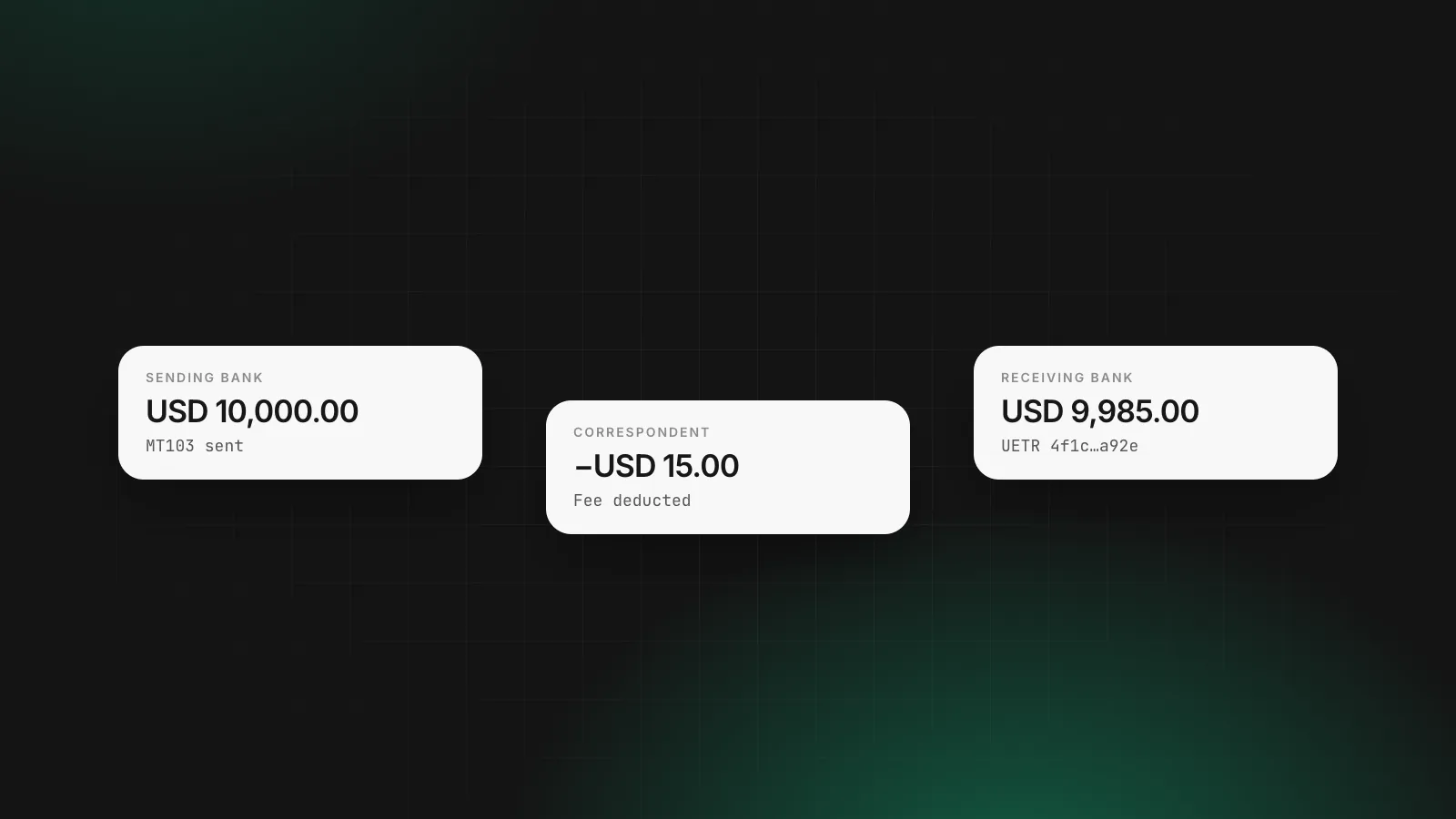
Companies in Qatar, Kuwait, Oman and Bahrain carry little exchange risk on dollar revenue, because their currencies are pegged to the US dollar or, in Kuwait, to a basket. Their costs come from intermediary fees, conversion spreads and tax: withholding on payments to foreign providers, Kuwait's contract retention, and VAT rules for exporting services.
Jump to a country: Qatar · Kuwait · Oman · Bahrain
How the four countries compare
| Country | Currency | Main tax rule on cross-border payments | Local rail |
|---|---|---|---|
| Qatar | Riyal, pegged at 3.64 per dollar since 2001 | 5 or 7 percent withholding on payments to non-residents for work in Qatar, filed through Dhareeba by the 16th of the next month | Fawran instant payments, seconds, 24/7 |
| Kuwait | Dinar, pegged to an undisclosed basket since 2007 | Retain 5 percent of contract payments until the contractor shows a tax clearance certificate | Bank transfers |
| Oman | Rial, pegged to the dollar | 10 percent withholding on royalties, software, research and development and management fees; 5 percent VAT with zero-rated exports of services | Bank transfers |
| Bahrain | Dinar, pegged at 0.376 per dollar | 10 percent VAT with zero-rated exports of services | Fawri+ in seconds, 24/7; Fawri within the day |
Qatar: the riyal peg and withholding tax on foreign contractors
Qatar Central Bank has kept the riyal at 3.64 to the US dollar since 2001, so a Qatari company's dollar revenue is close to riyal revenue. Converting between them costs a spread, but the rate does not swing. Qatari SMEs lose money on FX in three other places:
- International transfers. A dollar wire from a US client can lose intermediary fees on the way, so less arrives than was invoiced.
- Floating currencies. Euro, pound, rupee and peso costs move against the riyal; a German supplier paid in euros costs more riyals when the euro rises.
- Conversion spreads. Buying euros at the bank's rate each time a supplier invoice falls due adds up.
The fixes follow from that. Ask US clients to pay by ACH to US account details, and hold dollars for dollar costs instead of converting to riyals and back. Buy euros and pounds in planned amounts, and pay freelancers in India or the Philippines in their own currency on local rails so they receive the agreed amount.
Paying foreign contractors brings Qatari withholding tax when a non-resident without a permanent establishment in Qatar carries out work in Qatar: 5 percent on royalties and technical fees, and 7 percent on interest, commissions, brokerage, director's fees and other services. The payer remits it and files through the General Tax Authority's Dhareeba portal by the 16th of the following month. Services performed entirely outside Qatar are generally outside the regime. The full rules, treaty relief and gross or net pricing are in our guide to Qatar withholding tax on foreign contractors.
Kuwait: the dinar basket and the 5 percent contract retention
The Kuwaiti dinar is pegged to a basket of the currencies of Kuwait's main trade and financial partners. The weights are not published, though the dollar is generally understood to dominate, and Kuwait moved back to the basket in 2007 after a period pegged to the dollar alone. In practice the dinar moves a little against the dollar and more against the euro.
Kuwaiti importers pay US and many Asian suppliers in dollars, European suppliers in euros, and Chinese suppliers in dollars or sometimes yuan. A retailer converting dinars at its bank each time an invoice falls due can pay conversion spreads worth a month's rent over a year. Four habits cut that cost:
- Buy currency in planned amounts, for example once a month for known payments.
- Hold dollars and euros for recurring suppliers.
- Compare rates; retail bank rates for small companies can be wide.
- Settle who pays transfer fees in each supplier contract.
Confirm any email announcing new supplier bank details by phone with a known contact, and require two approvers for the first payment to new details.
Contracts for work in Kuwait carry one more rule. Under the income tax executive regulations, Kuwaiti entities must notify the tax department of contracts and retain 5 percent of each payment to contractors and subcontractors, including foreign companies, or of the final payment if larger, until the contractor presents a tax clearance certificate. A payer that releases it early can be liable for the contractor's tax. See Kuwait's 5 percent retention on contract payments.
Oman: VAT on exports and withholding tax on foreign providers
Oman has charged VAT at a standard rate of 5 percent since 16 April 2021, level with the UAE as the lowest rate among GCC states that have VAT. An exported service can be zero-rated when the customer has no place of residence in Oman or another GCC implementing state and the service is used or benefited from outside them. Services related to property in Oman, or used in Oman, do not qualify. The Tax Authority expects, for each foreign client, the contract, the client's registration and address abroad, the invoice at 0 percent with the reason, and evidence of use abroad, such as delivery of reports to the client's offices. Clients in other GCC states follow separate rules.
Oman's withholding tax on payments to foreign providers is 10 percent of the gross amount. It applies to foreign companies with no permanent establishment in Oman, or whose income is not connected to one, for:
- royalties,
- consideration for research and development,
- consideration for the use or right to use computer software,
- management fees,
- other categories the law adds, such as dividends and interest under specific rules.
The Omani payer withholds the tax, files the return and pays the Tax Authority within 14 days after the end of the month of payment, and is responsible if it fails to withhold. Treaties can reduce the rate: get the provider's certificate of tax residence and follow the Tax Authority's procedure. Foreign vendors often quote net of withholding; if you agree to gross up, you bear the 10 percent on top, so settle it in the contract.
The rial is pegged to the dollar. Clients in India, Europe or the US paying by international transfer can be slow and lose fees; US, euro and sterling details let them pay domestically.
Bahrain: VAT zero-rating for exported services and billing global clients
In Bahrain, VAT on exports of services is zero-rated when the customer has no place of residence in Bahrain or another GCC implementing state and the service is used or benefited from outside them, under conditions in the law and the National Bureau for Revenue's guides. The standard rate has been 10 percent since 1 January 2022, up from 5 percent when VAT arrived in 2019. Services connected to property in Bahrain, or used in Bahrain, do not qualify. For each foreign client keep the contract naming the client and its address abroad, the client's registration details, the invoice showing 0 percent and the reason, and evidence the service was used outside Bahrain, such as deliverables sent abroad. Services to clients in Saudi Arabia, the UAE or Oman are not automatically exports, because GCC rules treat supplies between implementing states differently.
Bahraini startups billing GCC and global clients face little rate risk inside the Gulf. The Central Bank of Bahrain pegs the dinar at 0.376 per dollar, and the Saudi riyal, UAE dirham, Qatari riyal and Omani rial are pegged to the dollar too. Pounds and euros float, so hold them to pay costs in those currencies, such as UK contractors, European cloud regions and conference travel, and convert the surplus on a schedule. Saudi and UAE clients pay by international transfer, which GCC interbank links have made faster. UK clients can pay sterling details by Faster Payments, EU clients a euro IBAN by SEPA, and US clients US details by ACH. At home, Fawri+ moves dinars in seconds around the clock. For neighbouring markets, see UAE multi-currency business accounts and international transfers from Saudi Arabia.
Where Rivet fits
Companies registered in supported countries can apply for a Rivet business account, and availability for each country is confirmed during verification. Local rules still apply. Approved companies get US account details in their own name on every plan and euro and sterling details from the Growth plan, and can hold dollars and euros. They pay contractors and suppliers in 120+ countries with each payment matched to its invoice, which keeps VAT evidence and retained amounts easy to trace. Rivet does not file Gulf tax returns or issue clearance certificates. See how the account details work. Rivet is not a bank; regulated partner institutions hold the funds.
Questions people ask
Is the Qatari riyal pegged to the dollar?
Yes. Qatar Central Bank has maintained a peg of 3.64 riyals per US dollar since 2001.
Is the Kuwaiti dinar pegged to the dollar?
Not solely. Since 2007 it has been pegged to an undisclosed weighted basket of currencies, generally understood to be dominated by the dollar.
What is Oman's VAT rate?
5 percent standard rate, introduced on 16 April 2021, with zero-rated and exempt categories.
Which payments carry withholding tax in Oman?
Royalties, consideration for research and development, use or right to use computer software, management fees, and other categories listed in the income tax law, including dividends and interest under rules introduced over time. The rate is 10 percent of the gross amount, subject to treaty relief.
When must Oman withholding tax be paid?
Within 14 days after the end of the month in which the payment was made or credited.
What is Bahrain's VAT rate?
10 percent since 1 January 2022, up from 5 percent when VAT was introduced in 2019.
Do services to Saudi or UAE clients count as exports for Oman or Bahrain VAT?
Not automatically. GCC rules on services between implementing states differ from the rules for customers outside the GCC. Check the treatment with your adviser.
What are Qatar's withholding rates on payments to foreign firms?
5 percent for royalties and technical fees; 7 percent for interest, commissions, brokerage fees, director's fees, attendance fees and payments for other services carried out in Qatar.
Sources
- 01Qatar Central Bank
- 02General Tax Authority (Qatar): Withholding tax
- 03Central Bank of Kuwait: Exchange rate policy
- 04Ministry of Finance (Kuwait): Tax administration
- 05Oman Tax Authority: VAT
- 06Oman Tax Authority: Withholding tax
- 07Central Bank of Oman
- 08National Bureau for Revenue (Bahrain)
- 09Central Bank of Bahrain
- 10BENEFIT: Fawri and Fawri+
- 11Qatar Central Bank: Fawran
- 12International Monetary Fund: Bahrain
William covers what happens once a company starts moving money: getting the business verified, paying contractors and suppliers abroad, and keeping card spend under control. William writes for the founder or finance lead who has to make it work this week, and links every rule cited to the text it comes from.
More from William Sunjo M. →This article is general information, not legal, tax or financial advice. Rules and fees change; check the sources above and the provider’s current terms before you act on them.
- gcc
- qatar
- kuwait
- oman
- bahrain
- withholding-tax
- vat
- currency-peg