Kuwait's 5 percent retention on contract payments: what companies paying foreign contractors must do
A Kuwaiti company paying a foreign engineering firm for work on a project cannot simply pay the full invoice. Kuwait's tax rules require it to hold back 5 percent of each payment until the contractor produces a tax clearance certificate. Paying in full can make the Kuwaiti company liable.
- Published
- Reading time
- 1 min read
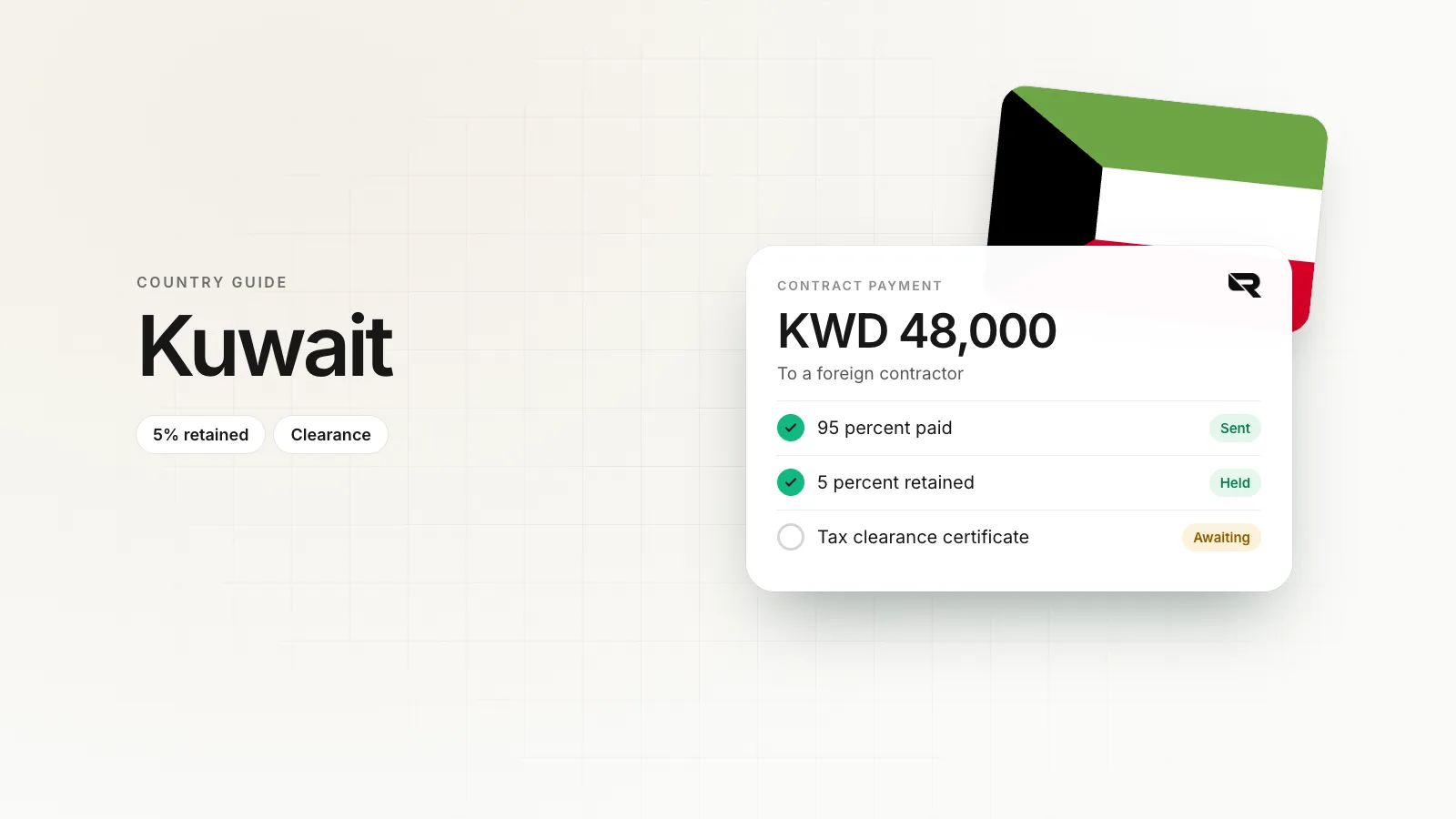
A Kuwait City developer hires a European engineering firm for KWD 480,000 of design and supervision work on a residential tower. Each month it pays 95 percent of the firm's invoice and holds 5 percent. At the end of the project the firm asks for the retained amount. The developer replies that it needs to see the firm's tax clearance certificate first. That is the rule.
The retention rule
Kuwait taxes foreign companies on income from activities in Kuwait. To secure that tax, the income tax executive regulations require Kuwaiti entities that contract with contractors and subcontractors to:
- notify the tax department of the contract,
- retain 5 percent of each payment, or of the final payment if that is larger,
- release the retention only when the contractor presents a tax clearance certificate from the Ministry of Finance.
The rule covers foreign companies doing work and services in Kuwait.
Why the payer cares
If a Kuwaiti company releases the retention without clearance, it can be held liable for the contractor's unpaid tax. The 5 percent is the payer's protection, so finance teams hold it firmly.
Planning with contractors
- Put it in the contract. State that 5 percent is retained until clearance, so the contractor plans for it.
- Notify the contract to the tax department as required.
- Track retentions per contractor and project.
- Release promptly once clearance arrives.
Paying the 95 percent
The regular payments still have to reach the contractor. Foreign contractors receive international transfers from Kuwaiti banks, usually in dollars or euros. Agree the currency and who bears transfer charges in the contract.
Where Rivet fits
Rivet does not handle Kuwaiti tax filings or clearance. A Rivet business account accepts registered companies after verification, including Kuwaiti companies, subject to local rules, and pays contractors in 120+ countries from dollar and euro balances, with each payment matched to its invoice so retained amounts are easy to track. Rivet is not a bank; regulated partner institutions hold the funds.
Questions people ask
What is the 5 percent retention in Kuwait?
A requirement under Kuwait's income tax executive regulations that entities retain 5 percent of contract payments, or of the final payment if larger, until the contractor provides a tax clearance certificate from the Ministry of Finance.
Does it apply to foreign suppliers of goods?
It applies to contracts and subcontracts for work and services in Kuwait. Pure supplies of goods from abroad are treated differently. Check your contract type.
When can the retention be released?
When the contractor presents a tax clearance certificate showing it has met its Kuwaiti tax obligations.
What happens if a company releases it early?
It can be held liable for taxes due from the contractor.
Sources
William covers what happens once a company starts moving money: getting the business verified, paying contractors and suppliers abroad, and keeping card spend under control. William writes for the founder or finance lead who has to make it work this week, and links every rule cited to the text it comes from.
More from William Sunjo M. →This article is general information, not legal, tax or financial advice. Rules and fees change; check the sources above and the provider’s current terms before you act on them.
- kuwait
- retention
- tax clearance
- contractors
- mof
- foreign companies