E-Rechnung in Germany: what the e-invoice rules mean for companies that also bill abroad
Every German business has had to accept e-invoices since 1 January 2025, and the obligation to issue them phases in from 2027. The rules cover domestic B2B invoices. Foreign clients sit outside them, which creates two invoicing tracks for exporters.
- Published
- Reading time
- 3 min read
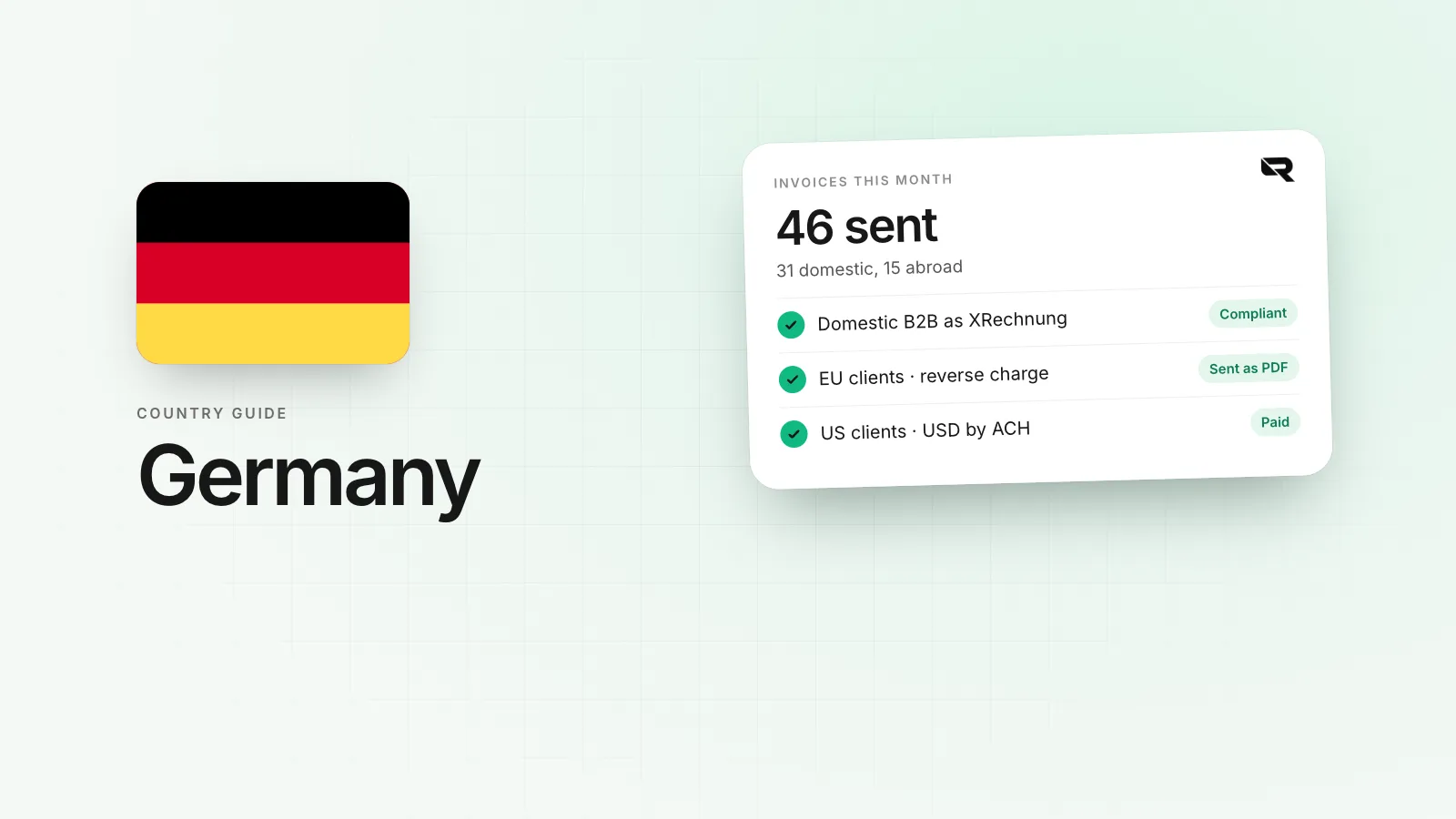
A Hamburg logistics software company sends about 45 invoices a month. Thirty go to German customers, and from 2027 every one of those must be a structured e-invoice. Fifteen go to customers in Austria, the Netherlands and the US, and those can carry on as PDFs. The company now runs two invoicing tracks, and the second one is where payment problems sit.
What the law requires and when
Germany's Growth Opportunities Act (Wachstumschancengesetz) made electronic invoicing mandatory for domestic business-to-business supplies.
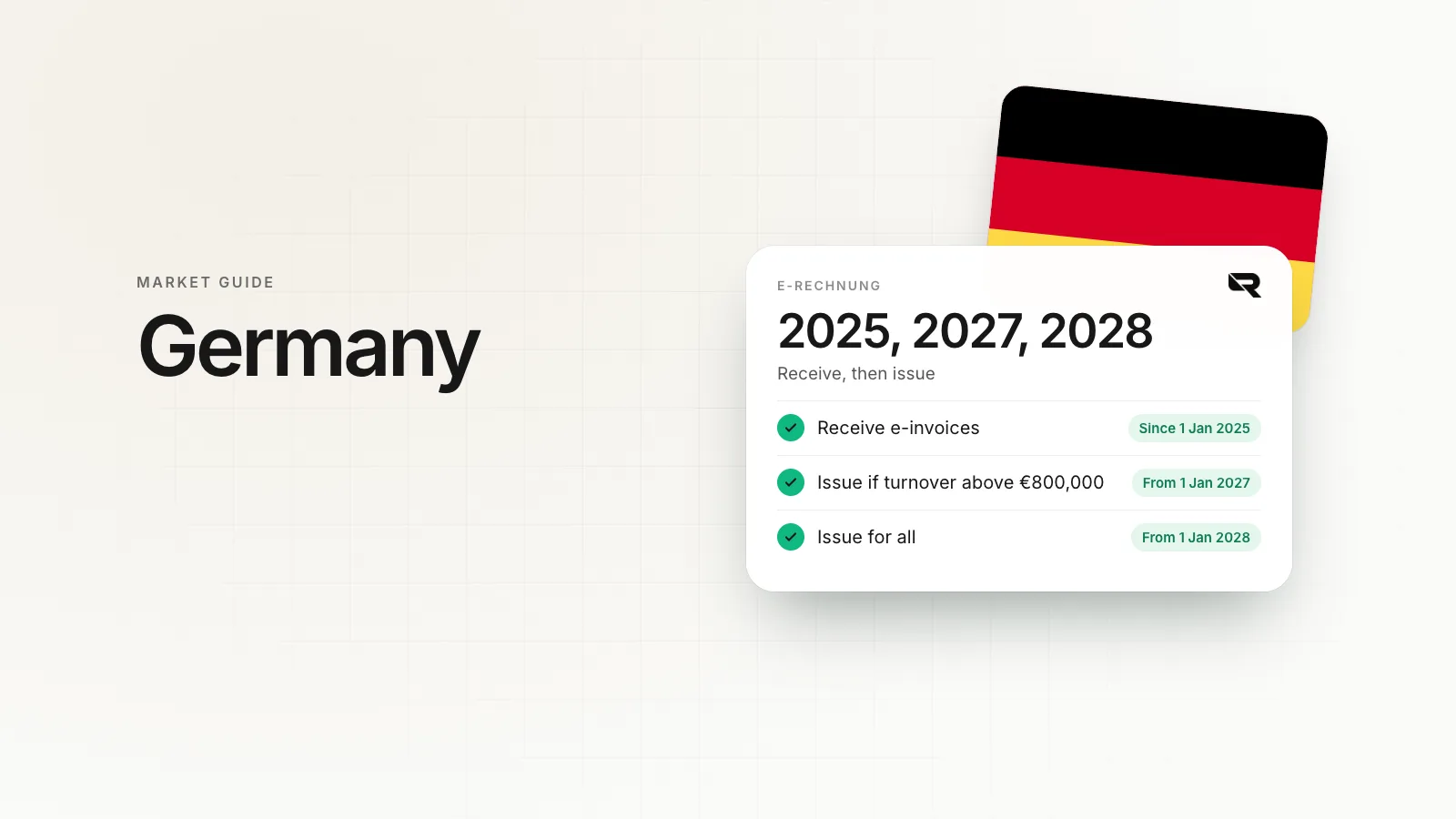
- Since 1 January 2025: every business must be able to receive e-invoices.
- From 1 January 2027: businesses with prior-year turnover above €800,000 must issue them.
- From 1 January 2028: every business must issue them.
Invoices up to €250 and some specific supplies are exempt.
What counts as an e-invoice
An e-invoice is a structured file a computer can read without interpretation, following the European standard EN 16931. In practice that means:
- XRechnung, a pure XML format used widely with public authorities.
- ZUGFeRD from version 2.0.1, a PDF with embedded XML, readable by people and machines.
A PDF on its own, even one generated by accounting software, is now an "other electronic invoice" and loses its standing as companies reach their issuing deadline.
Foreign customers: outside the mandate
The rules apply between businesses established in Germany. An invoice to a client in Vienna or Austin is not covered. You can keep sending PDFs, or whatever the client's accounts payable system accepts.
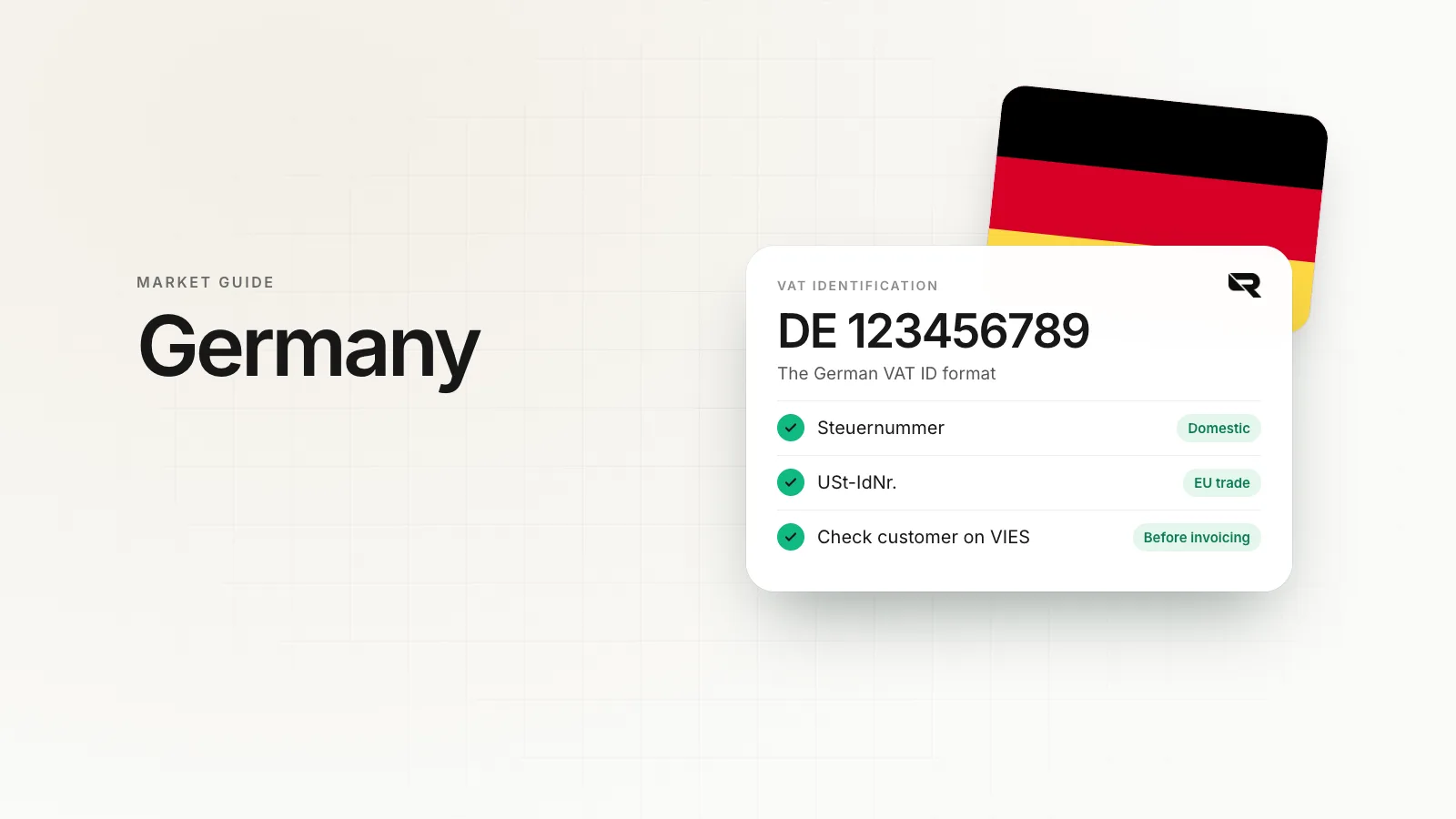
The VAT content rules still apply. For services to EU business customers, the invoice shows no German VAT, gives both VAT numbers and refers to the reverse charge. For customers outside the EU, it states the service is not taxable in Germany. The EU's own e-invoicing plans for cross-border trade, under the VAT in the Digital Age package, will eventually change this, but not before 2030.
Where the second track goes wrong
Foreign invoices are where German companies wait longest for money. Austrian and Dutch clients pay quickly by SEPA. American clients asked to pay a German IBAN must send an international wire, which arrives with deductions and is converted at the bank's rate on arrival. Some pay weeks late simply because foreign wires need an extra approval.
Two fixes are worth making while you rework invoicing anyway:
- Put payment details on foreign invoices that the client can pay domestically: euro IBAN for the EU, US account details for American clients.
- Match incoming foreign payments to invoices automatically, so a short payment shows up at once.
Paying into Germany: the local rail
| What | Detail |
|---|---|
| Local rail | SEPA Instant Credit Transfer |
| Run by | European Payments Council scheme, run by each bank |
| Settlement | Under ten seconds, 24/7 |
| Published fee | By the EU Instant Payments Regulation, no more than the bank charges for a standard SEPA transfer |
Source: European Payments Council: SEPA Instant Credit Transfer. Checked when this guide was last updated; the scheme's own page has the current figures.
Where Rivet fits
Rivet does not create XRechnung or ZUGFeRD files; keep your accounting software for that. A Rivet business account handles the foreign side: US account details for every plan, so American clients pay by ACH, plus euro and sterling details from the Growth plan, all in the company's own name. Payments are matched against invoices, and balances can be held or converted at a rate shown before confirming. Rivet is not a bank; regulated partner institutions hold the funds.
For other countries' timelines, see e-invoicing mandates from 2026 to 2028.
Questions people ask
Does the German e-invoice obligation apply to invoices for foreign clients?
No. It covers B2B supplies between businesses established in Germany. Invoices to customers abroad can be PDFs or another agreed format, though the normal VAT invoice content rules still apply.
Which formats count as an E-Rechnung?
Structured formats that comply with the European standard EN 16931, such as XRechnung, and hybrid formats like ZUGFeRD from version 2.0.1, which combine a PDF with embedded XML. A PDF alone is no longer an e-invoice.
Can small businesses still send PDF invoices?
Until the end of 2026, all businesses may send paper or PDF invoices in domestic B2B. Businesses with turnover up to €800,000 may continue until the end of 2027. Small invoices up to €250 are exempt.
Do I need special software to receive e-invoices?
You need a way to receive and read the XML, which many accounting tools now provide. An email inbox that accepts the files is enough to receive; storage and processing need proper software.
Sources
William covers what happens once a company starts moving money: getting the business verified, paying contractors and suppliers abroad, and keeping card spend under control. William writes for the founder or finance lead who has to make it work this week, and links every rule cited to the text it comes from.
More from William Sunjo M. →This article is general information, not legal, tax or financial advice. Rules and fees change; check the sources above and the provider’s current terms before you act on them.
- germany
- e-rechnung
- e-invoicing
- xrechnung
- zugferd
- vat