Ethiopian coffee exporters: contracts, ECTA rules and getting paid
Ethiopian coffee is sold to roasters from Hamburg to Tokyo, often as traceable specialty lots. Every export contract and shipment passes through regulatory steps, and payment comes against documents. Small mistakes cost weeks.
- Published
- Reading time
- 1 min read
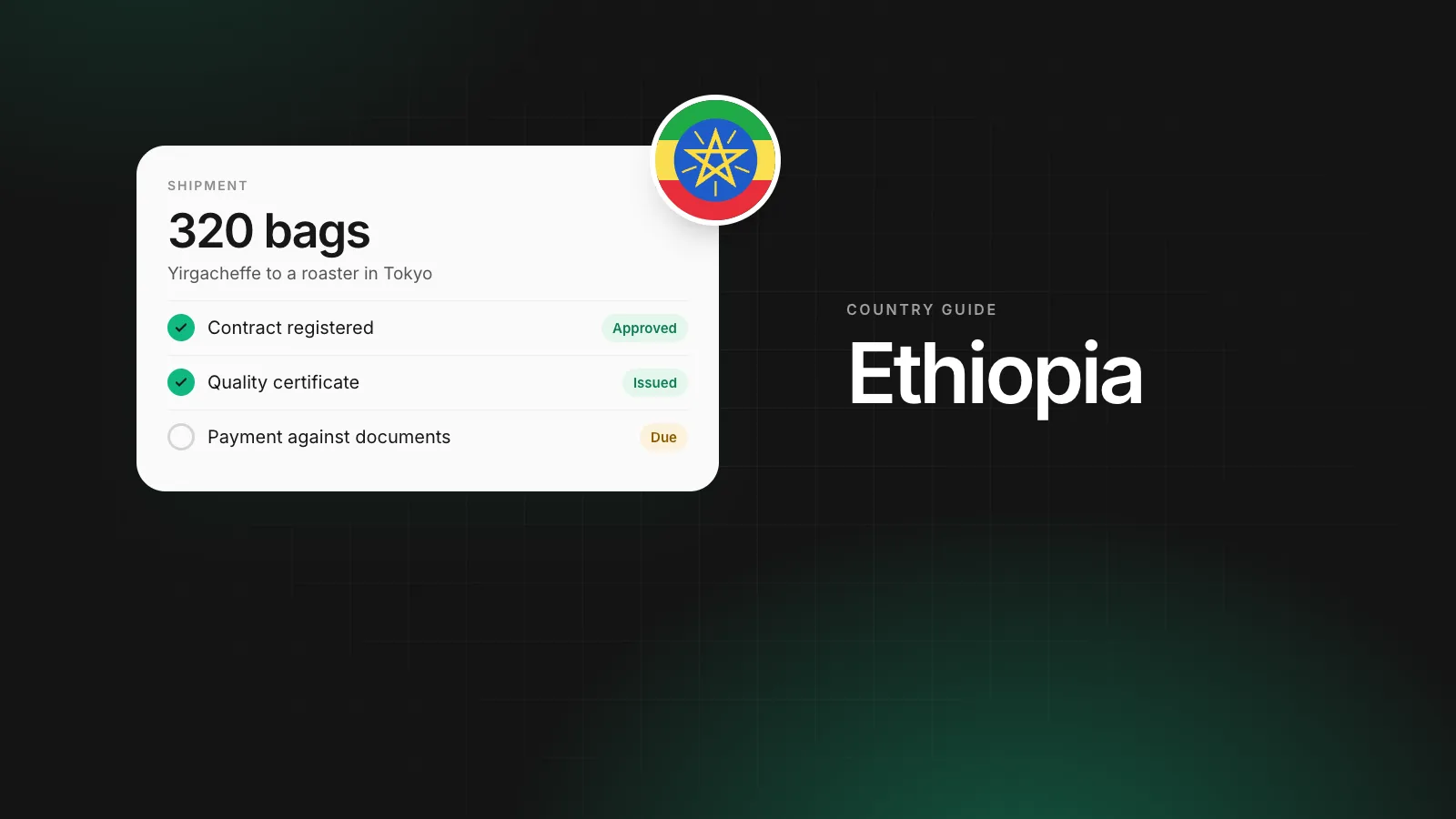
A Yirgacheffe cooperative union sells 320 bags of washed coffee to a specialty roaster in Tokyo. Before shipping, the contract is registered, the coffee is graded and certified, and the shipping documents are prepared. The roaster's bank pays when the documents arrive and match the contract.
Contracts
Coffee export contracts are registered with the authorities, which check prices against the market and the rules. Reforms have opened more direct sales by producers and cooperatives to buyers abroad, alongside traditional exporters.
Quality
ECTA inspects and certifies coffee quality before export. Specialty buyers also cup samples themselves. Grade and cupping results must match the contract.
Documents
- Registered contract.
- Quality certificate.
- Certificate of origin and phytosanitary certificate.
- Bill of lading or air waybill.
- Commercial invoice and packing list.
Discrepancies delay payment.
Payment and proceeds
Buyers pay in dollars, against documents or under letters of credit, through Ethiopian banks. Proceeds are repatriated, and exporters retain a share in foreign currency under NBE rules.
Paying into Ethiopia: the local rail
| What | Detail |
|---|---|
| Local rail | EthSwitch interbank transfers |
| Run by | EthSwitch, owned by the National Bank of Ethiopia and the banks |
| Settlement | Minutes between participating banks |
Source: EthSwitch. Checked when this guide was last updated; the scheme's own page has the current figures.
Where Rivet fits
Rivet is not a bank and does not handle Ethiopian export documentation. Ethiopian exporters receive proceeds through Ethiopian banks under NBE rules. Where available, roasters and buyers abroad that bank with Rivet can pay Ethiopian bank accounts through Rivet's payouts. Regulated partner institutions hold Rivet customers' funds.
Questions people ask
Do coffee export contracts need registration?
Yes. Contracts are registered with the authorities, which check prices and terms against the rules.
Who certifies coffee quality for export?
ECTA's quality inspection and certification, before shipment.
How do buyers pay?
In dollars, against documents or under letters of credit, through Ethiopian banks.
Can exporters sell directly to roasters?
Reforms have allowed more direct sales, including by producers and cooperatives, under ECTA rules.
Sources
Rashidatou writes Rivet's guides to how money moves between countries: the payment rails, what each one costs, and the account details a company needs to get paid in another currency. Every figure in Rashidatou's articles is traced to the scheme rulebook, the regulator or the provider's published price list, and those sources are listed at the end.
More from Rashidatou K. →This article is general information, not legal, tax or financial advice. Rules and fees change; check the sources above and the provider’s current terms before you act on them.
- ethiopia
- coffee
- ecta
- exports
- documents
- usd