Ethiopian exporters after the 2024 foreign exchange reform
In July 2024 the National Bank of Ethiopia moved to a market-based exchange rate, ending decades of a tightly managed birr. Exporters gained more control over their foreign currency. Repatriation and reporting rules still apply.
- Published
- Reading time
- 1 min read
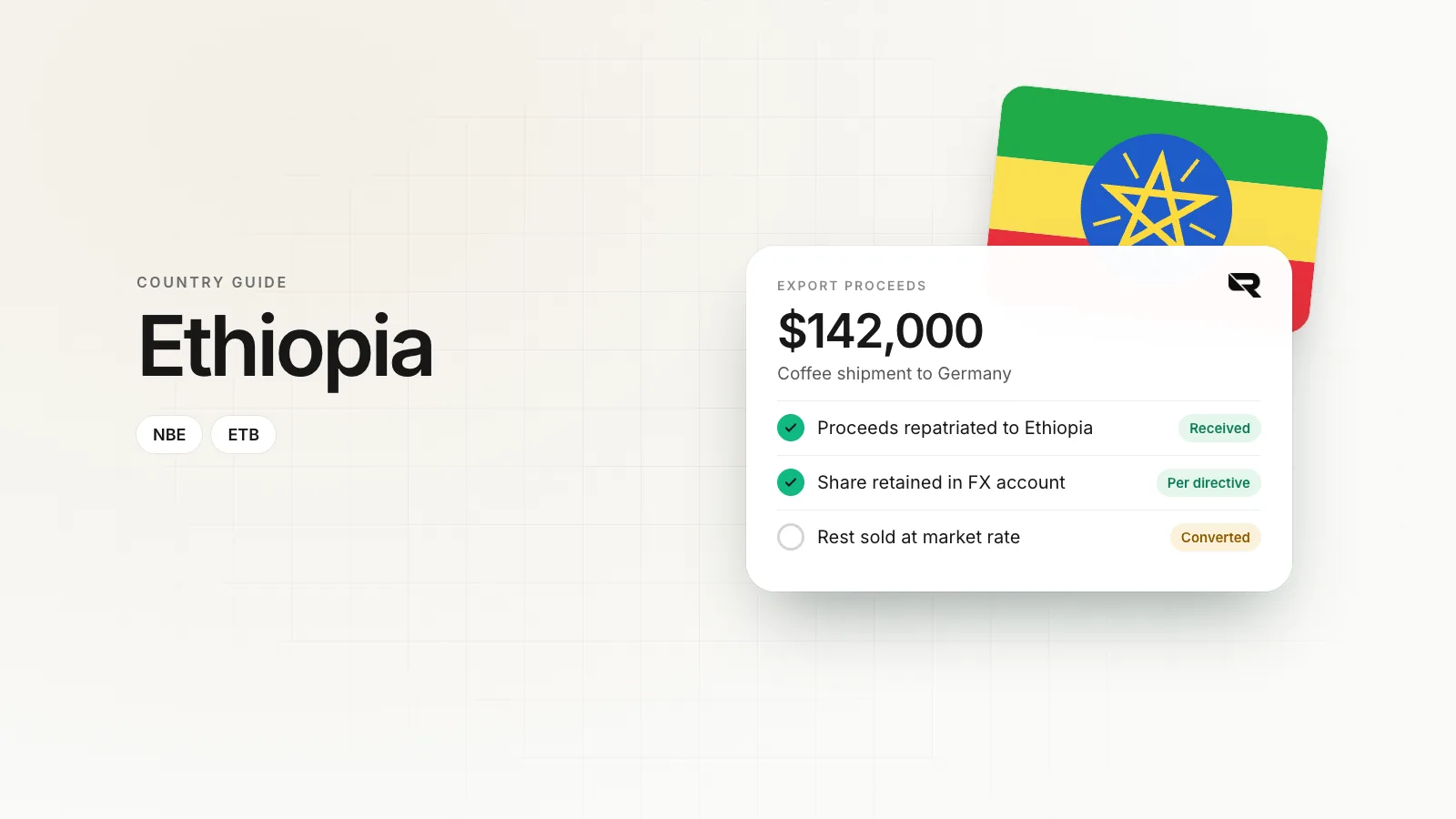
An Addis Ababa coffee exporter ships to a roaster in Hamburg. Before July 2024 its dollars were converted at an official rate far below the parallel market. Since the National Bank of Ethiopia moved to a market-based rate, the gap has narrowed, and the exporter keeps a share of its proceeds in foreign currency under the new rules.
The reform
In July 2024 the NBE ended decades of a tightly managed birr and moved to a market-based exchange rate, with IMF support. The birr fell sharply against the dollar at first, and the gap with the parallel market narrowed.
Exporters' foreign currency
The reform also changed rules for exporters:
- proceeds must still be repatriated to Ethiopia through banks,
- exporters can retain a share in foreign currency accounts, under NBE directives,
- the rest is sold at market rates.
The shares are set in NBE directives and have been revised. Ask your bank for the current position.
Using retained currency
Retained foreign currency can pay for imports of inputs, equipment and services, which was a constant problem before the reform.
Accounts abroad
Ethiopian residents generally may not hold accounts abroad. Export proceeds come into Ethiopia.
Paying into Ethiopia: the local rail
| What | Detail |
|---|---|
| Local rail | EthSwitch interbank transfers |
| Run by | EthSwitch, owned by the National Bank of Ethiopia and the banks |
| Settlement | Minutes between participating banks |
Source: EthSwitch. Checked when this guide was last updated; the scheme's own page has the current figures.
Where Rivet fits
Rivet opens business accounts for registered companies after verification. Ethiopia-registered exporters must repatriate proceeds under NBE rules, so they should not hold funds abroad. Where available, partners abroad who bank with Rivet can pay Ethiopian bank accounts through Rivet's payouts. Rivet is not a bank; regulated partner institutions hold the funds.
Questions people ask
What changed in July 2024?
The NBE moved from a tightly managed birr to a market-based exchange rate, as part of a reform programme supported by the IMF, and revised rules on foreign currency.
How much can exporters retain?
The NBE's foreign exchange directives set the share exporters can retain in foreign currency accounts. Ask your bank for the current figure.
Do exporters have to repatriate proceeds?
Yes, through Ethiopian banks, within the period set by the NBE.
Can Ethiopian companies hold accounts abroad?
Generally not. Proceeds come into Ethiopia.
Sources
William covers what happens once a company starts moving money: getting the business verified, paying contractors and suppliers abroad, and keeping card spend under control. William writes for the founder or finance lead who has to make it work this week, and links every rule cited to the text it comes from.
More from William Sunjo M. →This article is general information, not legal, tax or financial advice. Rules and fees change; check the sources above and the provider’s current terms before you act on them.
- ethiopia
- nbe
- birr
- exporters
- foreign exchange
- coffee