Paying freelancers in Poland, Ukraine and India from a Danish company
Copenhagen's software companies rely on freelancers well beyond Denmark. Poland, Ukraine and India each bring different rules on the receiving side, and a Danish krone transfer by SWIFT is rarely the best way to pay any of them.
- Published
- Reading time
- 2 min read
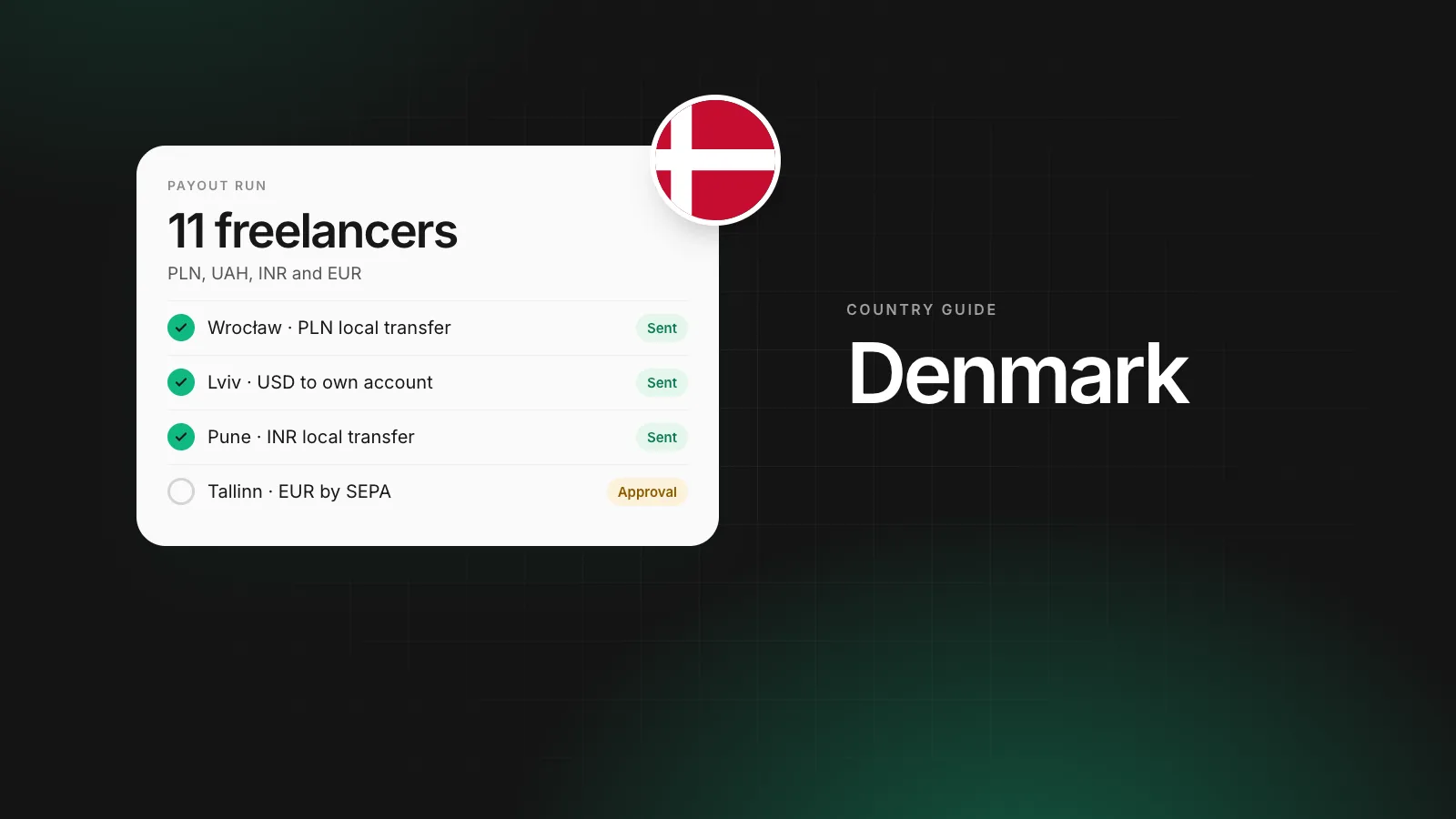
A Copenhagen fintech works with eleven freelancers: four in Wrocław, three in Lviv, three in Pune and one in Tallinn. For two years it paid everyone in Danish kroner by SWIFT. The Polish freelancers' banks converted at poor rates, two Ukrainian freelancers asked to be paid in dollars instead, and one Indian freelancer's bank held a payment until it could confirm what it was for.
The Danish side
Freelancer invoices from abroad carry no Danish moms. Under the reverse charge the Danish company declares the moms and, with full deduction, deducts it in the same return. EU freelancers, such as those in Poland or Estonia, include their VAT number where they have one.
Keep the contract, each invoice and proof of payment, plus the exchange rate for non-krone payments.
Poland
Polish freelancers, often operating as sole traders (jednoosobowa działalność gospodarcza), invoice in zloty or euros. Zloty to a local account is usually what they prefer: domestic transfers in Poland are fast, and a krone or euro transfer forces their bank to convert. Poland's own rules on disguised employment apply to exclusive long-term arrangements.
Ukraine
Many Ukrainian freelancers are registered as individual entrepreneurs (FOP) and hold foreign currency accounts. The hryvnia has moved sharply since 2022, and the National Bank of Ukraine applies currency rules that change from time to time. Freelancers often ask to be paid in dollars or euros into their own account. Ask, and record the agreed currency in the contract.
India
Indian freelancers receive rupees. Their bank needs to see the payment as an export of services, with a clear purpose, so it can issue the inward remittance record they use for income tax and, if they are registered, GST export reporting. A payment that arrives without that context can sit in review. Put "payment for software development services" or similar in the payment reference, and send the invoice if the freelancer's bank asks.
See our INR business payments guide for more.
Status
All three countries have rules on bogus self-employment, and a full-time, exclusive, open-ended freelancer arrangement looks like a job anywhere. Deliverables, own tools and hours, and other clients are the usual safeguards.
Paying into Denmark: the local rail
| What | Detail |
|---|---|
| Local rail | Straksclearing (instant clearing) |
| Run by | Finance Denmark, settled at Danmarks Nationalbank |
| Settlement | Seconds, 24/7 |
Source: Danmarks Nationalbank: payment systems. Checked when this guide was last updated; the scheme's own page has the current figures.
Where Rivet fits
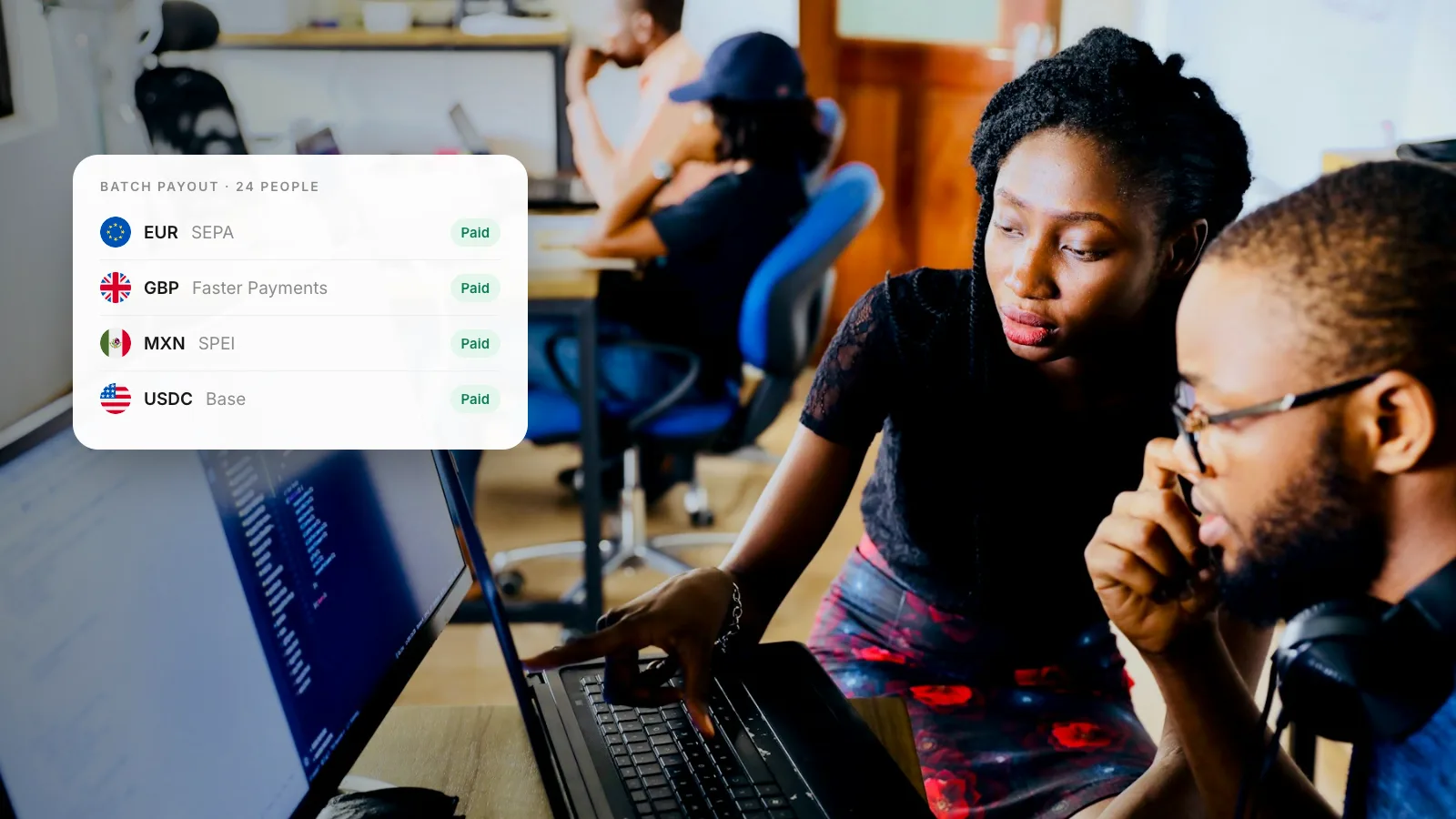
A Rivet business account pays freelancers in 120+ countries, in local currency on local rails where available, or in dollars and euros where the freelancer prefers. Bulk payouts send the month's invoices at once, the rate shows before you confirm, and from the Growth plan a second approver can be required. Rivet is not a bank; regulated partner institutions hold the funds.
Questions people ask
How do Ukrainian freelancers prefer to be paid?
Many hold foreign currency accounts and prefer dollars or euros, since the hryvnia has moved sharply and the National Bank of Ukraine applies currency rules. Ask each freelancer.
What do Indian freelancers need from a foreign payer?
A payment with a clear purpose, as an export of services, so their bank can issue the inward remittance documentation they use for tax and, where registered, GST export reporting.
Does the Danish company pay moms on foreign freelancer invoices?
It accounts for the moms under the reverse charge and, with full deduction, deducts it in the same return. The freelancer's invoice should not include Danish moms.
Should I pay freelancers in Danish kroner?
Rarely. Kroner by SWIFT are converted by the freelancer's bank, often with fees. Local currency or the freelancer's chosen currency lands the invoiced amount.
Sources
William covers what happens once a company starts moving money: getting the business verified, paying contractors and suppliers abroad, and keeping card spend under control. William writes for the founder or finance lead who has to make it work this week, and links every rule cited to the text it comes from.
More from William Sunjo M. →This article is general information, not legal, tax or financial advice. Rules and fees change; check the sources above and the provider’s current terms before you act on them.
- denmark
- freelancers
- poland
- ukraine
- india
- payouts