Danish companies selling to Germany and Sweden: VAT, reverse charge and collecting in euros and kronor
Germany and Sweden together take a large share of Danish exports. Both are EU markets, so VAT is straightforward. Currency is the part Danish companies usually leave to the bank: euros and Swedish kronor converted into Danish kroner on arrival.
- Published
- Reading time
- 2 min read
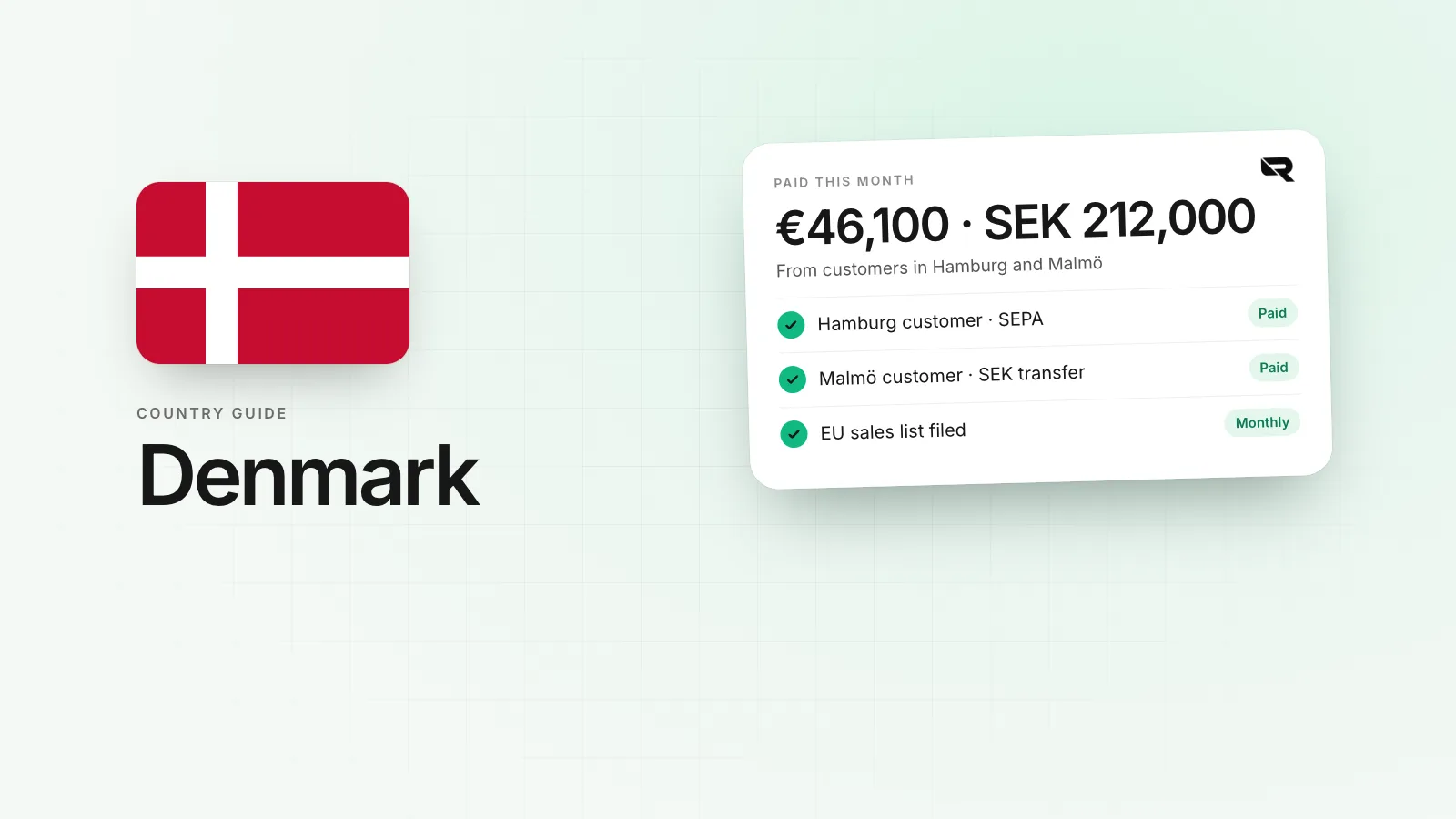
An Aarhus food packaging company invoices supermarkets in Hamburg in euros and distributors in Malmö in Swedish kronor. Both payments arrive in a Danish krone account. Both are converted on arrival. The company then buys euros for German raw material suppliers, converting back.
VAT on sales to German and Swedish businesses
Both countries are in the EU, so the rules are the familiar ones:
- Services to businesses: no Danish moms. The invoice shows both VAT numbers and states that the reverse charge applies. The customer accounts for VAT in its own country.
- Goods to businesses: zero-rated intra-EU supplies, provided you have the customer's valid VAT number and evidence that the goods left Denmark.
Both go on the EU sales list (listeindberetning) to Skattestyrelsen. Check each customer's VAT number in VIES before the first invoice and keep the result.
Euros: the peg helps, conversion still costs
The Danish krone is pegged to the euro within a narrow band under ERM II, so the rate barely moves. That removes most of the currency risk on euro revenue. It does not remove the conversion margin: each time euros become kroner, or kroner become euros, the bank takes its spread.
A company that both earns and spends euros can skip most of those conversions by holding a euro balance.
Swedish kronor: real currency risk
The Swedish krona floats. Over the past decade it has moved substantially against the euro and the Danish krone. A Danish exporter with large SEK revenue carries that movement in its margin.
Two habits help. Hold kronor and pay Swedish costs from them, such as distributors, warehousing and marketing. Then convert the surplus deliberately, on a schedule or when the rate is favourable, instead of on the day each payment lands.
Collect on local rails
German customers pay a euro IBAN by SEPA, often instantly. Swedish customers prefer to pay into an account they recognise as Swedish; when that is not possible, a krona transfer into a SEK balance still beats converting at arrival.
Paying into Denmark: the local rail
| What | Detail |
|---|---|
| Local rail | Straksclearing (instant clearing) |
| Run by | Finance Denmark, settled at Danmarks Nationalbank |
| Settlement | Seconds, 24/7 |
Source: Danmarks Nationalbank: payment systems. Checked when this guide was last updated; the scheme's own page has the current figures.
Where Rivet fits
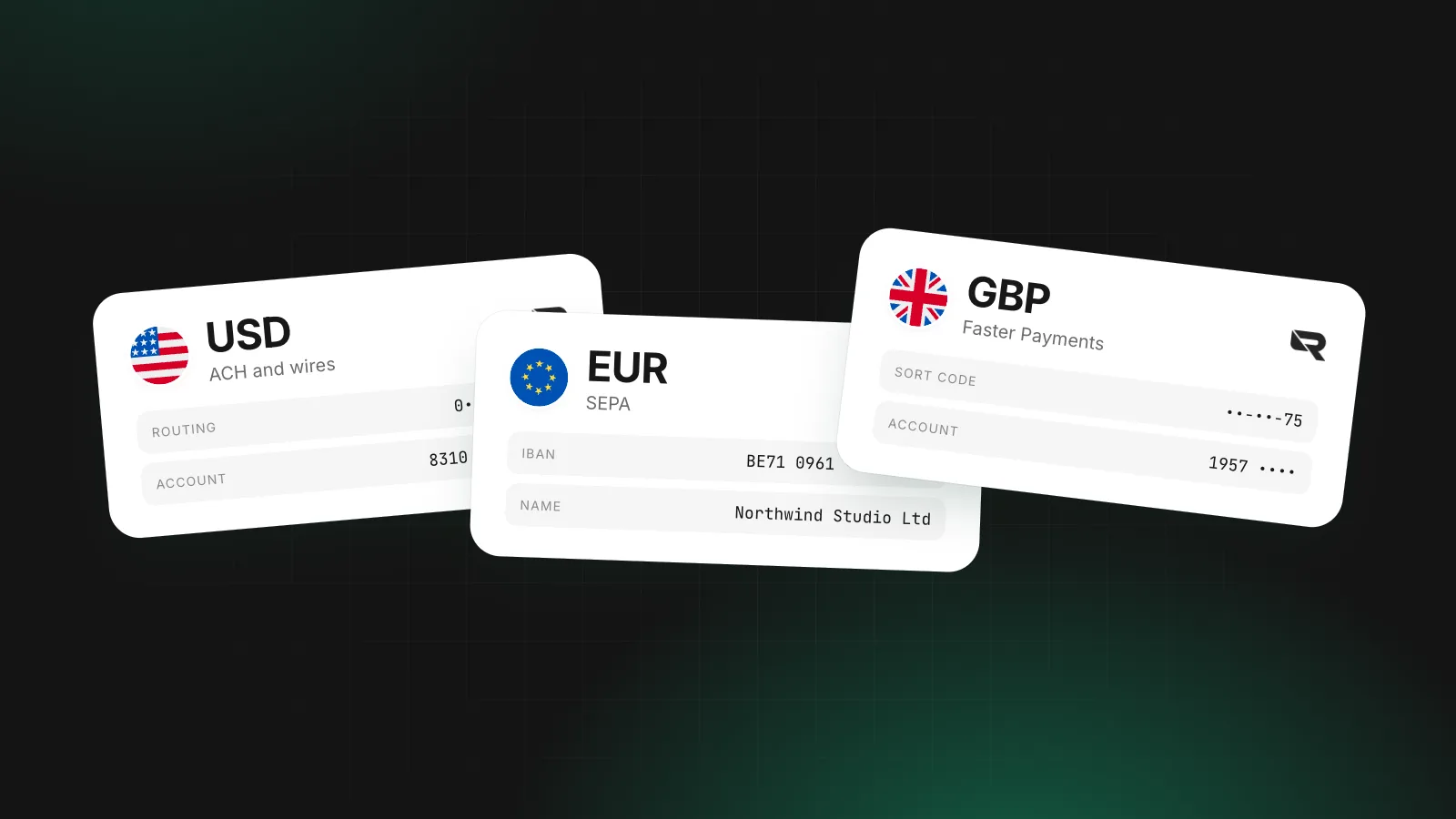
A Rivet business account gives a Danish company euro details with an IBAN and sterling details from the Growth plan, and US dollar details on every plan, all in its own name. On the Scale plan it holds balances in 30 currencies, including Swedish and Danish kroner. Payments are matched to invoices, and conversions happen at a rate shown before you confirm. Rivet is not a bank; regulated partner institutions hold the funds.
Questions people ask
Do Danish companies charge moms to German business customers?
For most services, no. The place of supply is Germany, and the German customer accounts for VAT under the reverse charge. Goods delivered to German businesses are zero-rated intra-EU supplies.
What is the EU sales list?
A report of sales to VAT-registered businesses in other EU countries, listing each customer's VAT number and the value. Danish companies file it through Skattestyrelsen, monthly or quarterly depending on the volume.
Is it worth keeping euros if the krone is pegged?
The peg limits how much the rate moves, but each conversion still costs a margin. If you pay euro suppliers, keeping euros avoids converting twice.
Should I invoice Swedish customers in SEK?
Swedish customers prefer it. SEK moves against the Danish krone, so a krona balance lets you choose when to convert.
Sources
Rashidatou writes Rivet's guides to how money moves between countries: the payment rails, what each one costs, and the account details a company needs to get paid in another currency. Every figure in Rashidatou's articles is traced to the scheme rulebook, the regulator or the provider's published price list, and those sources are listed at the end.
More from Rashidatou K. →This article is general information, not legal, tax or financial advice. Rules and fees change; check the sources above and the provider’s current terms before you act on them.
- denmark
- germany
- sweden
- reverse charge
- eur
- sek