Cross-border payments explained: how money moves between countries
A domestic payment moves between two banks on one network. A cross-border payment has to cross at least two, and every crossing adds cost and time. Here is how it works.
- Published
- Updated
- Reading time
- 2 min read
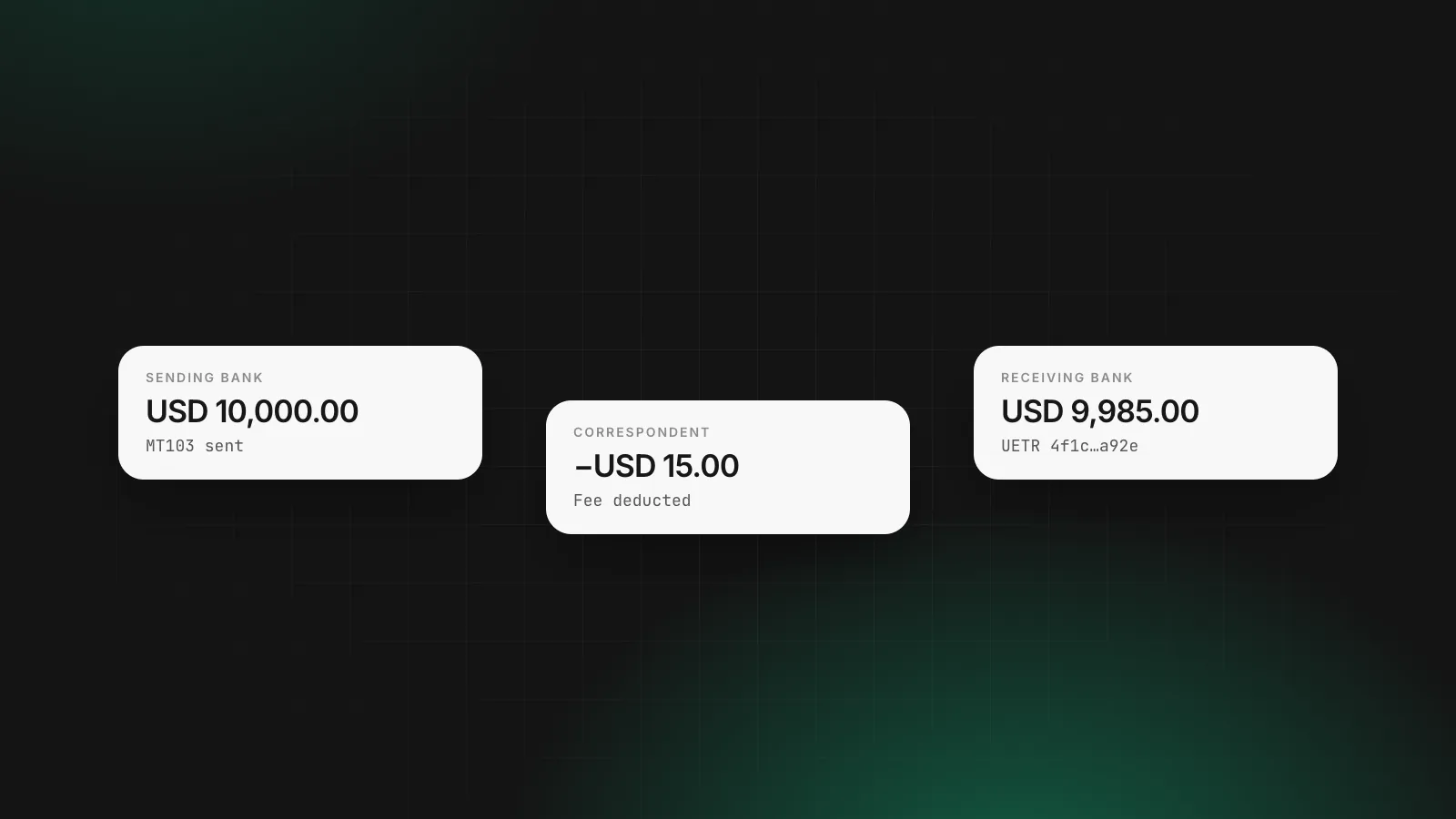
A payment between two accounts in the same country uses one domestic network. A payment between two countries cannot, because no single network covers both. Everything that makes cross-border payments slower and more expensive comes from bridging that gap.
What is a cross-border payment?
Any payment where the payer and the payee are in different countries. A US client paying a Kenyan agency, a UK company paying a supplier in Vietnam, a marketplace paying sellers in 40 countries. Most also change currency, which adds a second cost: the conversion.
The four routes money takes
| Route | How it works | Typical use |
|---|---|---|
| Correspondent banking (SWIFT) | Banks hold accounts with each other; the payment hops along a chain | Bank wires, large payments, unusual corridors |
| Local payout networks | A provider holds money in each country and pays out on the local rail | Business payouts, transfers through fintechs |
| Card networks | Visa and Mastercard settle between banks in different countries | Card payments, some push-to-card payouts |
| Stablecoins | Tokens move on a blockchain, then convert at each end | Corridors where bank routes are slow or costly |
Correspondent banking
A bank in Lagos rarely holds an account with a bank in Ohio. So it uses a correspondent, often a large bank in New York, that does. The payment message travels on SWIFT; the money moves through the correspondent's books. Each bank in the chain may take a fee and run its own checks. The SWIFT fees guide breaks down the costs.
Local payouts
Payment companies avoid the chain by holding money in many countries. When you pay a supplier in Mexico, the provider pays them from its Mexican account on Mexico's domestic rail, and you fund it from your USD balance. To the supplier it is a domestic payment. Most of the savings fintechs offer come from this.
Why cross-border payments cost more
- More systems: every network crossing adds a party and a fee.
- Currency conversion: someone converts, usually with a margin above the mid-market rate.
- Compliance: every bank screens the payment, and some hold it for questions.
- Time zones and cut-offs: two countries' bank holidays and closing times.
The G20 targets
In 2020 the G20 made cross-border payments a priority, and set targets for 2027 on cost, speed, transparency and access. One example: the global average cost of sending a 200 USD remittance should be no more than 3%. The Financial Stability Board and the BIS report progress every year. The World Bank's price data shows many corridors into Africa and South Asia remain well above that.
What a business should look at
- Which rail is used at each end. Domestic at both ends is cheapest.
- Who converts, and the margin. The true cost of international payments explains how to compare.
- How many parties touch the money.
- How you track a payment that is late.
On Rivet
Rivet receives through local details (ACH and wire in the US, SEPA in Europe, Faster Payments in the UK) and pays out on local rails in 120+ countries, or in USDC or USDT where there is no local rail. The cost of each leg is shown before you confirm. See Payouts.
Questions people ask
What does cross-border payment mean?
A payment where the sender and the recipient are in different countries. It can be a bank transfer, a card payment, a remittance or a stablecoin transfer. Most cross-border payments also change currency on the way.
Why are cross-border payments expensive?
Because the money crosses more than one system. Each bank in a correspondent chain may charge a fee, someone converts the currency with a margin, and every bank runs its own compliance checks. Local payout networks cut out most of the hops.
Which companies handle cross-border payments?
Banks through correspondent networks; money transfer operators; payment companies such as Wise, Airwallex and Payoneer; card networks such as Visa and Mastercard; and stablecoin issuers and providers. Rivet provides business accounts with cross-border payouts.
What are the G20 targets for cross-border payments?
The G20 roadmap sets 2027 targets on cost, speed, transparency and access. For example, the average cost of sending a retail remittance should fall to no more than 3%. The Financial Stability Board publishes progress reports.
Sources
Rashidatou writes Rivet's guides to how money moves between countries: the payment rails, what each one costs, and the account details a company needs to get paid in another currency. Every figure in Rashidatou's articles is traced to the scheme rulebook, the regulator or the provider's published price list, and those sources are listed at the end.
More from Rashidatou K. →This article is general information, not legal, tax or financial advice. Rules and fees change; check the sources above and the provider’s current terms before you act on them.
- cross border payments
- cross border payments meaning
- correspondent banking
- local payouts
- g20 targets