Belgian SMEs selling to the UK: customs, VAT and getting paid in pounds
The UK is one of Belgium's largest export markets outside the EU. Since 2021 a Belgian company selling there deals with customs declarations, rules of origin, UK VAT and a second currency. Each piece is manageable once.
- Published
- Reading time
- 2 min read
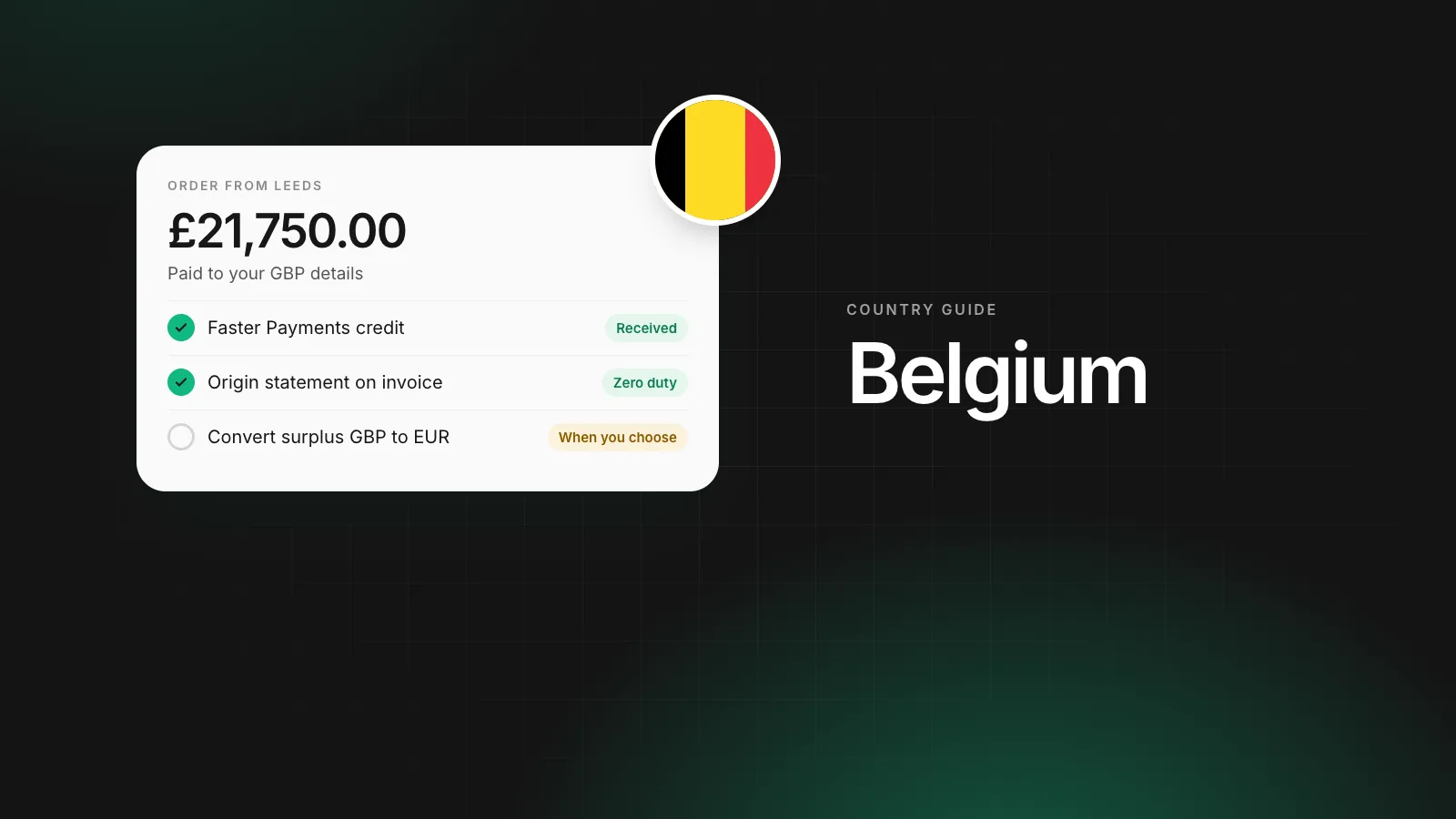
A Kortrijk furniture maker sells to retailers in Leeds and Manchester. Before 2021 a delivery to Leeds was paperwork-light, like one to Lille. Now each shipment needs customs declarations on both sides, an origin statement on the invoice, and a buyer who knows how to handle import VAT. Then the payment arrives in pounds into a euro account, converted at a rate nobody chose.
Customs on both sides
The Belgian company files an export declaration and the UK side files an import declaration. Both need an EORI number: a Belgian one for you, a UK one for your buyer or whoever acts as importer. Most small exporters use a customs broker or a freight forwarder that includes customs in the price.
Rules of origin: the zero-duty step
The EU-UK Trade and Cooperation Agreement removes duty on goods that "originate" in the EU or UK. Furniture made in Kortrijk from EU or UK materials usually qualifies. Goods assembled mostly from Asian components may not.
To claim zero duty, the exporter makes an origin statement, a set wording on the invoice, and keeps evidence that the goods meet the rule for their product code. Without it, the buyer pays the UK's normal duty rate, and a buyer surprised by duty becomes a former buyer.
UK VAT
For B2B shipments, the UK importer usually accounts for import VAT, often using postponed VAT accounting so no cash changes hands at the border. For consumer sales of £135 or less, the seller charges UK VAT at checkout and needs a UK VAT registration. Above £135, VAT is collected at import.
Services are simpler: most services to UK businesses are outside Belgian VAT, and the invoice says so.
Getting paid in pounds
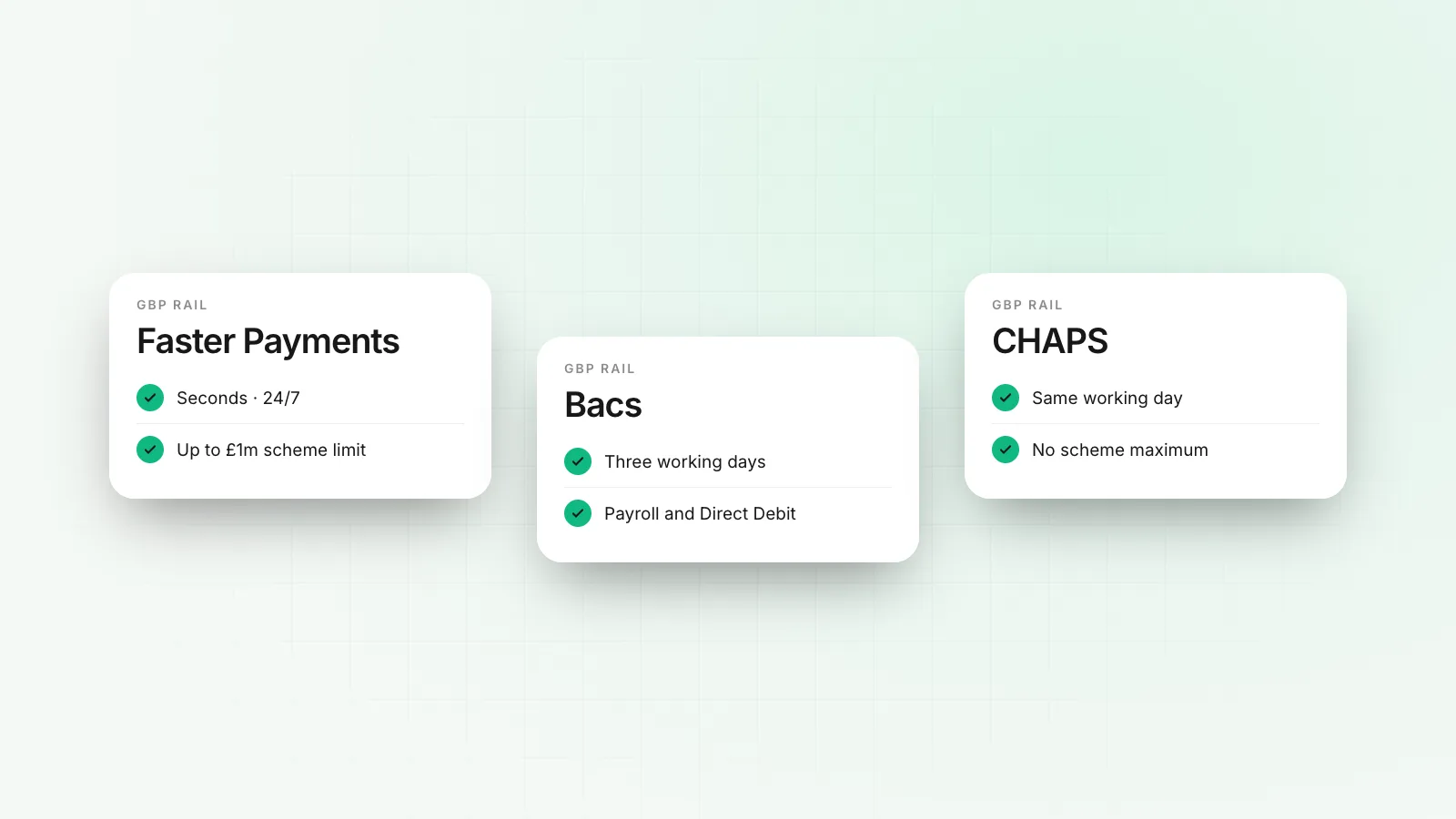
UK businesses pay each other by Faster Payments, which settles in seconds. Asked to pay a euro IBAN, a UK buyer sends an international transfer, its bank converts at its own rate, and the amount arriving in euros rarely matches the invoice to the cent.
Invoicing in pounds with sterling account details on the invoice gives the buyer a domestic payment. You receive the exact amount in pounds and decide when to convert. If you pay UK freight, a UK sales agent or trade shows in pounds, part of it never needs converting.
Paying into Belgium: the local rail
| What | Detail |
|---|---|
| Local rail | SEPA Instant Credit Transfer |
| Run by | European Payments Council scheme, run by each bank |
| Settlement | Under ten seconds, 24/7 |
| Published fee | By the EU Instant Payments Regulation, no more than the bank charges for a standard SEPA transfer |
Source: European Payments Council: SEPA Instant Credit Transfer. Checked when this guide was last updated; the scheme's own page has the current figures.
Where Rivet fits
A Rivet business account on the Growth plan gives a Belgian company sterling details for Faster Payments and euro details with an IBAN, both in its own name, plus US dollar details on every plan. Balances can be held, converted at a rate shown before you confirm, or used to pay suppliers in 120+ countries. Rivet is not a bank; regulated partner institutions hold the funds.
For more on the UK side, see postponed VAT accounting and our GBP business account guide.
Questions people ask
Is there duty on Belgian goods sold to the UK?
Not if the goods meet the rules of origin in the EU-UK Trade and Cooperation Agreement and the invoice carries an origin statement. Goods that do not qualify pay the UK's normal duty rates.
Who pays UK VAT on goods from Belgium?
For B2B imports, the UK importer usually accounts for import VAT, often through postponed VAT accounting. For consumer sales of £135 or less, the seller charges UK VAT at the point of sale and must register in the UK.
Do services to UK clients carry Belgian VAT?
For most services to UK businesses, no; the place of supply is the UK, and the invoice states that Belgian VAT does not apply.
Should I invoice UK clients in pounds?
UK buyers prefer it, and paying sterling details by Faster Payments is instant for them. Keep the pounds if you have UK costs, and convert the rest when it suits you.
Sources
Rashidatou writes Rivet's guides to how money moves between countries: the payment rails, what each one costs, and the account details a company needs to get paid in another currency. Every figure in Rashidatou's articles is traced to the scheme rulebook, the regulator or the provider's published price list, and those sources are listed at the end.
More from Rashidatou K. →This article is general information, not legal, tax or financial advice. Rules and fees change; check the sources above and the provider’s current terms before you act on them.
- belgium
- uk exports
- brexit
- eori
- rules of origin
- gbp