Belgium's Peppol e-invoicing since January 2026: what it covers and what it leaves out
Belgium made structured e-invoicing compulsory for domestic B2B sales from 1 January 2026, using the Peppol network. Invoices to clients abroad are outside the mandate, which leaves exporters with a Peppol track at home and a separate one for everyone else.
- Published
- Reading time
- 2 min read
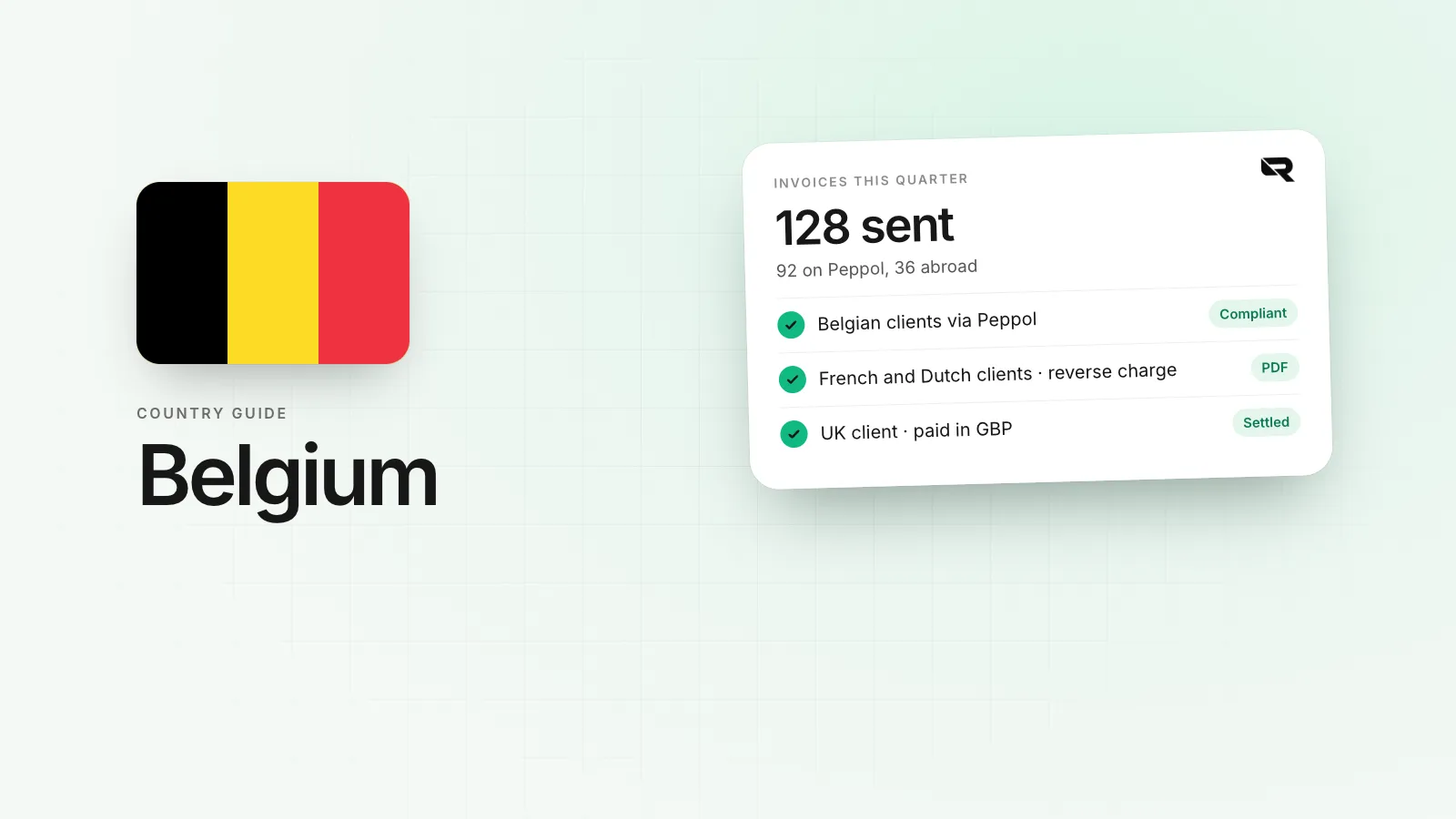
A Ghent software agency sends about 40 invoices a month. Thirty go to Belgian clients and, since January 2026, leave through a Peppol access point as structured files. The other ten go to clients in Lille, Rotterdam and London. Those can still go as PDFs, and they are the ones that get paid late.
What the mandate requires
From 1 January 2026, companies established in Belgium and registered for VAT must issue and receive invoices for domestic B2B sales in a structured electronic format. Peppol is the default route: you connect through an access point provider, often built into your accounting software, and your invoices travel as data.
A PDF by email between two Belgian companies no longer meets the rule. The authorities applied a short tolerance period at the start of 2026 for companies that were clearly working towards compliance. After that, penalties rise with repeated failures.
What is outside it
The mandate covers transactions between companies established in Belgium. Not covered:
- invoices to customers abroad, whether in the EU or outside it,
- invoices to consumers,
- some specific exempt activities.
You can still use Peppol for foreign clients if they are on the network; Peppol is international. Most are not, so the foreign track stays PDF for now.
VAT on foreign invoices
For most services to businesses in another EU country, the invoice carries no Belgian VAT, shows both VAT numbers and states that the reverse charge applies (autoliquidation, verlegging van heffing). Intra-EU sales also go in your listing of intra-community operations. For clients outside the EU, the invoice states why Belgian VAT does not apply.
2028: e-reporting
Belgium plans to add e-reporting from 2028: invoice data sent to the tax administration close to real time, again through Peppol. Domestic B2B data will flow automatically. Plan to check how your software handles cross-border invoices before then.
The foreign track: where cash waits
Lille and Rotterdam pay a Belgian IBAN by SEPA, often instantly. London and New York are slower. A UK client paying a euro IBAN sends an international transfer and its bank converts on the way. An American client sends an international wire that can arrive short.
Putting sterling details on UK invoices and US details on American ones lets those clients pay domestically, in full.
Paying into Belgium: the local rail
| What | Detail |
|---|---|
| Local rail | SEPA Instant Credit Transfer |
| Run by | European Payments Council scheme, run by each bank |
| Settlement | Under ten seconds, 24/7 |
| Published fee | By the EU Instant Payments Regulation, no more than the bank charges for a standard SEPA transfer |
Source: European Payments Council: SEPA Instant Credit Transfer. Checked when this guide was last updated; the scheme's own page has the current figures.
Where Rivet fits
Rivet is not a Peppol access point; keep your accounting software for that. A Rivet business account handles foreign collections: US account details in the company's own name on every plan, and euro details with an IBAN plus sterling details from the Growth plan. Payments are matched to invoices, and balances can be held or converted at a rate shown before you confirm. Rivet is not a bank; regulated partner institutions hold the funds.
See e-invoicing mandates from 2026 to 2028 for neighbouring countries.
Questions people ask
Do I need Peppol to invoice a client in France?
No. The Belgian mandate covers B2B transactions between companies established in Belgium. You can send a French client a PDF or use a format you agree, though Peppol works across borders if both sides use it.
What is Peppol?
An international network and set of standards for exchanging structured business documents. Companies connect through an access point provider, and invoices move as data files that accounting systems read directly.
Was there a grace period?
The authorities announced a tolerance period in early 2026 for companies that showed they were working to comply. Penalties apply for repeated failures after that.
What happens in 2028?
Belgium plans to add e-reporting, in which invoice data is sent to the tax administration close to real time. Peppol is expected to carry it.
Sources
William covers what happens once a company starts moving money: getting the business verified, paying contractors and suppliers abroad, and keeping card spend under control. William writes for the founder or finance lead who has to make it work this week, and links every rule cited to the text it comes from.
More from William Sunjo M. →This article is general information, not legal, tax or financial advice. Rules and fees change; check the sources above and the provider’s current terms before you act on them.
- belgium
- peppol
- e-invoicing
- vat
- reverse charge
- bv