Australian companies with US clients: collecting dollars without the bank's conversion
Australian software, design and consulting firms sell heavily to the US. Paid into an AUD account, every US dollar payment is converted the day it arrives at a retail rate. Holding US dollars puts the timing back in the company's hands.
- Published
- Reading time
- 2 min read
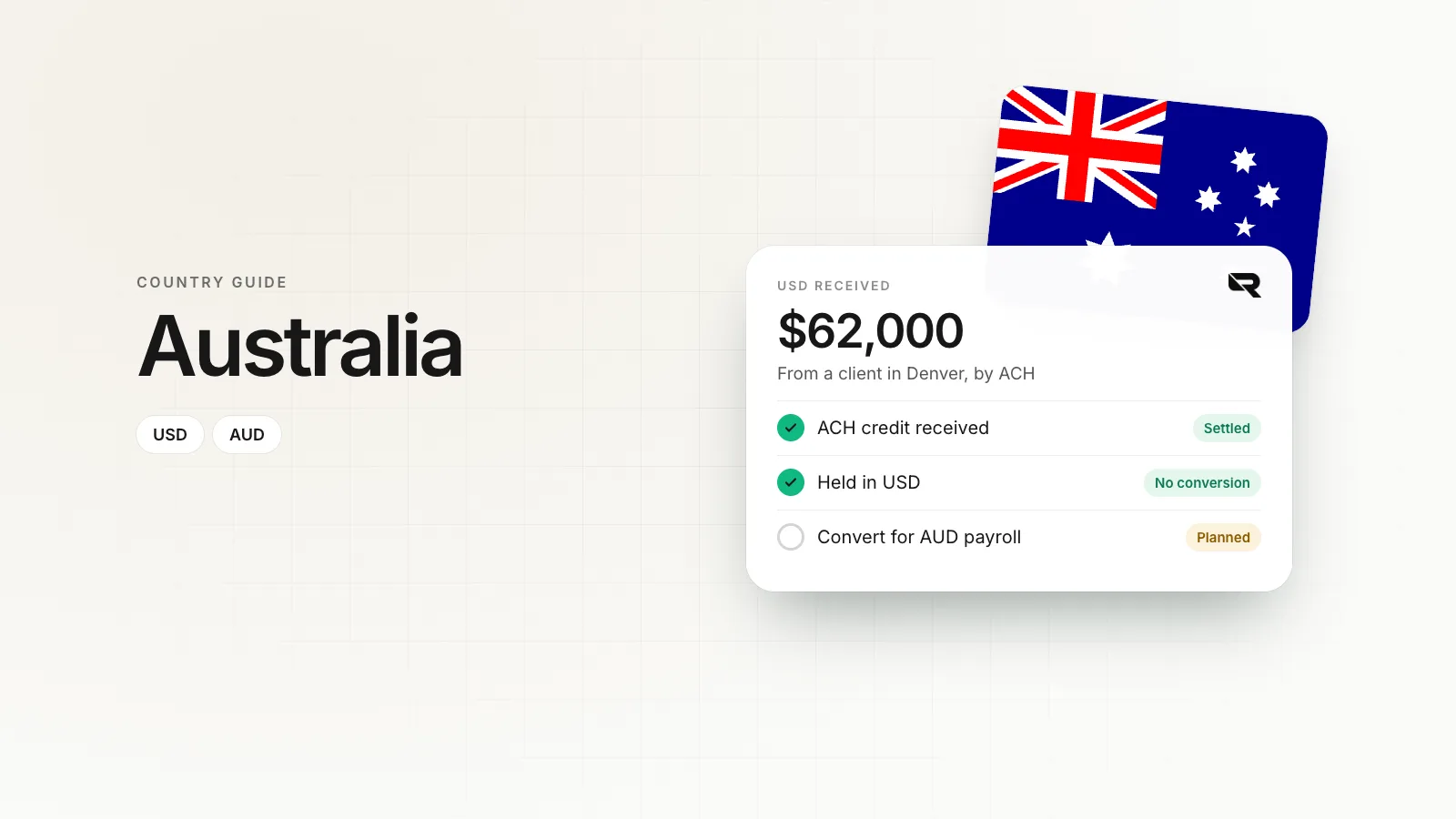
A Brisbane product design studio earns most of its revenue from US clients. Each pays by international wire into the studio's Australian dollar account, which converts on arrival. The studio then buys US dollars to pay for its design software, cloud services and a contractor in Austin. Its bank wins on both conversions.
The cost of converting on arrival
US dollars landing in an AUD account are converted at the bank's retail rate, usually some distance from the mid-market rate, on whatever day the wire arrives. Add a possible intermediary fee, and the studio loses a slice of every invoice it never sees.
US clients prefer ACH
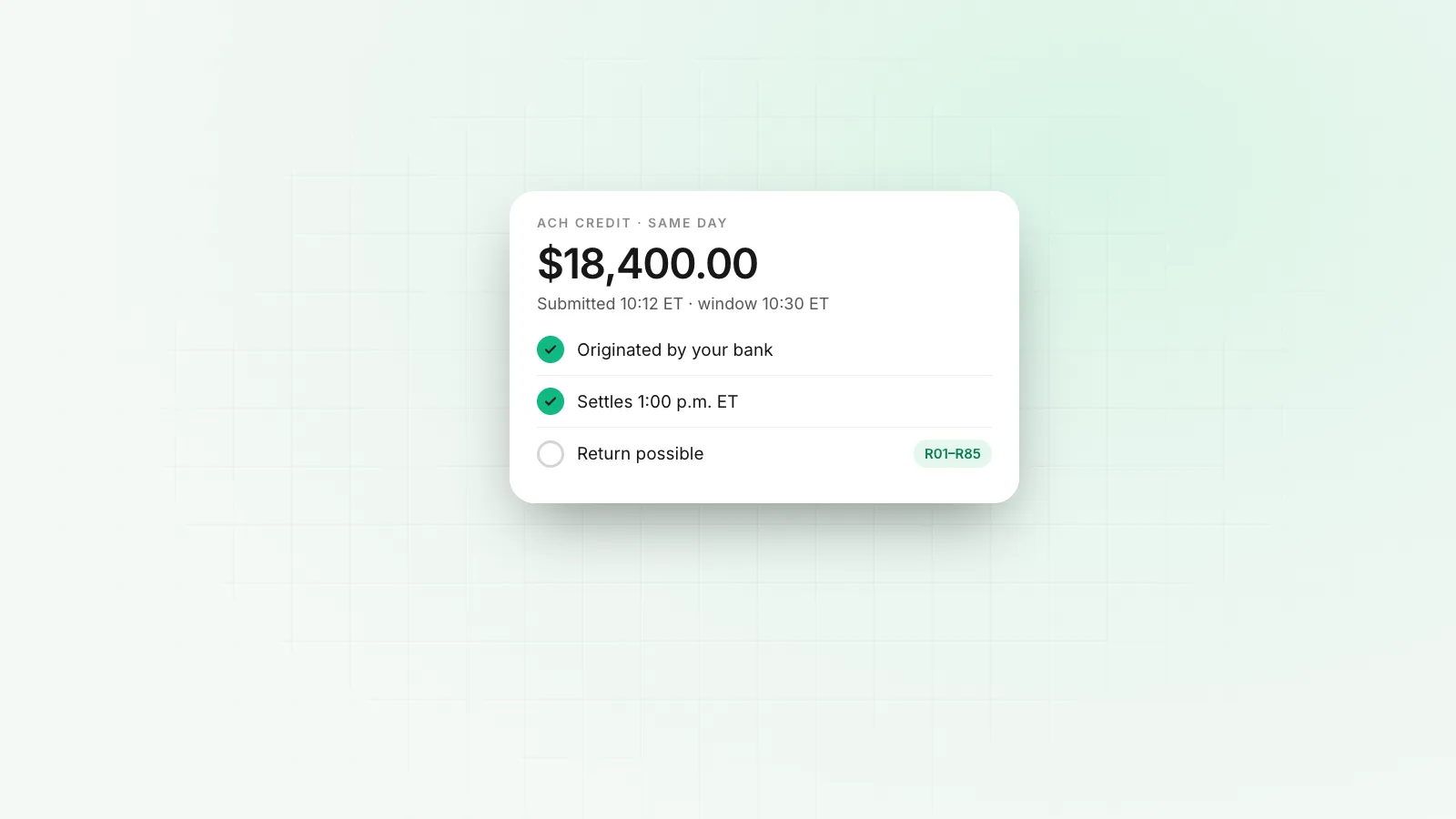
American companies pay vendors by ACH. US account details in the studio's own name let clients pay that way. The full amount arrives, usually in one to two business days, with the invoice reference.
Hold, spend, convert
- Hold US dollars as they arrive.
- Pay US dollar costs from them: software, ads, contractors, travel.
- Convert the surplus to AUD on a schedule before payroll, at a rate you see first.
GST
Services supplied to non-residents who are outside Australia are generally GST-free when the conditions in the GST law are met. Keep contracts showing the client is a non-resident and the service is used outside Australia.
Tax records
Record US dollar income in AUD at a rate the ATO accepts, consistently. Statements showing the rate on each conversion make this easier.
Paying into Australia: the local rail
| What | Detail |
|---|---|
| Local rail | New Payments Platform (Osko and PayID) |
| Run by | NPP Australia |
| Settlement | Seconds, 24/7 |
Direct Entry (BECS) still carries batch payroll and supplier runs, settling several times a day.
Source: NPP Australia. Checked when this guide was last updated; the scheme's own page has the current figures.
Where Rivet fits
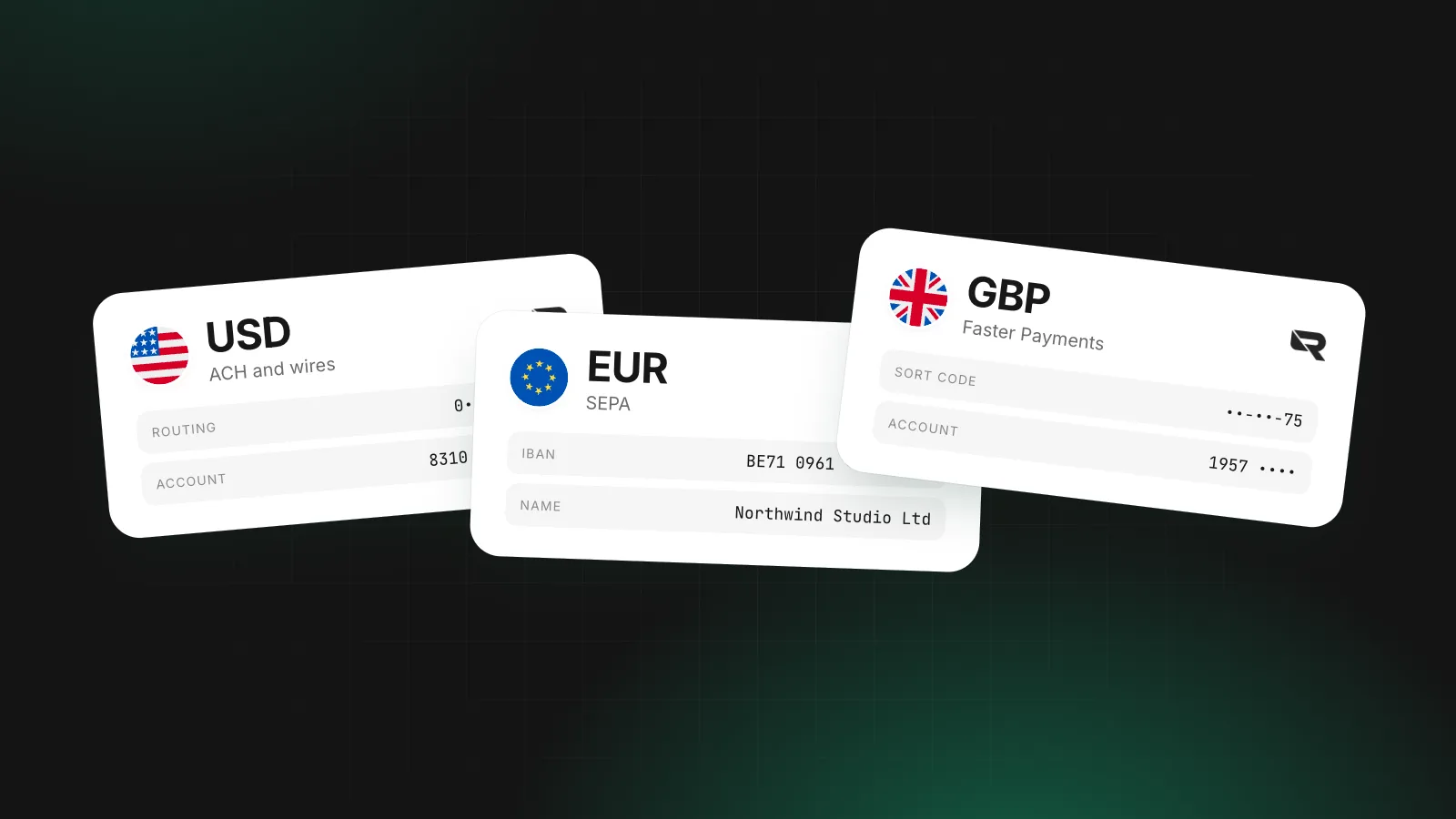
A Rivet business account gives an Australian company US account details in its own name on every plan, for ACH and wires, plus euro and sterling details from the Growth plan and, on Scale, balances in 30 currencies including AUD. Dollars can be held, spent with Visa company cards, paid to contractors in 120+ countries or converted at a rate shown before you confirm. Rivet is not a bank; regulated partner institutions hold the funds.
Questions people ask
Why do US payments arrive as less AUD than expected?
The bank converted at its own rate, which includes a margin, and an intermediary may have deducted a fee from the wire.
Can US clients pay an Australian company by ACH?
Only to US account details. An Australian account requires an international wire.
Is GST charged on services to US clients?
Services supplied to non-residents outside Australia are generally GST-free if the conditions in the GST law are met.
Should we hold US dollars?
If you pay US software, contractors or ads in dollars, yes. Convert the surplus to AUD when you need it.
Sources
Rashidatou writes Rivet's guides to how money moves between countries: the payment rails, what each one costs, and the account details a company needs to get paid in another currency. Every figure in Rashidatou's articles is traced to the scheme rulebook, the regulator or the provider's published price list, and those sources are listed at the end.
More from Rashidatou K. →This article is general information, not legal, tax or financial advice. Rules and fees change; check the sources above and the provider’s current terms before you act on them.
- australia
- usd
- us clients
- ach
- aud
- gst