How a US business can accept stablecoin payments
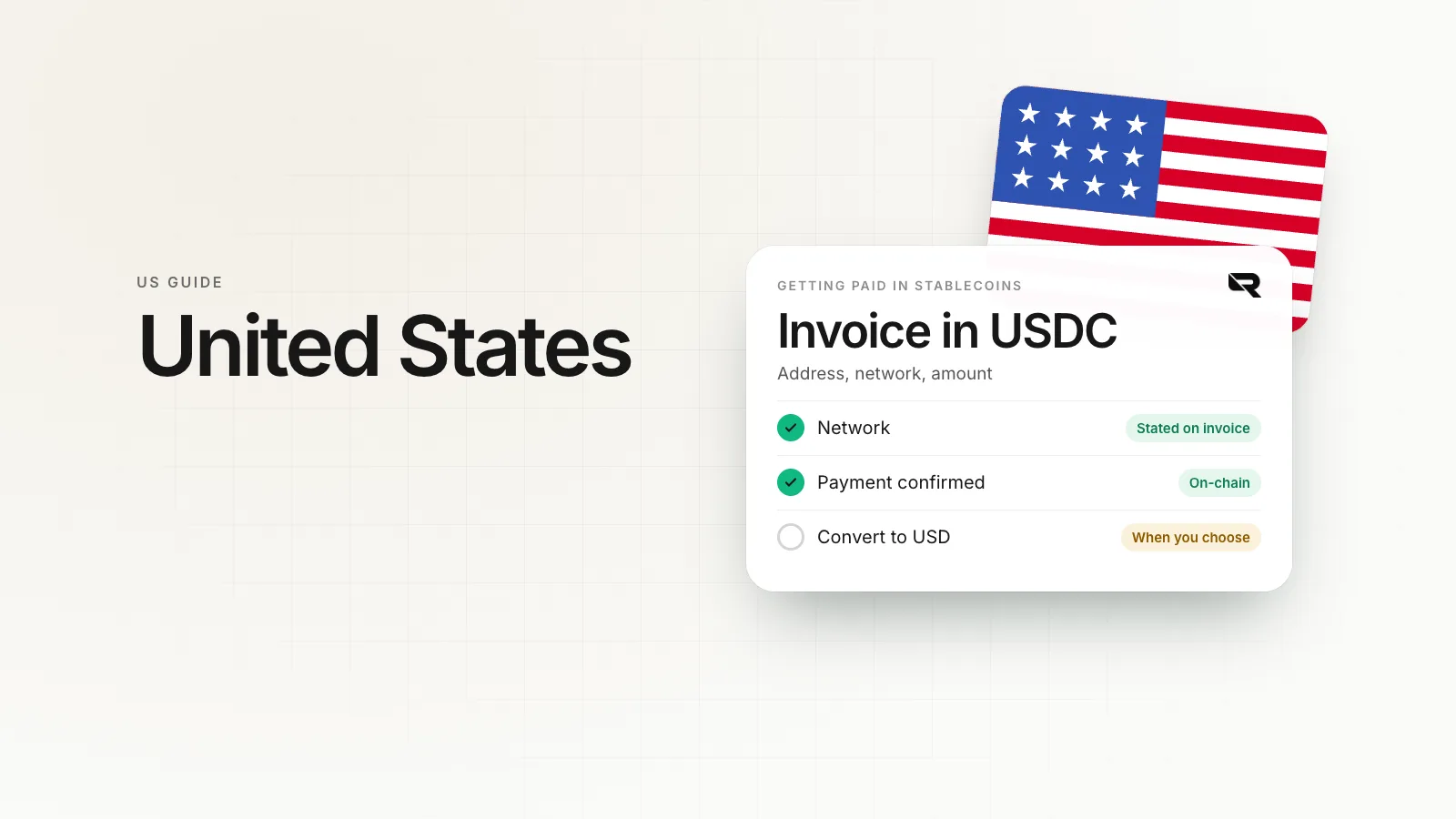
Accepting stablecoins means giving customers a wallet address and network, confirming the payment on-chain and deciding when to convert to dollars. It takes minutes to set up and needs clear records.
- Published
- Reading time
- 1 min read
"Stablecoin payments" is a growing search, with "platform" and "companies" among the completions. For a US business, accepting them is simple; recording them properly is the work.
The invoice
| Field | Example |
|---|---|
| Amount | 5,000 USDC |
| Token | USDC |
| Network | Ethereum or Polygon |
| Wallet address | Company-controlled |
| Invoice number | In the memo where possible |
Steps
- Issue the invoice with the details above.
- Customer sends.
- Confirm the transaction on-chain.
- Match it to the invoice.
- Hold USDC or convert to USD.
Risks
- Wrong network: the payment may be lost.
- Wrong address: the payment is gone.
- Custody: who holds the keys.
- Sanctions screening: required as for any payment.
Records
Record the dollar value at receipt and any conversion. The IRS treats digital assets as property.
Paying into the United States: the local rail
| What | Detail |
|---|---|
| Local rail | ACH for batch payments; RTP and FedNow for instant transfers |
| Run by | Nacha for ACH; The Clearing House for RTP; the Federal Reserve for FedNow |
| Settlement | Same-day ACH within the business day, standard ACH the next; RTP and FedNow in seconds, 24/7, where both banks take part |
Source: Nacha: Same Day ACH. Checked when this guide was last updated; the scheme's own page has the current figures.
Where Rivet fits
Every Rivet plan includes USDC and USDT balances beside USD, with addresses in the company's account, conversion to USD at a fee shown before you confirm, and every receipt on one ledger. Rivet is not a bank; regulated partner institutions hold the funds. See USDT and USDC networks and fees.
Questions people ask
How do I accept stablecoin payments?
Give the customer an invoice with the token, network and address. Confirm the payment on-chain, then hold or convert it.
Which network should I use?
One your provider supports and your customers use, such as Ethereum, Solana, Polygon or Tron for USDT. State it on the invoice.
Are stablecoin payments taxable?
Receiving them as payment is income at the dollar value. Converting can create small gains or losses. Ask your accountant.
What about chargebacks?
There are none. On-chain payments are final, which helps sellers but means refunds are manual.
Sources
Alexia compares the accounts, cards and payment tools companies weigh before they switch, and writes Rivet's market guides for founders in a specific country. Prices in Alexia's comparisons come from each provider's own pricing page on the date given in the article, rules come from the regulator or tax authority that sets them, and every source is listed at the end.
More from Alexia M. →This article is general information, not legal, tax or financial advice. Rules and fees change; check the sources above and the provider’s current terms before you act on them.
- accept stablecoin payments
- usdc payments
- usdt
- crypto payments business
- stablecoin invoices
- us