Uzbek textile exporters: collecting from buyers in Europe, Türkiye and beyond
Uzbekistan stopped exporting raw cotton and built a textile industry that now sells yarn, fabric and garments abroad. Buyers in Europe, Türkiye and Central Asia pay on different terms. Payment structure and documents decide how long a factory waits.
- Published
- Reading time
- 1 min read
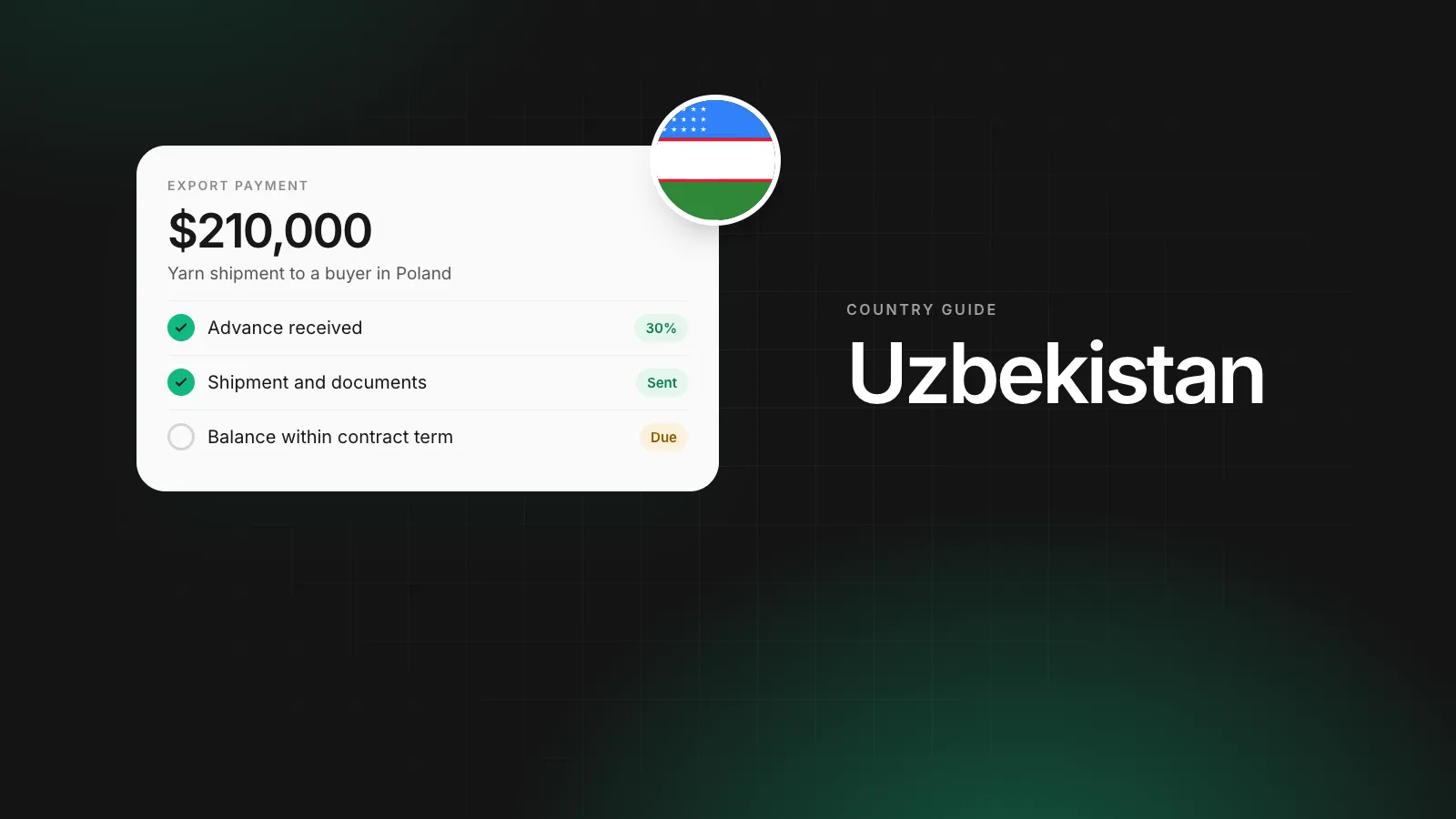
A Fergana Valley spinning mill ships cotton yarn to a knitwear maker in Łódź. It asks for 30 percent in advance and the balance within 30 days of the goods arriving. A new buyer in Istanbul wants 60-day terms. The mill's finance director weighs the order size against the risk and against the repatriation deadline its bank watches.
From raw cotton to finished goods
For decades Uzbekistan exported raw cotton. Over the past decade the country moved up the value chain: it ended raw cotton exports and built spinning, weaving and garment factories. Today it exports yarn, fabric and clothing to Europe, Türkiye, Central Asian neighbours and beyond.
GSP+
Uzbekistan has GSP+ status with the EU, which removes or reduces duty on many products, including many textiles, when origin rules are met and the right certificate accompanies the goods.
Terms
- Advance of 20 to 30 percent on order for new buyers.
- Balance against documents or on short terms after arrival.
- Letters of credit for large orders with new buyers.
- Credit limits for each buyer.
Repatriation
Export proceeds must arrive in Uzbekistan within the period set by law and the contract. Banks track contracts in the foreign trade information system. Long payment terms can collide with that deadline; agree terms that fit it.
Currency
Uzbek exporters hold dollars and euros at local banks and convert to soum as needed. Converting a planned amount ahead of payroll gives control over the rate.
Where Rivet fits
Rivet opens business accounts for registered companies after verification. Uzbekistan-registered exporters must receive proceeds in Uzbekistan within the repatriation period, so check with your bank before receiving funds abroad. Rivet is not a bank; regulated partner institutions hold the funds.
Questions people ask
How do textile buyers usually pay Uzbek exporters?
Often with an advance and the balance against documents or on short terms. Large European buyers may ask for open account terms once a relationship exists.
Do Uzbek exporters get duty-free access to the EU?
Uzbekistan has GSP+ status with the EU, which removes or reduces duties on many products, including textiles, when origin rules are met.
What documents do buyers need?
Commercial invoice, packing list, transport document, certificate of origin (including GSP+ form where relevant) and quality certificates.
Is there a deadline for export proceeds?
Yes. Proceeds must be received within the period set by law and the contract. Banks monitor this.
Sources
William covers what happens once a company starts moving money: getting the business verified, paying contractors and suppliers abroad, and keeping card spend under control. William writes for the founder or finance lead who has to make it work this week, and links every rule cited to the text it comes from.
More from William Sunjo M. →This article is general information, not legal, tax or financial advice. Rules and fees change; check the sources above and the provider’s current terms before you act on them.
- uzbekistan
- textiles
- exports
- cotton
- eur
- usd