US companies selling to Europe: collecting euros and pounds without international wires
A European customer asked to pay a US company sends an international wire in dollars, converted by its bank. Many pay late, some pay short, and finance teams on both sides chase the difference. Local euro and sterling details make the payment domestic for them.
- Published
- Reading time
- 2 min read
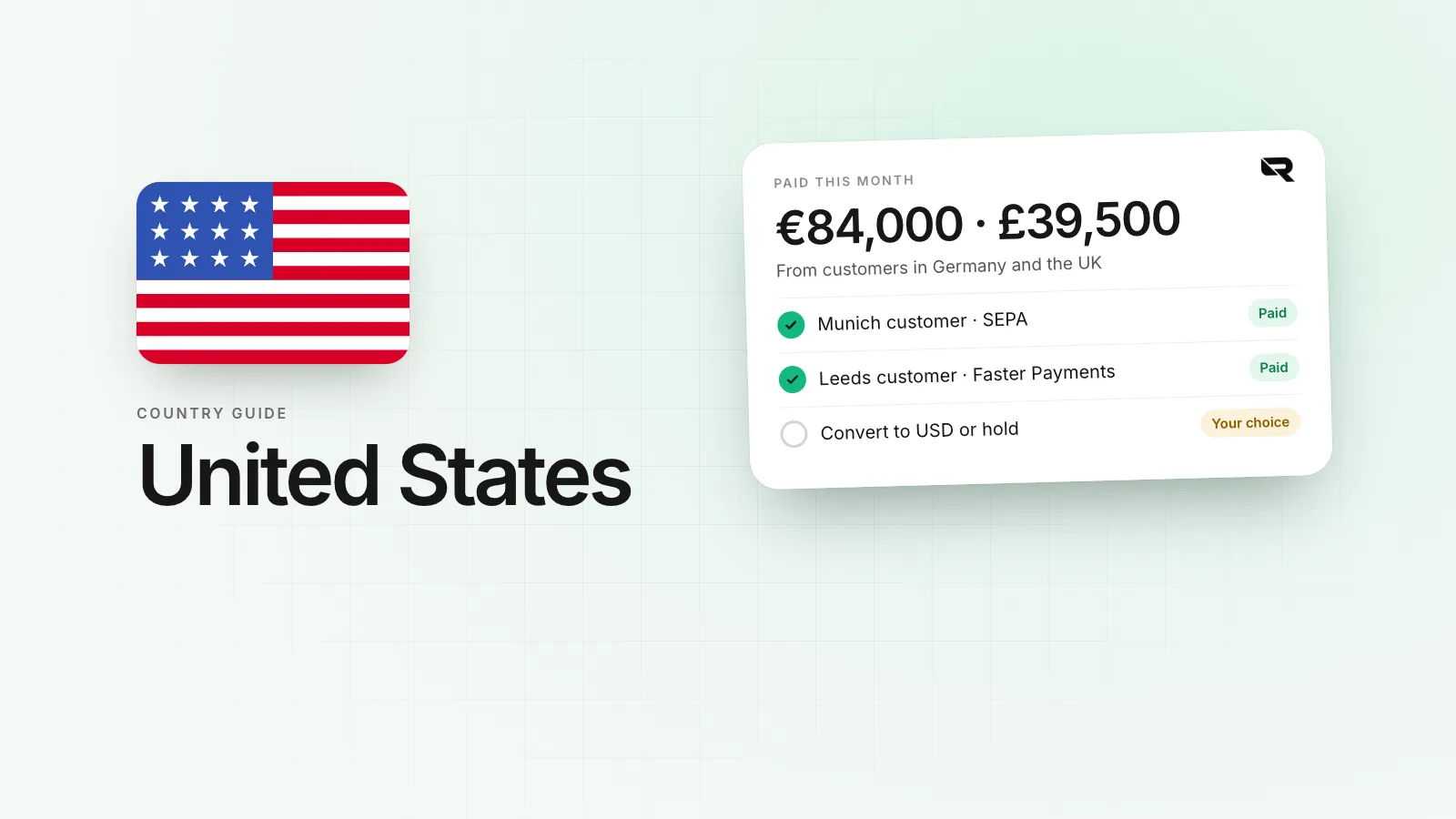
A Denver software company signs its first enterprise customers in Munich and Leeds. Both receive dollar invoices with US wire instructions. Munich pays 25 days late after its treasury team approves a foreign wire. Leeds pays the dollar amount but its bank converts from pounds at a rate the customer queries, and the payment lands $180 short after an intermediary fee. The customer success team spends a week on it.
How European businesses pay
In the euro area, companies pay suppliers by SEPA credit transfer, cheap and increasingly instant. In the UK, they use Faster Payments, which settles in seconds. An international wire in dollars is a different process: often a separate approval, a currency conversion at their bank's rate, and fees that someone has to absorb.
For a European accounts payable team, a US vendor with dollar wire instructions is extra work, and extra work gets paid last.
Invoice in their currency
European buyers budget in euros or pounds. A dollar price makes them estimate the conversion, add a buffer and sometimes ask for a re-quote at renewal. A euro or sterling price list for European customers removes that, and many American SaaS companies find it shortens procurement.
You then carry the currency movement. That is manageable, especially if you also have costs in euros or pounds.
Give them local details
Euro account details with an IBAN, and sterling details with a sort code and account number, in your company's own name, let European customers pay you the way they pay local suppliers. The payment arrives in full, often the same day, with their reference attached.
VAT basics
For most services sold to EU and UK businesses, the customer accounts for VAT under the reverse charge; your invoice shows no VAT and says so. Selling digital services to European consumers is different: EU VAT applies from the first sale, usually through the non-Union OSS, and the UK requires VAT registration for digital services to UK consumers. See EU VAT OSS for non-EU sellers.
What to do with the euros
Many US companies have European costs: contractors in Portugal or Poland, events, a sales hire in London, European cloud regions. Paying those from euro and sterling balances avoids converting dollars out and back. Convert the surplus to dollars when you need it, at a rate you see first.
Paying into the United States: the local rail
| What | Detail |
|---|---|
| Local rail | ACH for batch payments; RTP and FedNow for instant transfers |
| Run by | Nacha for ACH; The Clearing House for RTP; the Federal Reserve for FedNow |
| Settlement | Same-day ACH within the business day, standard ACH the next; RTP and FedNow in seconds, 24/7, where both banks take part |
Source: Nacha: Same Day ACH. Checked when this guide was last updated; the scheme's own page has the current figures.
Where Rivet fits
A Rivet business account on the Growth plan gives a US company euro details with an IBAN for SEPA and sterling details for Faster Payments, beside its US account details, all in the company's own name. Payments are matched to invoices, balances can be held or converted at a rate shown before you confirm, and payouts go to 120+ countries. Rivet is not a bank; regulated partner institutions hold the funds.
Questions people ask
Why do European customers pay US vendors slowly?
Paying a US account means an international wire, often with a separate approval, a currency conversion and fees. Many accounts payable teams batch these and pay them late.
Should a US company invoice European customers in euros?
Usually yes. European buyers budget in euros or pounds and approve local-currency invoices faster.
Does selling to EU businesses create VAT obligations for a US company?
For most B2B services, the EU customer accounts for VAT under the reverse charge. Sales of digital services to EU consumers require VAT registration, usually through the non-Union OSS.
Do I need to convert euros to dollars?
Not immediately. If you pay European contractors, events or suppliers, pay them from the euro balance and convert the surplus when it suits you.
Sources
Rashidatou writes Rivet's guides to how money moves between countries: the payment rails, what each one costs, and the account details a company needs to get paid in another currency. Every figure in Rashidatou's articles is traced to the scheme rulebook, the regulator or the provider's published price list, and those sources are listed at the end.
More from Rashidatou K. →This article is general information, not legal, tax or financial advice. Rules and fees change; check the sources above and the provider’s current terms before you act on them.
- us
- europe
- eur
- gbp
- sepa
- saas