A strong franc and foreign revenue: currency risk for Swiss exporters
The franc has strengthened against the euro and the dollar for most of the past two decades. A Swiss company with franc salaries and euro or dollar revenue absorbs that every year. Matching currencies and planning conversions cuts the damage.
- Published
- Reading time
- 2 min read
A Jura watch component maker sells 60 percent of its output to customers in Germany and France, priced in euros. It pays 45 people in Switzerland in francs. When the euro fell from about 1.20 francs to below 0.95 over a decade, the same euro order bought steadily fewer franc salaries. Prices could not rise fast enough to make up for it.
Measure it
Take twelve months of figures and split them by currency:
- Revenue in francs, euros and dollars.
- Costs in francs, euros and dollars.
The difference in each foreign currency is your exposure. Multiply the euro surplus by 5 percent: that is roughly what one bad year for the euro costs you. For many exporters it equals several salaries.
Match first
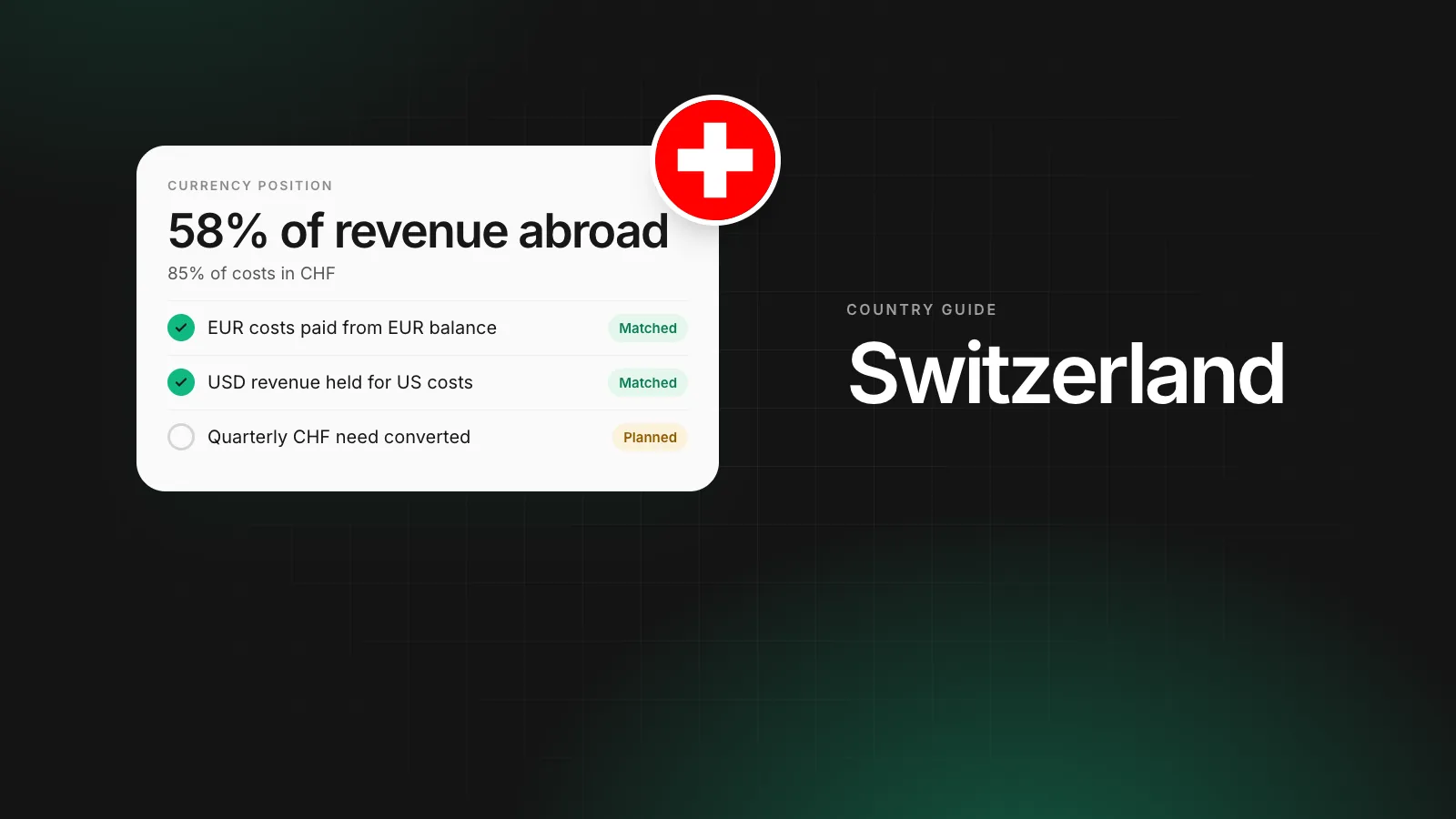
The cheapest protection is spending foreign currency in that currency. Euro-priced inputs from German suppliers, EU trade fairs, sales agents in France and dollar software subscriptions can all be paid from the euro and dollar revenue they partly offset.
That requires holding euros and dollars. If every euro lands in a franc account and is converted on arrival, you pay a margin to sell euros and another to buy them back for the supplier.
Then schedule the rest
The surplus has to become francs for payroll and Swiss costs. Converting each receipt the day it arrives takes whatever rate that day offers. Converting a planned amount each month or quarter, ahead of payroll, averages the rate and makes the franc budget predictable.
Larger exporters add forward contracts on top: a fixed rate for a known future amount. They remove uncertainty and also the benefit if the rate moves your way. See FX forward contracts explained.
Tariffs on top
Dollar revenue faced a second squeeze in 2025. The US raised tariffs on Swiss goods sharply in August that year, and an agreement later in the year brought the rate down. For exporters pricing in dollars, tariff and currency moves now land on the same margin, which makes holding dollars for US costs, and converting the surplus deliberately, more useful.
Paying into Switzerland: the local rail
| What | Detail |
|---|---|
| Local rail | SIC instant payments |
| Run by | SIX, on behalf of the Swiss National Bank |
| Settlement | Seconds, 24/7; the larger Swiss banks have accepted instant payments since August 2024 |
Source: SIX: instant payments. Checked when this guide was last updated; the scheme's own page has the current figures.
Where Rivet fits
A Rivet business account lets a Swiss company receive dollars on US account details, and from the Growth plan euros on an IBAN and pounds on sterling details, all in its own name. Balances can be held, used to pay suppliers in 120+ countries, or converted at a rate shown before you confirm. On the Scale plan the account holds 30 currencies, francs included. Rivet is not a bank; regulated partner institutions hold the funds.
Questions people ask
How do I measure currency exposure?
Split twelve months of revenue and costs by currency. Net exposure in each currency is revenue minus costs in that currency. Apply a plausible move, such as 5 percent, to see the impact.
Should a small Swiss exporter hedge?
Start with matching and scheduled conversions. Forwards become worthwhile when a predictable foreign surplus is large enough that a 5 percent move would hurt.
Can I invoice foreign clients in francs instead?
Some industrial buyers accept francs. Most EU and US clients prefer their own currency, and francs can make you less competitive when the currency is strong.
Sources
Rashidatou writes Rivet's guides to how money moves between countries: the payment rails, what each one costs, and the account details a company needs to get paid in another currency. Every figure in Rashidatou's articles is traced to the scheme rulebook, the regulator or the provider's published price list, and those sources are listed at the end.
More from Rashidatou K. →This article is general information, not legal, tax or financial advice. Rules and fees change; check the sources above and the provider’s current terms before you act on them.
- switzerland
- chf
- currency risk
- exporters
- hedging
- tariffs