Slovenia's B2B e-invoicing from 2028: what companies need to know
Slovenia was early with e-invoices to the public sector. It has now legislated for structured e-invoices between businesses, with the obligation starting in 2028. Exporters have time, but the change touches every domestic invoice and supplier bill.
- Published
- Reading time
- 2 min read
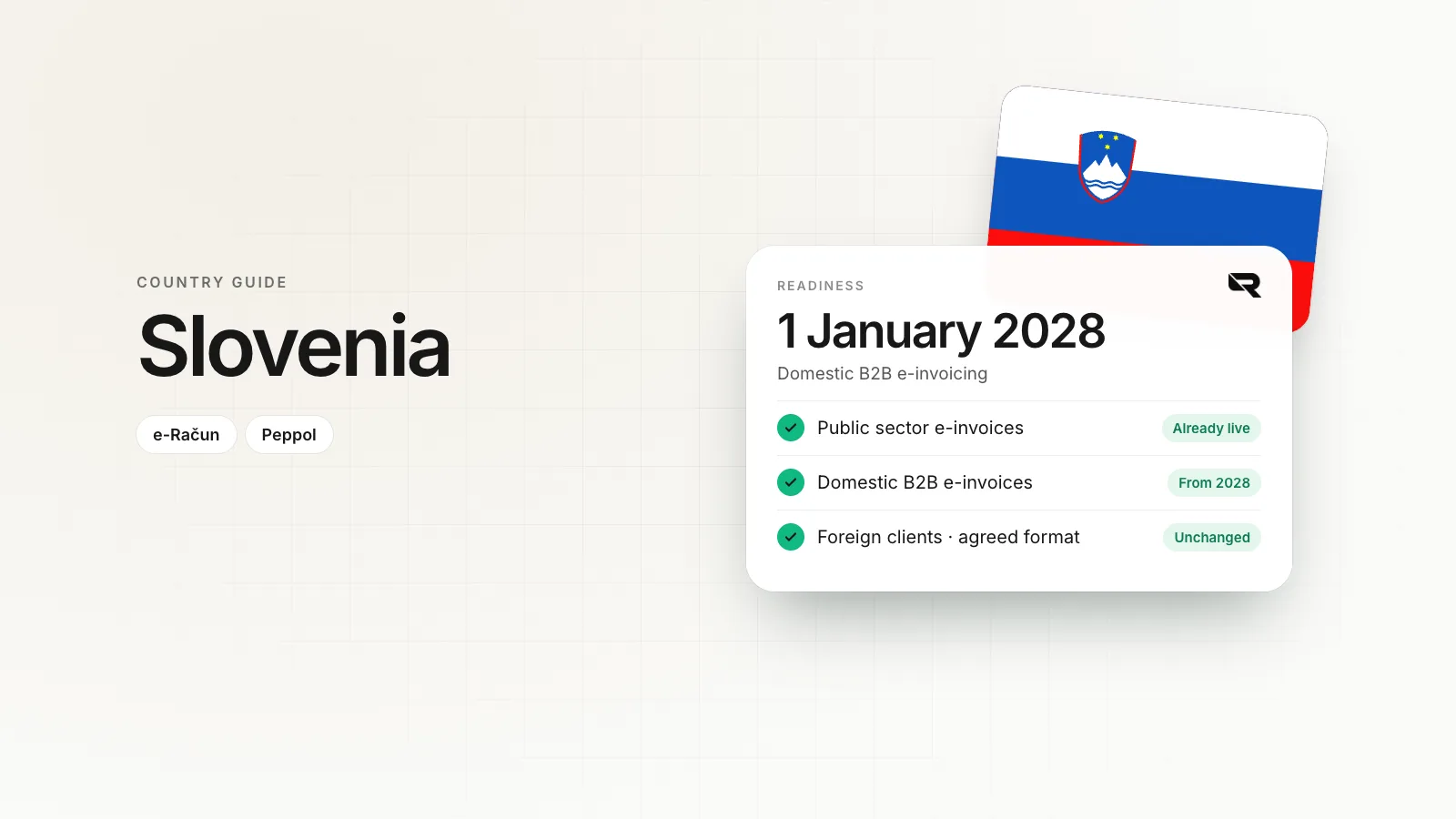
A Ljubljana industrial software company already sends e-invoices to its public sector clients, as Slovenian law has required for years. From 1 January 2028 its private Slovenian customers will receive e-invoices too. Its clients in Germany, Croatia and the US will not, and they make up most of its revenue.
From public sector to B2B
Slovenia required e-invoices to public bodies early, using the national e-SLOG format and the UJP exchange. The country has now legislated to extend structured e-invoicing to transactions between businesses, with the obligation starting on 1 January 2028.
Expect invoices based on the European standard EN 16931, exchanged through recognised networks such as Peppol or national exchange providers. Implementing rules are being published by the Financial Administration (FURS) and the Ministry of Finance.
What changes
For domestic B2B:
- PDF and paper invoices between Slovenian businesses will no longer suffice,
- your software must send and receive structured invoices,
- incoming supplier e-invoices need an approval process.
What does not change
Invoices to foreign clients are outside the domestic obligation. The usual VAT rules still apply: no Slovenian VAT on most services to EU businesses, with both VAT numbers and the reverse charge reference, and the recapitulative statement. EU-wide cross-border digital reporting is scheduled under the VAT in the Digital Age package from July 2030.
Use the time on collections too
Two years is plenty for a software change. It is also a good moment to fix how foreign clients pay. Slovenia uses the euro, so euro-area clients pay by SEPA. Croatian clients now pay euros as well. US and UK clients still send international transfers to a Slovenian IBAN that can arrive short. Putting US details on American invoices and sterling details on British ones makes their payments domestic.
Paying into Slovenia: the local rail
| What | Detail |
|---|---|
| Local rail | SEPA Instant Credit Transfer |
| Run by | European Payments Council scheme, run by each bank |
| Settlement | Under ten seconds, 24/7 |
| Published fee | By the EU Instant Payments Regulation, no more than the bank charges for a standard SEPA transfer |
Source: European Payments Council: SEPA Instant Credit Transfer. Checked when this guide was last updated; the scheme's own page has the current figures.
Where Rivet fits
Rivet is not an e-invoice exchange. A Rivet business account handles the collection side: US account details in the company's own name on every plan and, from the Growth plan, euro details with an IBAN and sterling details. Payments are matched to invoices and balances can be held or converted at a rate shown before you confirm. Rivet is not a bank; regulated partner institutions hold the funds.
Questions people ask
When does B2B e-invoicing become mandatory in Slovenia?
From 1 January 2028 under the adopted law. Check the Financial Administration (FURS) and ministry guidance for implementing details.
What format will be used?
Structured invoices based on the European standard EN 16931, such as the national e-SLOG format, exchanged through networks including Peppol.
Are invoices to foreign clients covered?
No. The obligation is for domestic transactions. Foreign clients continue to receive invoices in agreed formats.
What should companies do before 2028?
Confirm your software's e-invoice support, clean customer master data, and plan how incoming e-invoices are approved.
Sources
William covers what happens once a company starts moving money: getting the business verified, paying contractors and suppliers abroad, and keeping card spend under control. William writes for the founder or finance lead who has to make it work this week, and links every rule cited to the text it comes from.
More from William Sunjo M. →This article is general information, not legal, tax or financial advice. Rules and fees change; check the sources above and the provider’s current terms before you act on them.
- slovenia
- e-invoicing
- 2028
- furs
- vat
- peppol