Singapore companies paying suppliers and staff across ASEAN
For many Singapore companies, the region is the market and the workforce. Suppliers in Johor, contractors in Ho Chi Minh City and staff in Manila each want paying in their own currency, often on different rails. A Singapore dollar SWIFT transfer is rarely the best way.
- Published
- Reading time
- 1 min read
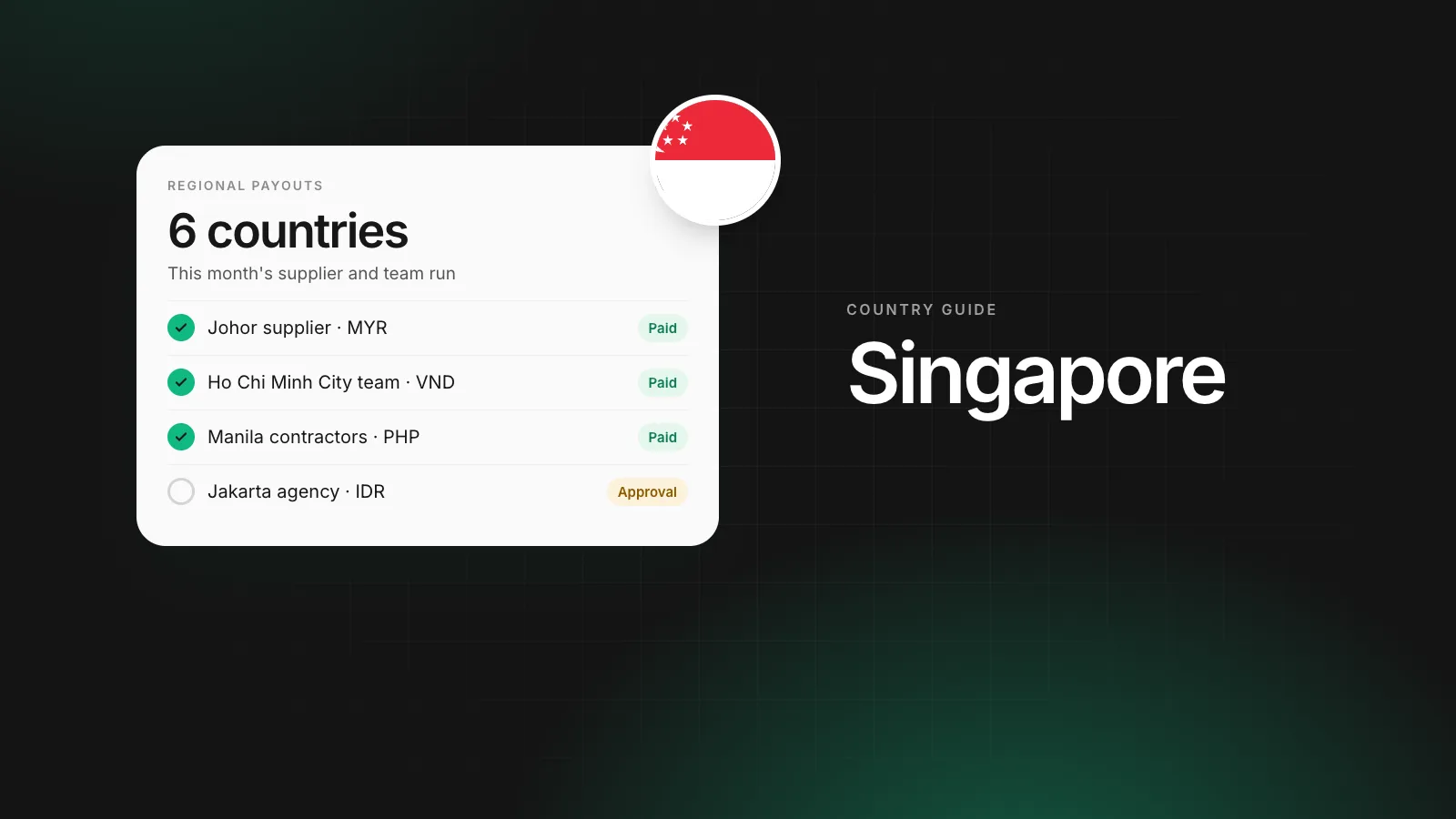
A Singapore consumer electronics brand buys packaging from Johor, runs a design team in Ho Chi Minh City, works with contractors in Manila and pays a marketing agency in Jakarta. Each month the finance team sends a dozen payments in Singapore dollars by SWIFT. The recipients' banks convert, charge receiving fees and sometimes hold payments for questions.
Local currency, local rails
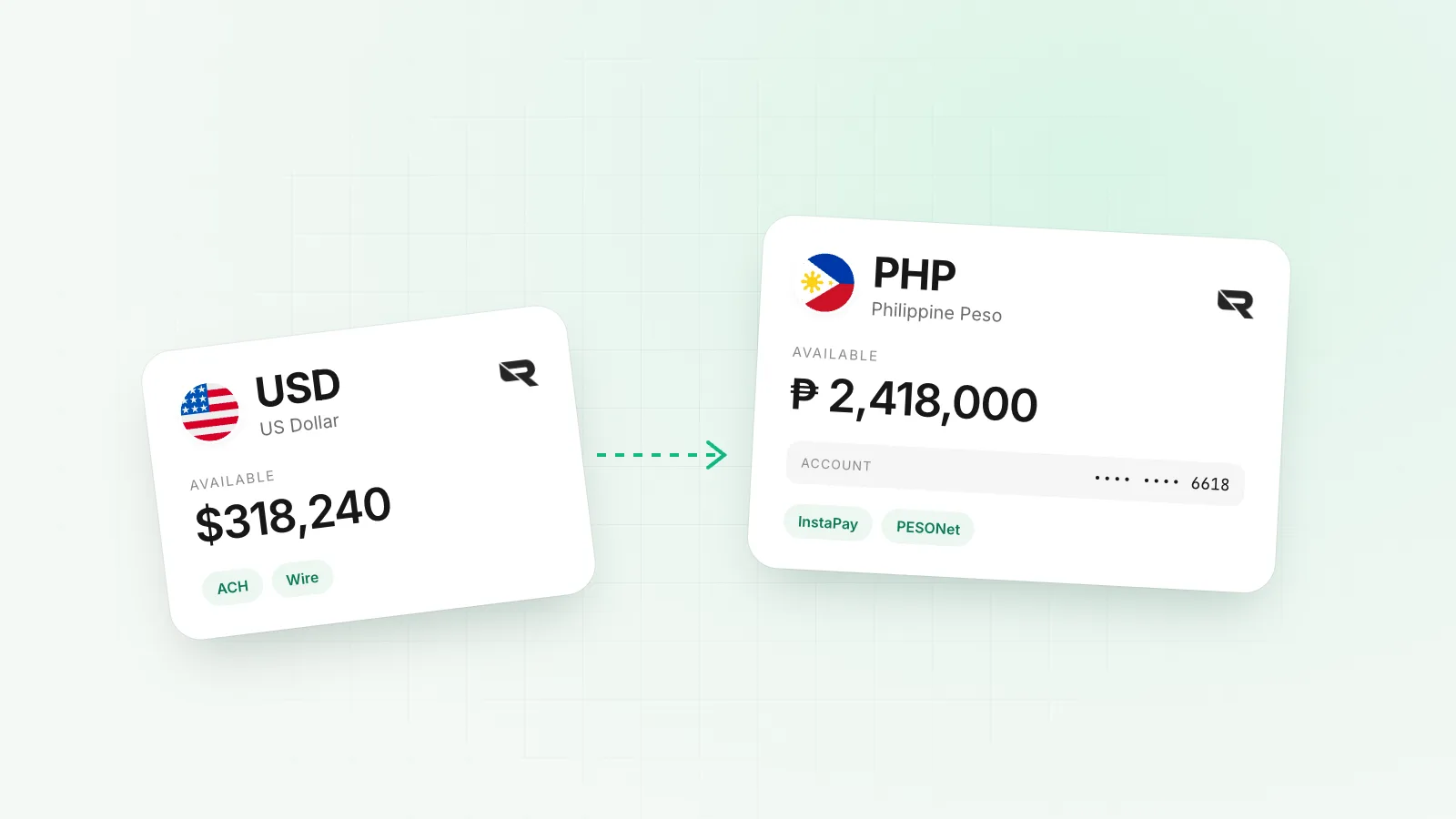
Paying the Johor supplier in ringgit, the Manila contractors in pesos and the Jakarta agency in rupiah, delivered on local rails, means each recipient receives the invoiced amount. Suppliers that no longer carry a conversion risk often quote lower.
Recipient-side rules
ASEAN countries differ:
- Malaysia and the Philippines have relatively open rules for receiving foreign payments.
- Indonesia and Vietnam have stricter foreign exchange rules; recipients' banks classify and report receipts.
- Thailand sits in between.
Clear purpose details on each payment help the recipient's bank process it.
Controls
Regional payouts are a fraud target. Verify bank details at onboarding, confirm changes by phone with a known contact, and require a second approver for each payout run.
Records
Keep the invoice, payment confirmation and rate used for each payment. Statements that show the rate per line make month end and audits simpler.
Paying into Singapore: the local rail
| What | Detail |
|---|---|
| Local rail | FAST and PayNow |
| Run by | Banking Computer Services, under the Association of Banks in Singapore |
| Settlement | Seconds, 24/7, up to S$200,000 per FAST transfer |
Source: Association of Banks in Singapore: FAST. Checked when this guide was last updated; the scheme's own page has the current figures.
Where Rivet fits
A Rivet business account accepts registered companies after verification, including Singapore companies. It pays suppliers and teams in 120+ countries, in local currency on local rails where available, with bulk payouts, rates shown before confirming and, from the Growth plan, second approvals. Rivet is not a bank; regulated partner institutions hold the funds.
Questions people ask
Should Singapore companies pay regional suppliers in SGD?
Usually not. Paying in the supplier's currency often lowers the price and avoids conversion and receiving fees on their side.
How do regional contractors prefer to be paid?
Usually in local currency to a local bank account or e-wallet. Some prefer dollars. Ask and record it.
Do recipient countries have rules on receiving payments?
Yes. Vietnam and Indonesia, for example, have foreign exchange rules that affect how residents receive and report foreign payments. Recipients' banks handle most of this.
How can regional payouts be controlled?
Bulk payouts with a second approver, verified bank details and a record of the rate used for each payment.
Sources
Rashidatou writes Rivet's guides to how money moves between countries: the payment rails, what each one costs, and the account details a company needs to get paid in another currency. Every figure in Rashidatou's articles is traced to the scheme rulebook, the regulator or the provider's published price list, and those sources are listed at the end.
More from Rashidatou K. →This article is general information, not legal, tax or financial advice. Rules and fees change; check the sources above and the provider’s current terms before you act on them.
- singapore
- asean
- payouts
- myr
- idr
- php