Relay vs Bluevine: budgeting accounts or interest on checking?
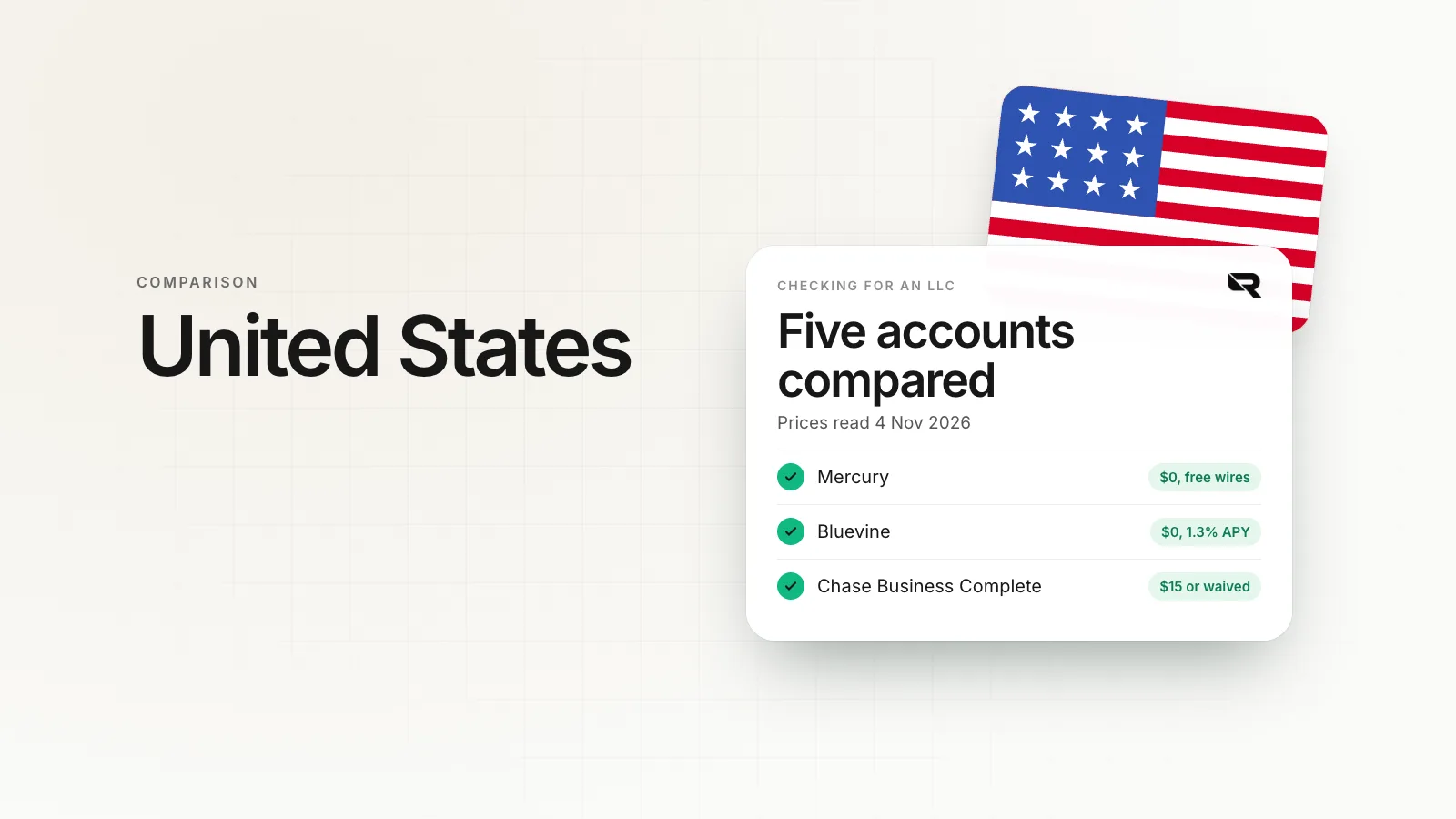
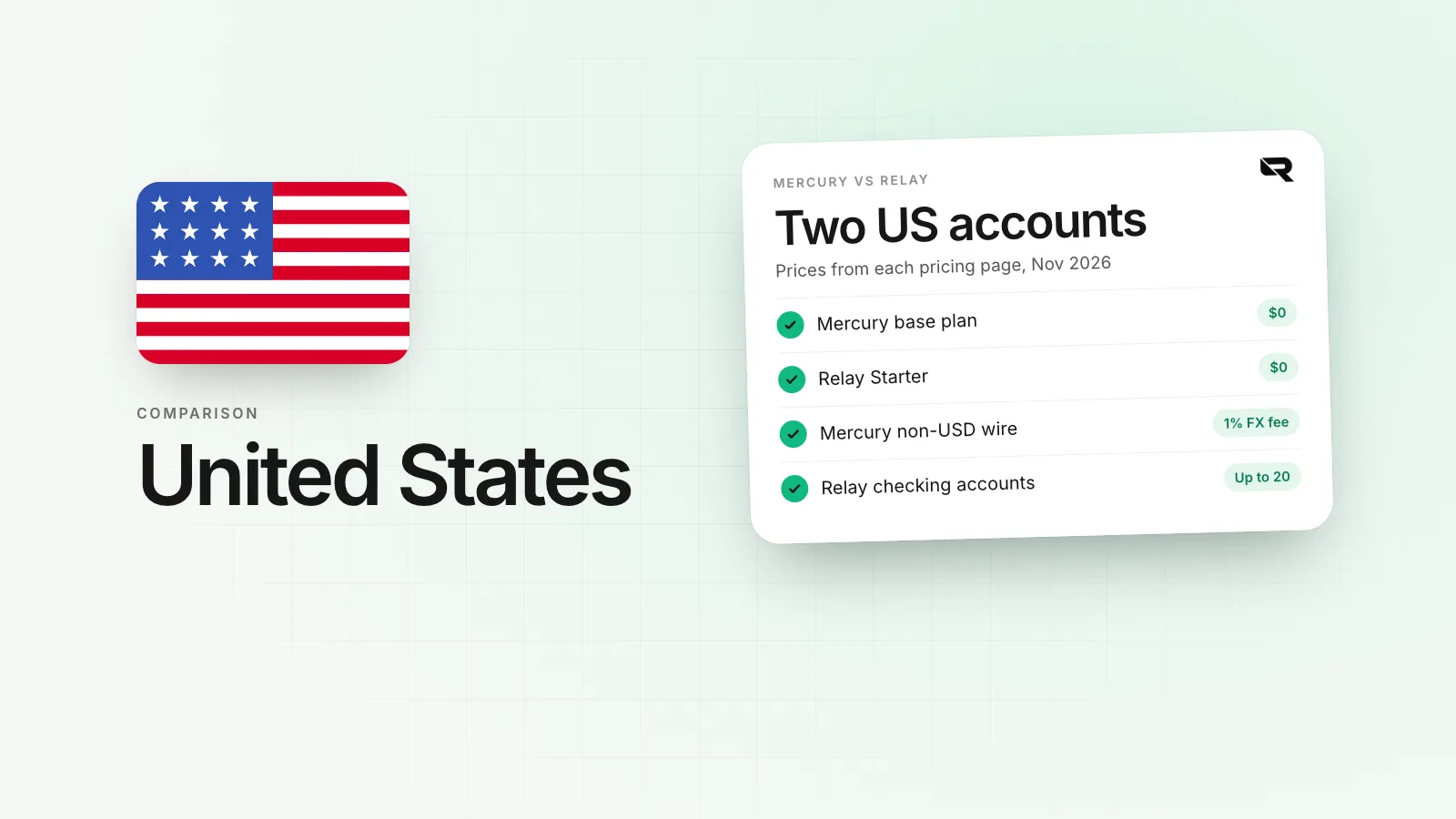
Relay gives you up to 20 checking accounts to split money by purpose. Bluevine pays interest on checking with fees on wires. Small businesses compare them because both promise more than a basic bank.
- Published
- Updated
- Reading time
- 2 min read
Relay and Bluevine both appear in "Bluevine vs" and "Relay vs" suggestions, and the people searching tend to run small service businesses. The two accounts reward different habits. Figures below were read on both pages on 4 November 2026.
The plans
| Relay | Bluevine | |
|---|---|---|
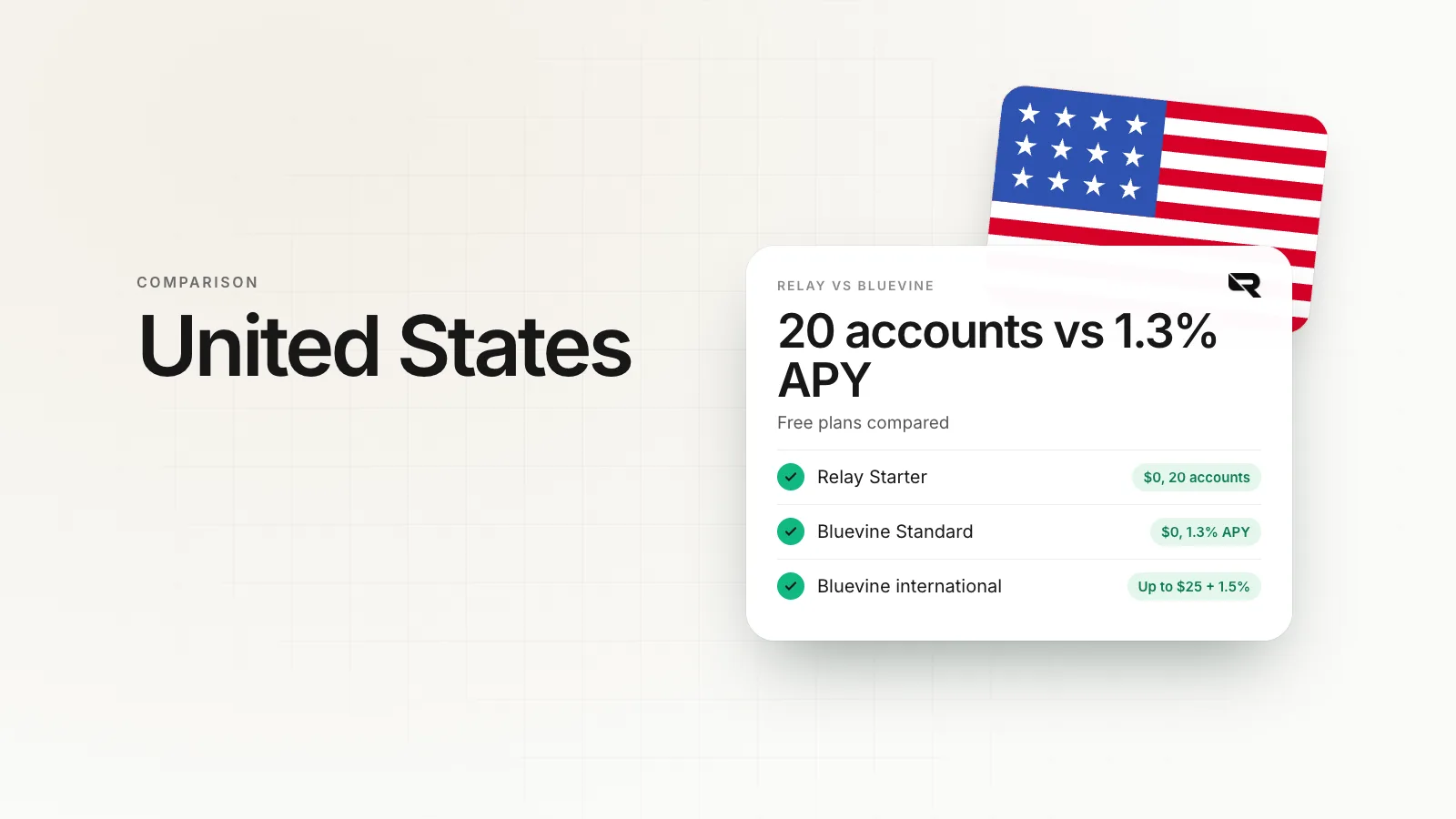
| Free plan | Starter: up to 20 checking accounts | Standard: 1.3% APY with activity condition |
| Paid plans | Grow $30; Scale $120 (listed at $90) | Plus $30; Premier $95 (both waivable) |
| Interest | Savings 1.19% to 3.21% APY by plan | Checking 1.3% to 3.0% APY by plan |
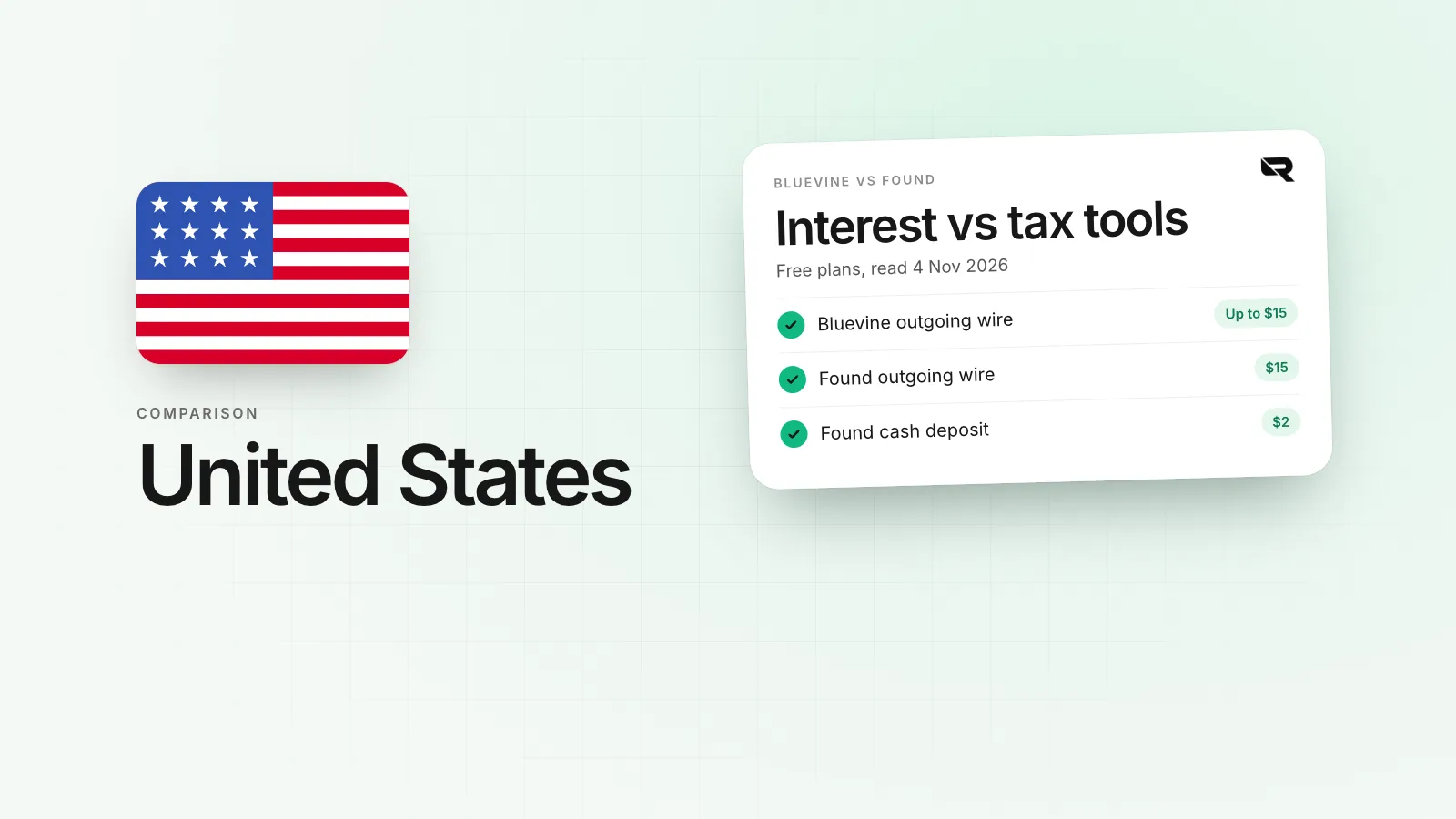
| Domestic wire | Not listed | Up to $15 |
| International | Through a partner; fees not listed | Up to $25 plus up to 1.5% in foreign currency |
| Partner bank | Thread Bank | Coastal Community Bank and program banks |
The case for Relay
You run Profit First or something like it: a fixed share of each payment goes to tax, payroll, owner pay and operating costs. Relay lets you keep those as separate accounts with their own cards, so nobody spends the tax money by accident.
The case for Bluevine
You keep a buffer of $50,000 to $250,000 and want it to earn something without moving it to savings. On Standard, meeting the activity condition earns 1.3% on balances up to $250,000.
Where both stop
Neither holds other currencies. Paying a supplier in Canada or a developer in Argentina means a converted payment, and on Bluevine the fee is published: up to $25 plus up to 1.5%. On $5,000 that is up to $100.
Paying into the United States: the local rail
| What | Detail |
|---|---|
| Local rail | ACH for batch payments; RTP and FedNow for instant transfers |
| Run by | Nacha for ACH; The Clearing House for RTP; the Federal Reserve for FedNow |
| Settlement | Same-day ACH within the business day, standard ACH the next; RTP and FedNow in seconds, 24/7, where both banks take part |
Source: Nacha: Same Day ACH. Checked when this guide was last updated; the scheme's own page has the current figures.
Where Rivet fits
Rivet is built for the international part of a company's money. Starter is free with USD details and payouts at $2 each. Growth adds EUR and GBP details, local payouts to 120+ countries at $1 each and FX from 0.50%, shown before you confirm. Rivet is not a bank; regulated partner institutions hold the funds. See Payouts or how to choose a business account.
Questions people ask
Is Relay or Bluevine better for small business?
Relay suits owners who budget by splitting money into accounts. Bluevine suits owners who keep a balance and want interest on it without a separate savings account.
Is Relay a legit bank?
Relay is a fintech company. Banking services are provided by Thread Bank, Member FDIC, and international payments by a partner.
Does Bluevine have a monthly fee?
Standard has none. Plus costs $30 and Premier $95 a month, and both can be waived under conditions Bluevine sets.
Which is better for paying people abroad?
Bluevine publishes its international fees: up to $25 plus up to 1.5%. Relay's were not listed. For regular payments abroad, a multi-currency account is usually cheaper than either.
Sources
Alexia compares the accounts, cards and payment tools companies weigh before they switch, and writes Rivet's market guides for founders in a specific country. Prices in Alexia's comparisons come from each provider's own pricing page on the date given in the article, rules come from the regulator or tax authority that sets them, and every source is listed at the end.
More from Alexia M. →This article is general information, not legal, tax or financial advice. Rules and fees change; check the sources above and the provider’s current terms before you act on them.
- relay vs bluevine
- relay bank
- bluevine
- business checking
- apy
- comparison