KSeF in 2026: Poland's mandatory e-invoicing and invoices to foreign clients
Poland's National e-Invoicing System (KSeF) became compulsory in 2026: from February for the largest taxpayers and from April for most others. Invoices to foreign clients are issued in KSeF too. The client simply never logs in to it.
- Published
- Reading time
- 2 min read
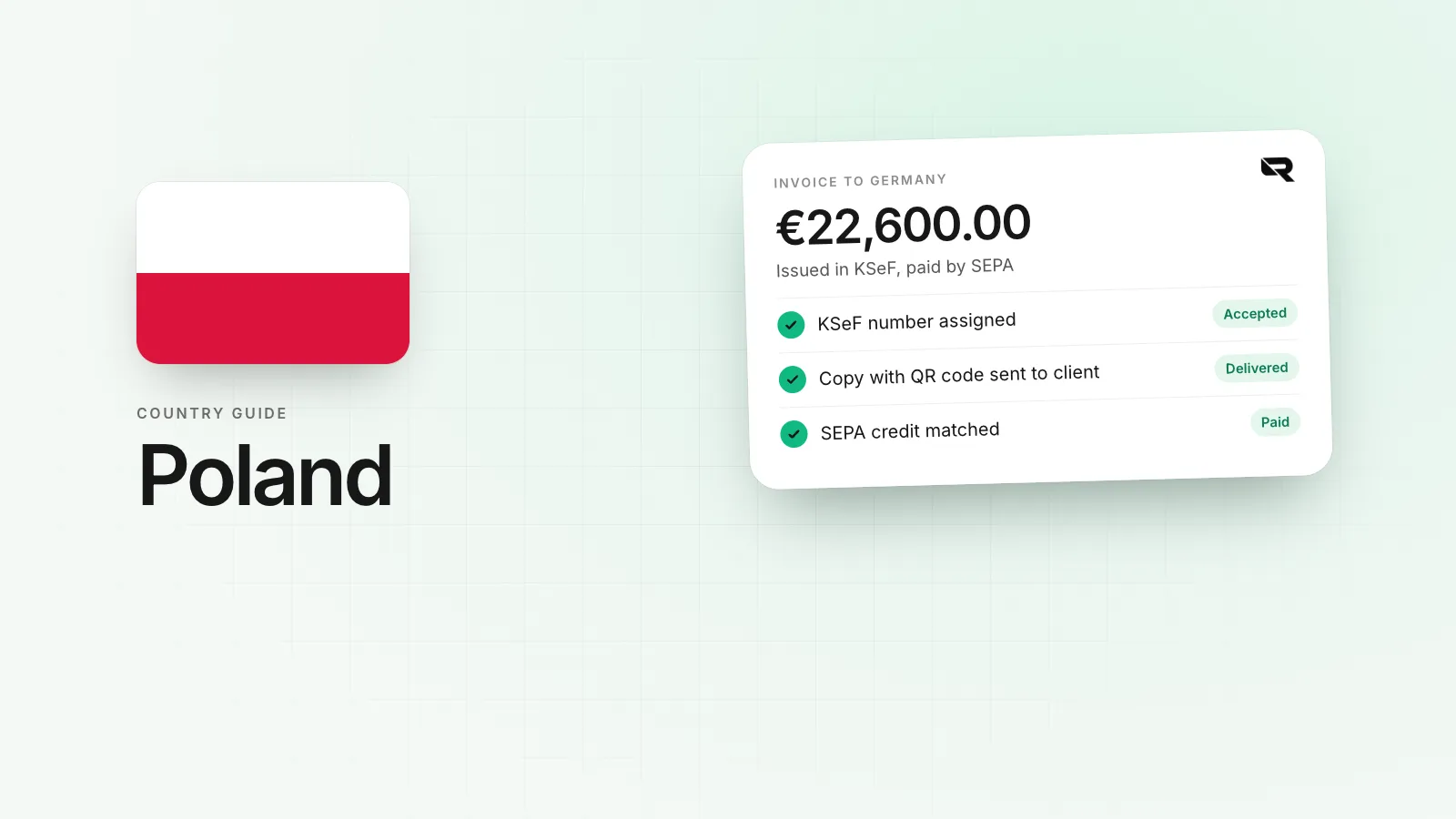
A Kraków software house sends 60 invoices a month: 20 to Polish clients and 40 to clients in Germany, the Netherlands and the US. Since April 2026 every one of them, foreign ones included, is issued in KSeF, Poland's National e-Invoicing System, and gets a KSeF number. The German client receives a PDF with a QR code and never sees KSeF itself.
The KSeF timeline
KSeF has been available voluntarily since 2022. It became compulsory in 2026:
- 1 February 2026: taxpayers whose sales in 2024 exceeded PLN 200 million.
- 1 April 2026: all other VAT taxpayers.
- 1 January 2027: the smallest businesses, for invoices totalling up to PLN 10,000 a month, and some taxpayers using cash registers.
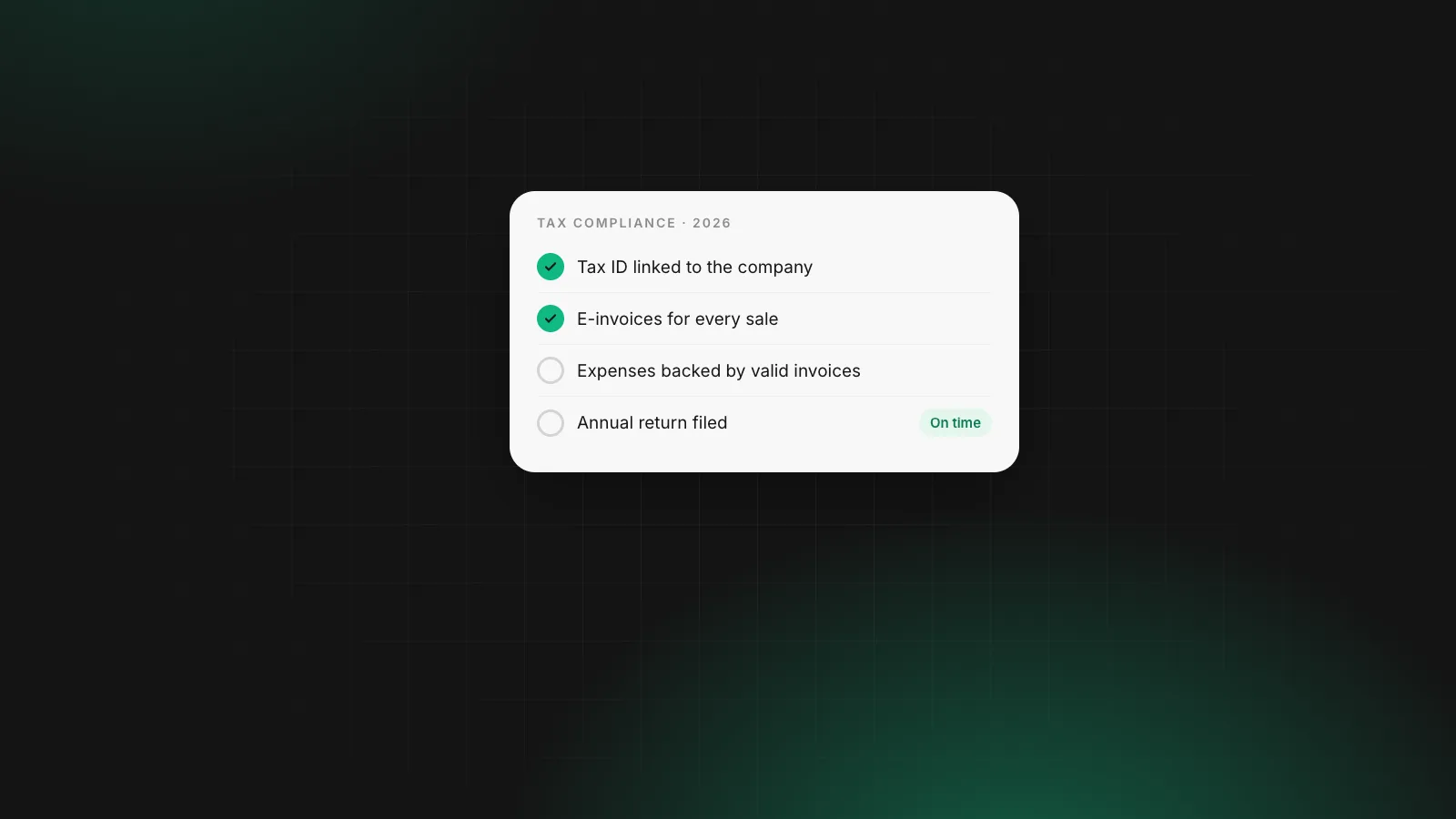
Every company had to be able to receive invoices in KSeF from February. Financial penalties for errors are deferred to 2027, but an invoice that should have gone through KSeF and did not can be challenged for VAT purposes.
Foreign clients
Polish VAT taxpayers issue invoices to foreign buyers in KSeF as well. The structured invoice (FA(3)) holds the buyer's foreign details and VAT number. The buyer abroad, who has no KSeF access, receives the invoice as a PDF or other visualisation that carries a QR code. Scanning it confirms the invoice exists in KSeF.
VAT treatment is unchanged. For most services to EU businesses, the invoice shows no Polish VAT and states the reverse charge (odwrotne obciążenie). For services to non-EU businesses, it states that the service is not taxed in Poland.
Currency and the NBP rate
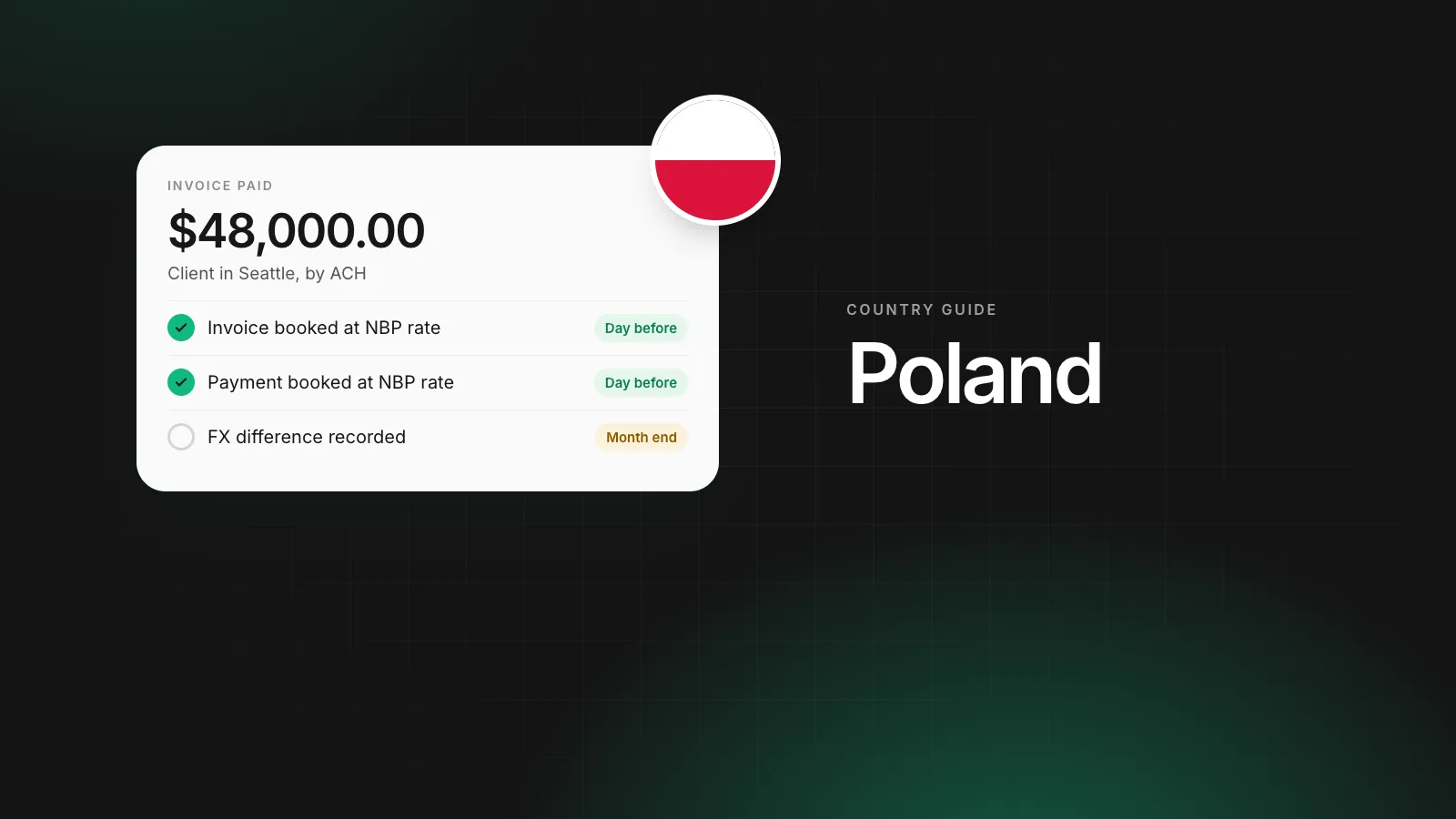
Many Polish exporters invoice in euros or dollars. KSeF supports foreign currencies; VAT amounts, where shown, must also be given in zloty, converted at the NBP average rate from the last business day before the tax point. Your accounting system needs that rate on every foreign invoice.
What does not change
KSeF governs how invoices are issued and stored. It does not change how foreign clients pay. A German client pays a euro IBAN by SEPA in seconds. A US client asked to pay a Polish IBAN must send an international wire, which can arrive short and is converted on arrival if the account is in zloty. Put details on the invoice that each client can pay domestically.
Paying into Poland: the local rail
| What | Detail |
|---|---|
| Local rail | Express Elixir |
| Run by | Krajowa Izba Rozliczeniowa (KIR) |
| Settlement | Seconds, 24/7, up to PLN 100,000 per transfer |
Source: KIR: Express Elixir. Checked when this guide was last updated; the scheme's own page has the current figures.
Where Rivet fits
Rivet does not issue invoices in KSeF; your invoicing software does that. A Rivet business account handles the collection side: US account details in the company's own name on every plan, euro details with an IBAN and sterling details from the Growth plan, and balances in 30 currencies, zloty included, on the Scale plan. Payments are matched to invoices and conversions happen at a rate shown first. Rivet is not a bank; regulated partner institutions hold the funds.
For other countries' mandates, see e-invoicing mandates from 2026 to 2028.
Questions people ask
Do invoices to foreign clients go through KSeF?
Yes, invoices issued by Polish VAT taxpayers to foreign buyers are issued in KSeF. The foreign buyer, who has no access to KSeF, receives a visualised copy with a QR code verifying the invoice.
When did KSeF become mandatory?
From 1 February 2026 for the largest taxpayers and from 1 April 2026 for others, with a later date of 1 January 2027 for the smallest invoice volumes.
What happens if KSeF is unavailable?
The law provides offline and failure modes: you issue the invoice in the structured format with QR codes and send it to KSeF within the set deadline once the system is back.
Does KSeF change how foreign clients pay?
No. It changes how invoices are issued and stored. Clients still pay to the account on the invoice, so give them details they can pay locally.
Sources
William covers what happens once a company starts moving money: getting the business verified, paying contractors and suppliers abroad, and keeping card spend under control. William writes for the founder or finance lead who has to make it work this week, and links every rule cited to the text it comes from.
More from William Sunjo M. →This article is general information, not legal, tax or financial advice. Rules and fees change; check the sources above and the provider’s current terms before you act on them.
- poland
- ksef
- e-invoicing
- sp. z o.o.
- vat
- foreign clients