Paying overseas contractors from a UK limited company
A UK company paying a developer in Lisbon or a designer in Manila has fewer payroll questions than you might expect and more record-keeping ones. The payment rail decides how much of the fee the contractor actually receives.
- Published
- Reading time
- 3 min read
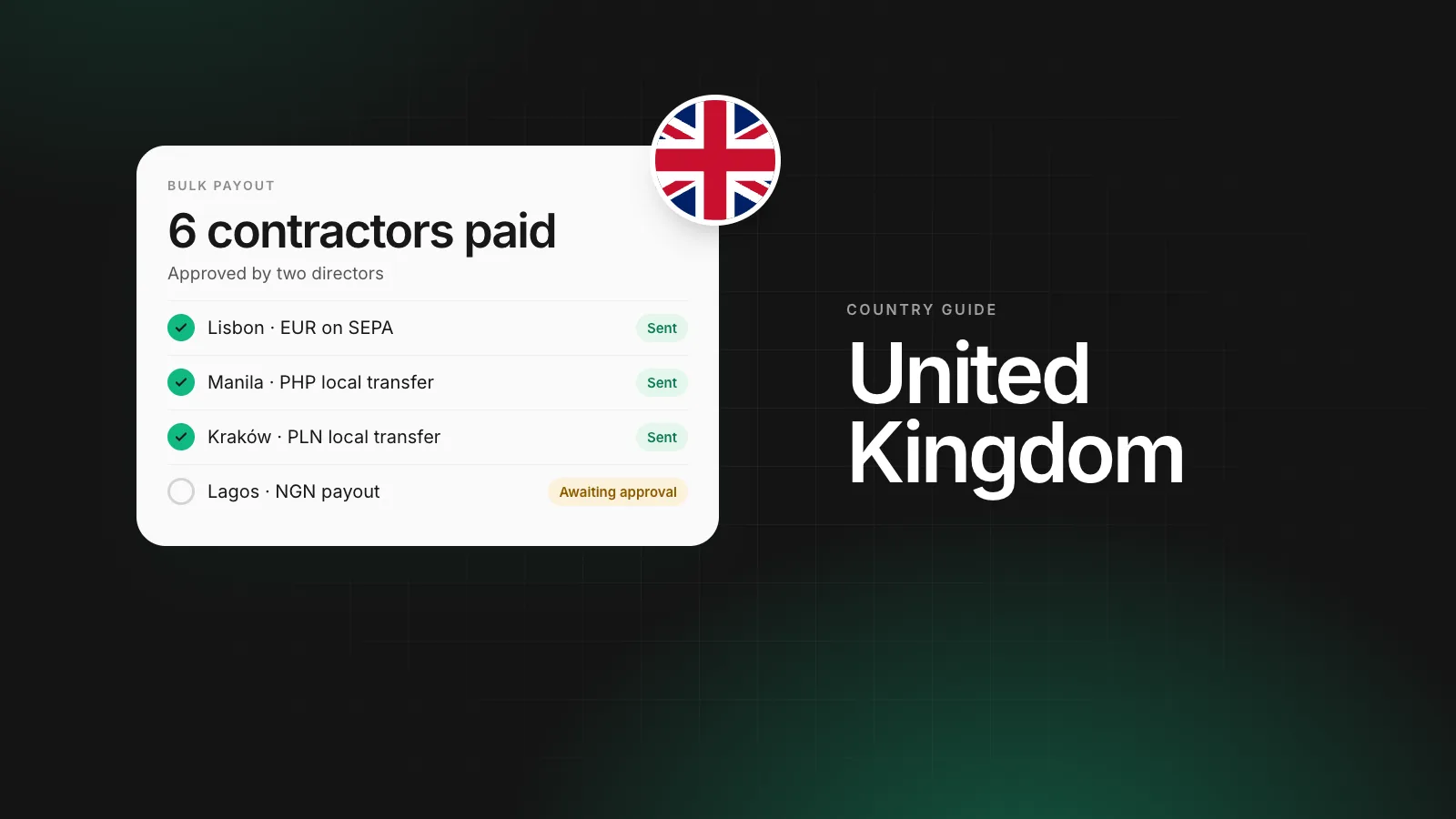
A Bristol software company engages a developer in Lisbon at €6,000 a month. Paying him takes two minutes. Proving to HMRC that the €6,000 was a business cost, and making sure it reached the right account, takes a bit of setup.
Status: contractor or employee?
The question of employment status still matters when the worker is abroad, for two reasons. The country where the contractor lives has its own rules on disguised employment, and Portugal, Spain and others do enforce them. And a long-term, full-time arrangement with one client looks like employment wherever the person sits.
For UK purposes, the off-payroll rules (IR35) deal with UK income tax and National Insurance. A contractor who is not UK resident and works outside the UK generally has nothing for those rules to apply to. That changes if the contractor spends working time in the UK, so keep track of visits.
What protects you is a contract that reads like a business arrangement: the contractor sets their own hours, uses their own equipment, can work for others and invoices for deliverables.
Records HMRC expects
To deduct contractor costs from corporation tax, keep three things for each payment:
- The agreement, signed by both sides.
- An invoice in the contractor's name, with their address, the service, the date and the amount.
- Proof of payment showing the amount, currency and the account it went to.
If you pay in euros but keep books in sterling, record the exchange rate used on the day. A payment platform that shows the rate on the confirmation screen and keeps it on the statement saves this step.
Choosing the rail
Paying a Lisbon contractor in sterling by SWIFT means his bank converts at its own rate and possibly charges to receive. You never see that cost, but he does, and he will price it into the next quote.
Paying in euros by SEPA lands the exact amount, usually the same day. The same applies to local transfers in zloty, pesos or rupees: the contractor gets the invoiced amount in the currency they live in.
Fraud: the email that changes bank details
The most common loss in contractor payments is a convincing email saying "our bank details have changed". It comes from a compromised mailbox or a lookalike domain. UK payments have Confirmation of Payee to catch a name mismatch; foreign accounts do not.
Set one rule: any change of bank details is confirmed by a call or video call with someone you already know, using contact details you already hold. Then require a second person to approve the first payment to the new details.
Paying into the United Kingdom: the local rail
| What | Detail |
|---|---|
| Local rail | Faster Payments |
| Run by | Pay.UK |
| Settlement | Seconds, 24/7; the scheme limit is £1,000,000, and each bank sets its own |
Bacs still carries most payroll and Direct Debits, on a three-day cycle.
Source: Pay.UK: Faster Payment System. Checked when this guide was last updated; the scheme's own page has the current figures.
Where Rivet fits
A Rivet business account pays contractors in 120+ countries, on local rails where they are available, from balances held in sterling, euros, dollars and other currencies. Bulk payouts send a month's contractor invoices in one batch, and from the Growth plan two people can be required to approve them. Each payment shows the rate before you confirm and keeps it on the statement. Rivet is not a bank; regulated partner institutions hold the funds.
For a broader walk-through, see how to pay international contractors and our guide to invoice fraud and payment detail scams.
Questions people ask
Does IR35 apply to overseas contractors?
The off-payroll rules concern UK income tax and National Insurance. A contractor who is not UK resident and does the work abroad generally has no UK liability for the rules to bite on. Time spent working in the UK changes the picture, so check HMRC guidance if contractors visit.
What records does a UK company need for overseas contractor payments?
A written agreement, an invoice for each payment showing the contractor's name, address and the amount, and proof that the payment was made. Keep the exchange rate used if you pay in another currency.
Should I pay contractors in pounds or their own currency?
Their own currency is usually cheaper overall. Paid in sterling, the contractor's bank converts at its own rate and may charge to receive a foreign transfer, so the contractor bears a cost you cannot see.
Is Confirmation of Payee available for payments abroad?
No. Confirmation of Payee checks UK account names. For foreign accounts, confirm details by phone or video with someone you already know.
Sources
Rashidatou writes Rivet's guides to how money moves between countries: the payment rails, what each one costs, and the account details a company needs to get paid in another currency. Every figure in Rashidatou's articles is traced to the scheme rulebook, the regulator or the provider's published price list, and those sources are listed at the end.
More from Rashidatou K. →This article is general information, not legal, tax or financial advice. Rules and fees change; check the sources above and the provider’s current terms before you act on them.
- uk
- contractors
- ir35
- hmrc
- payouts
- international payments