Nigeria's 2026 tax reform: what changes for small companies
Nigeria's tax reform acts took effect on 1 January 2026. Small companies, with turnover of ₦100 million or less and fixed assets under ₦250 million, are exempt from company income tax, capital gains tax and the new development levy. Larger companies pay a single 4% levy instead of several old ones.
- Published
- Reading time
- 2 min read
Nigeria rewrote much of its tax law in 2025. Four acts, the Nigeria Tax Act, the Nigeria Tax Administration Act, the Nigeria Revenue Service (Establishment) Act and the Joint Revenue Board (Establishment) Act, were signed on 26 June 2025 and took effect on 1 January 2026. For small companies, the headline change is a full exemption from company income tax.
This is a summary for founders, not tax advice. Have your accountant check your position against the statute.
Who counts as a small company?
A company qualifies as small if both are true:
| Test | Limit |
|---|---|
| Gross turnover | ₦100 million or less in the year |
| Fixed assets | ₦250 million or less |
Professional services firms are excluded from the small company definition. Commentators have noted some differences in wording between the acts, so check the current text and any guidance from the Nigeria Revenue Service.
What do small companies stop paying?
- Company income tax: 0%.
- Capital gains tax on chargeable gains.
- The new development levy.
They still register, file returns, deduct and remit withholding and PAYE where relevant, and keep proper records. The exemption is not an exemption from compliance.
What changes for companies above the threshold?
| Item | 2026 position |
|---|---|
| Company income tax | Applies to companies that are not small; check the current rate in the Act |
| Development levy | 4% of assessable profits |
| Levies replaced | Tertiary education tax and several earmarked levies, consolidated into the development levy |
| Minimum effective tax | Applies to large companies and groups above high turnover thresholds |
| VAT | Standard rate unchanged at 7.5% |
The development levy is meant to simplify things: one levy instead of several, each with its own return.
What changed in administration?
The Federal Inland Revenue Service was replaced by the Nigeria Revenue Service. Registration and tax identification are linked, so a tax ID is issued as part of company registration. See how to register a company with the CAC. The Nigeria Tax Administration Act sets out filing, record-keeping and penalty rules across federal and state taxes.
What should a small company do now?
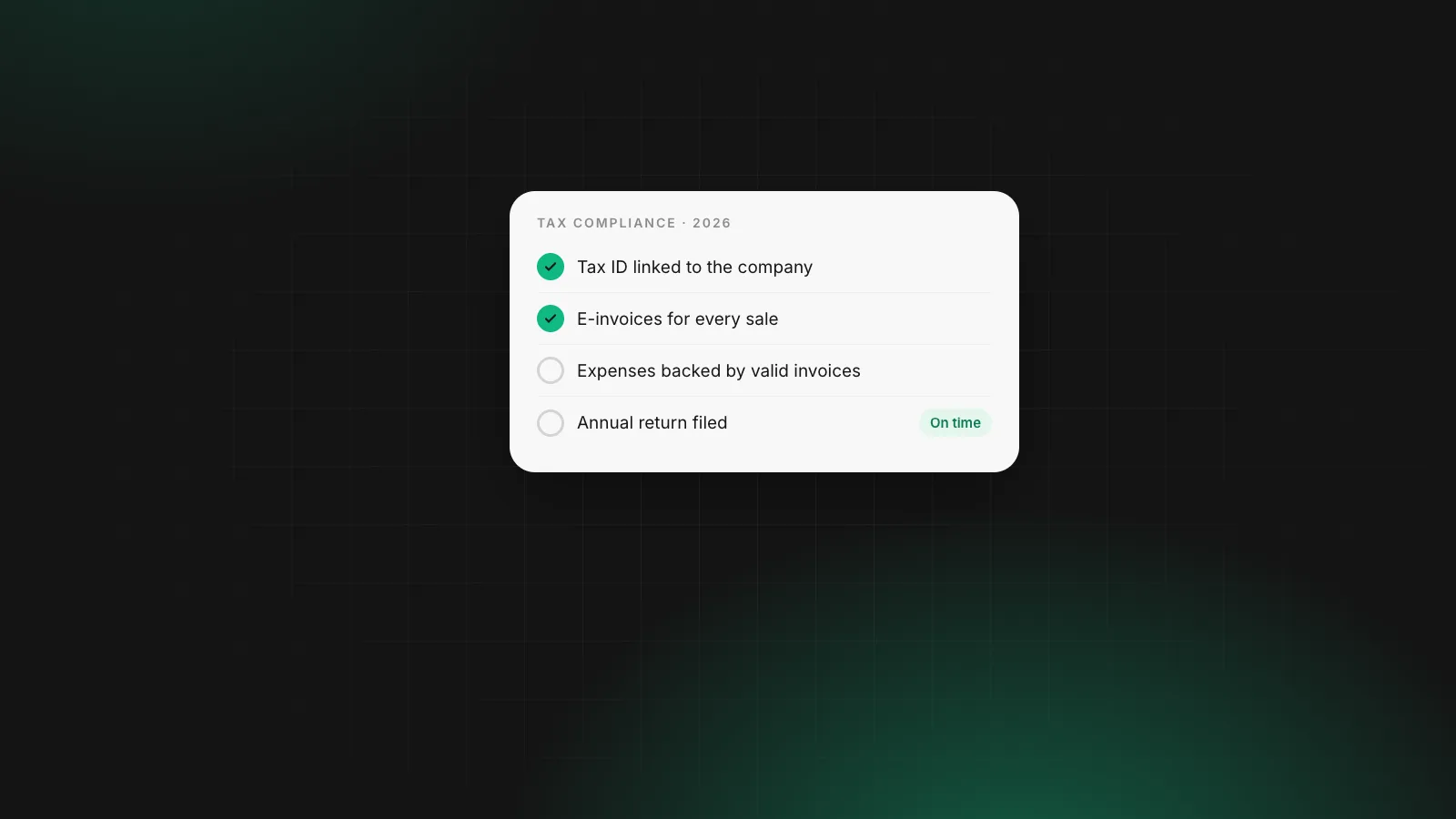
- Check turnover and fixed assets against the thresholds for the 2026 year.
- Make sure the company has a tax ID and is registered for the taxes it owes, including VAT where applicable.
- Keep invoices and bank records that support the turnover figure.
- File returns on time, even if no tax is payable.
Why records matter more now
A company relying on the small company exemption has to be able to show its turnover. Clean bank records in the company's name are the simplest evidence. For companies earning from clients abroad, that means foreign income landing in a company account, not a personal one. See domiciliary accounts vs USD accounts.
Rivet opens accounts for registered companies in the countries we support. A Nigerian company can receive USD from foreign clients into account details in its own name, and on Scale hold and convert NGN in the same account, with every payment on a downloadable statement.
Questions people ask
What is a small company under the Nigeria Tax Act 2025?
A company with gross turnover of ₦100 million or less and total fixed assets of ₦250 million or less, which is not a professional services business. Check the statute text for the exact wording on assets.
Do small companies still have to file tax returns?
Yes. The exemption is from paying company income tax, not from filing. Small companies still register, file returns and keep records.
What is the development levy?
A 4% levy on assessable profits for companies that are not small companies or non-resident companies. It replaces the tertiary education tax and several other earmarked levies.
What happened to FIRS?
Under the reforms, the Federal Inland Revenue Service was replaced by the Nigeria Revenue Service, which administers federal taxes.
Sources
William covers what happens once a company starts moving money: getting the business verified, paying contractors and suppliers abroad, and keeping card spend under control. William writes for the founder or finance lead who has to make it work this week, and links every rule cited to the text it comes from.
More from William Sunjo M. →This article is general information, not legal, tax or financial advice. Rules and fees change; check the sources above and the provider’s current terms before you act on them.
- nigeria tax act
- tax reform nigeria
- small company
- development levy
- nigeria revenue service
- nigeria