Nigerian startups with a Delaware parent: how money moves between the US company and Lagos
The common structure for a venture-backed Nigerian startup is a Delaware C-corp that raises money and a Nigerian subsidiary that runs operations. Money flows between them in a few set ways. Getting those flows right protects the company in its next funding round and with the CBN.
- Published
- Reading time
- 2 min read
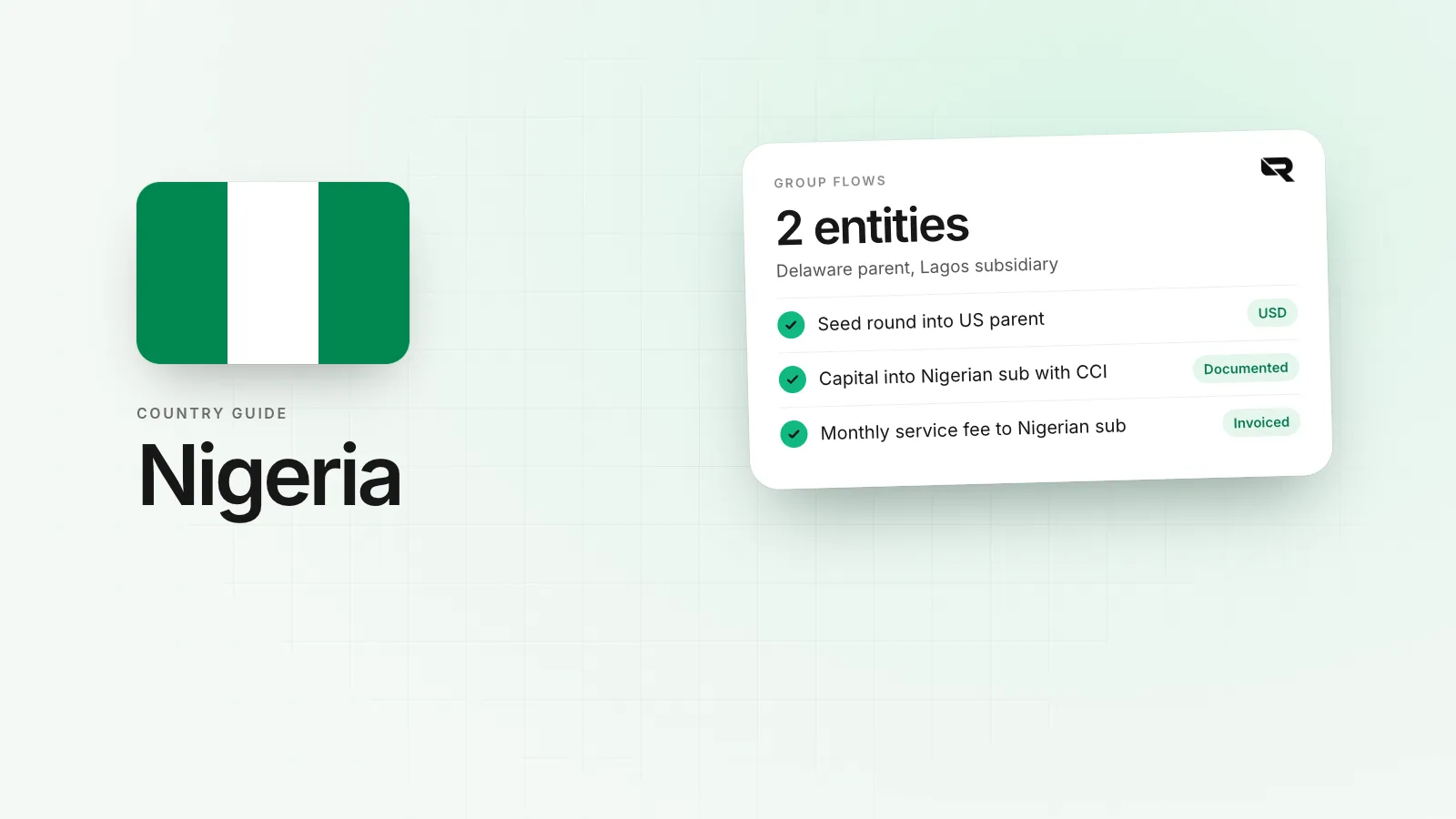
A Lagos fintech raises a $3 million seed round. The investors wire dollars to its Delaware parent. The parent then funds its Nigerian subsidiary, which employs 40 people in Yaba, and pays it a monthly fee for building the product. Two years later, at the Series A, the investors' lawyers ask for every Certificate of Capital Importation the subsidiary holds. The startup has two.
The structure
The usual setup:
- a Delaware C-corp that owns the intellectual property, signs customer and investor contracts, and raises money,
- a Nigerian subsidiary registered with the CAC that employs the team and runs local operations.
How money moves
Investment into the subsidiary. When the parent sends equity or a loan into the Nigerian subsidiary, it should come through an authorised dealer bank, which issues a Certificate of Capital Importation (CCI). The CCI lets the parent repatriate dividends and capital through the official market later. Funds brought in without one are harder to take out.
Services fees. Many parents pay the subsidiary monthly under an intercompany services agreement, for development and operations. The subsidiary invoices the parent, and the price should be at arm's length under Nigerian transfer pricing rules.
Revenue. US and international customers pay the parent. Nigerian customers usually pay the subsidiary in naira.
Separate accounts, separate records
Each entity needs its own bank account in its own name. Mixing the parent's dollars and the subsidiary's naira in personal or shared accounts creates problems in due diligence, tax audits and with the CBN.
Paying into Nigeria: the local rail
| What | Detail |
|---|---|
| Local rail | NIBSS Instant Payment (NIP) |
| Run by | Nigeria Inter-Bank Settlement System |
| Settlement | Seconds, 24/7 |
| Published fee | The CBN caps the sender's charge at ₦10 up to ₦5,000, ₦26 up to ₦50,000 and ₦50 above that |
Source: NIBSS: NIP. Checked when this guide was last updated; the scheme's own page has the current figures.
Where Rivet fits
A Rivet business account accepts US companies with Nigerian founders after verification, with the document list shown up front and a decision aimed within three business days. The Delaware parent gets US account details in its own name on every plan, euro and sterling details from the Growth plan, and payouts in 120+ countries. Rivet is not a bank; regulated partner institutions hold the funds. Investment into the Nigerian subsidiary should still go through an authorised dealer bank to obtain a CCI.
Questions people ask
Why do Nigerian startups use a Delaware parent?
US and international investors are familiar with Delaware corporations, and the structure simplifies fundraising and exits.
What is a Certificate of Capital Importation?
A certificate issued by an authorised dealer bank when foreign investment comes into Nigeria. It allows the investor to repatriate dividends and capital later through the official market.
How does the parent pay for the Nigerian team?
Usually under an intercompany services agreement, with the subsidiary invoicing the parent at an arm's length price.
Can the parent pay Nigerian staff directly?
That can create tax and employment complications in Nigeria. Most groups employ staff through the Nigerian subsidiary.
Sources
Rashidatou writes Rivet's guides to how money moves between countries: the payment rails, what each one costs, and the account details a company needs to get paid in another currency. Every figure in Rashidatou's articles is traced to the scheme rulebook, the regulator or the provider's published price list, and those sources are listed at the end.
More from Rashidatou K. →This article is general information, not legal, tax or financial advice. Rules and fees change; check the sources above and the provider’s current terms before you act on them.
- nigeria
- startups
- delaware
- cci
- subsidiary
- transfer pricing