Nigeria's 4% development levy from 2026: who pays it
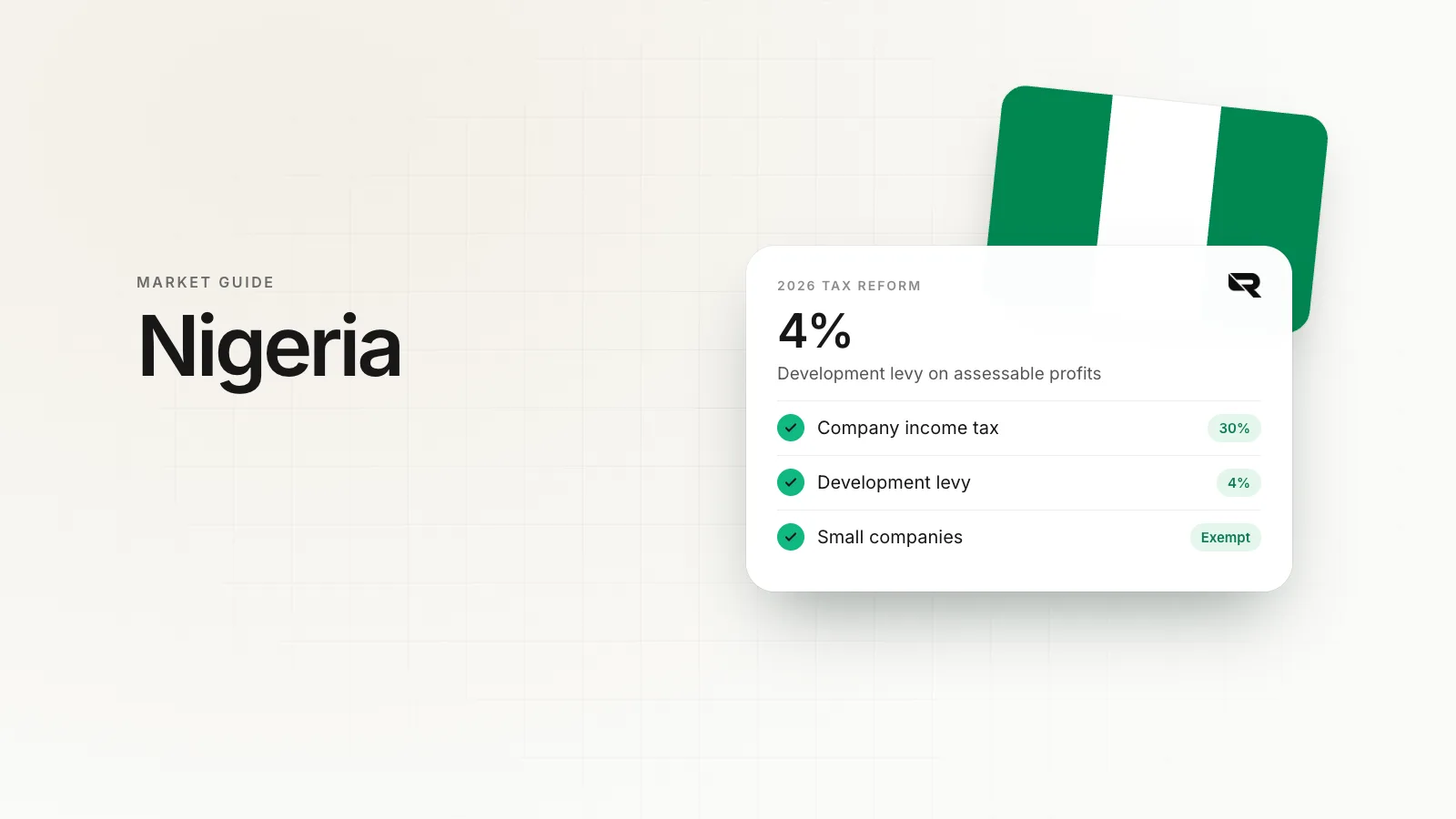
From 1 January 2026, Nigerian companies other than small companies pay a 4% development levy on assessable profits. It replaces several older levies and sits beside the 30% company income tax.
- Published
- Reading time
- 1 min read
"Nigeria corporate tax 2026" sits beside "nigeria corporate tax rate" in Google's suggestions. The 2026 answer has a new line: the development levy.
The rates from 2026
| Company | Company income tax | Development levy |
|---|---|---|
| Small company | 0% | Exempt |
| Other companies | 30% | 4% of assessable profits |
| Non-resident companies | Rules for non-residents | Exempt from the levy |
What it replaces
The levy consolidates older charges: the tertiary education tax and contributions such as the IT levy, NASENI levy and Police Trust Fund. Companies that paid several of them now pay one.
The small company test
Most sources, including PwC, describe small companies as those with turnover up to ₦100 million and fixed assets under ₦250 million. A few commentaries cite a lower turnover figure. Check the Act's text with your adviser. See Nigeria tax reform 2026 for small companies.
An example
A Lagos company with ₦600 million turnover and ₦120 million assessable profit pays 30% company income tax on its total profits and a 4% levy of ₦4.8 million.
Records
The Nigeria Revenue Service will expect clean records of revenue, including foreign currency income converted at the right rate.
Paying into Nigeria: the local rail
| What | Detail |
|---|---|
| Local rail | NIBSS Instant Payment (NIP) |
| Run by | Nigeria Inter-Bank Settlement System |
| Settlement | Seconds, 24/7 |
| Published fee | The CBN caps the sender's charge at ₦10 up to ₦5,000, ₦26 up to ₦50,000 and ₦50 above that |
Source: NIBSS: NIP. Checked when this guide was last updated; the scheme's own page has the current figures.
Where Rivet fits
Rivet serves registered companies in supported countries, including foreign companies owned by Nigerian founders where eligible, and keeps every receipt and conversion on one ledger. Rivet does not advise Nigerian-registered companies to hold funds offshore. Rivet is not a bank; regulated partner institutions hold the funds. See register a business in Nigeria with the CAC.
Questions people ask
What is Nigeria's development levy?
A 4% levy on assessable profits of companies other than small companies and non-resident companies, introduced by the Nigeria Tax Act 2025.
What does it replace?
Several earlier levies, including the tertiary education tax and contributions such as the IT levy and NASENI levy.
Who is exempt?
Small companies, which most sources define as turnover up to ₦100 million and fixed assets below ₦250 million. Some commentaries give a different figure; check the Act.
When is it paid?
Alongside company income tax returns. Ask your adviser for the filing mechanics.
Sources
Alexia compares the accounts, cards and payment tools companies weigh before they switch, and writes Rivet's market guides for founders in a specific country. Prices in Alexia's comparisons come from each provider's own pricing page on the date given in the article, rules come from the regulator or tax authority that sets them, and every source is listed at the end.
More from Alexia M. →This article is general information, not legal, tax or financial advice. Rules and fees change; check the sources above and the provider’s current terms before you act on them.
- nigeria development levy
- nigeria tax act 2025
- company income tax nigeria
- small company exemption
- nrs
- nigeria