Mercury vs Bluevine: business checking compared for 2026
Bluevine pays interest on checking and charges for wires. Mercury charges nothing for most wires and sells treasury separately. Which one costs less depends on how often you send money out.
- Published
- Updated
- Reading time
- 2 min read
Bluevine and Mercury land in the same search for different reasons. Bluevine is known for interest on a checking account. Mercury is known for free wires. Figures below come from each company's own pages, read on 4 November 2026.
Side by side
| Bluevine | Mercury | |
|---|---|---|
| Plans | Standard $0, Plus $30, Premier $95 (paid plans waivable) | Mercury $0, Plus $29.90, Pro $299 |
| Interest | 1.3% to 3.0% APY by plan, with conditions on Standard | Treasury yield up to 4.25% with a $250K balance, offered separately |
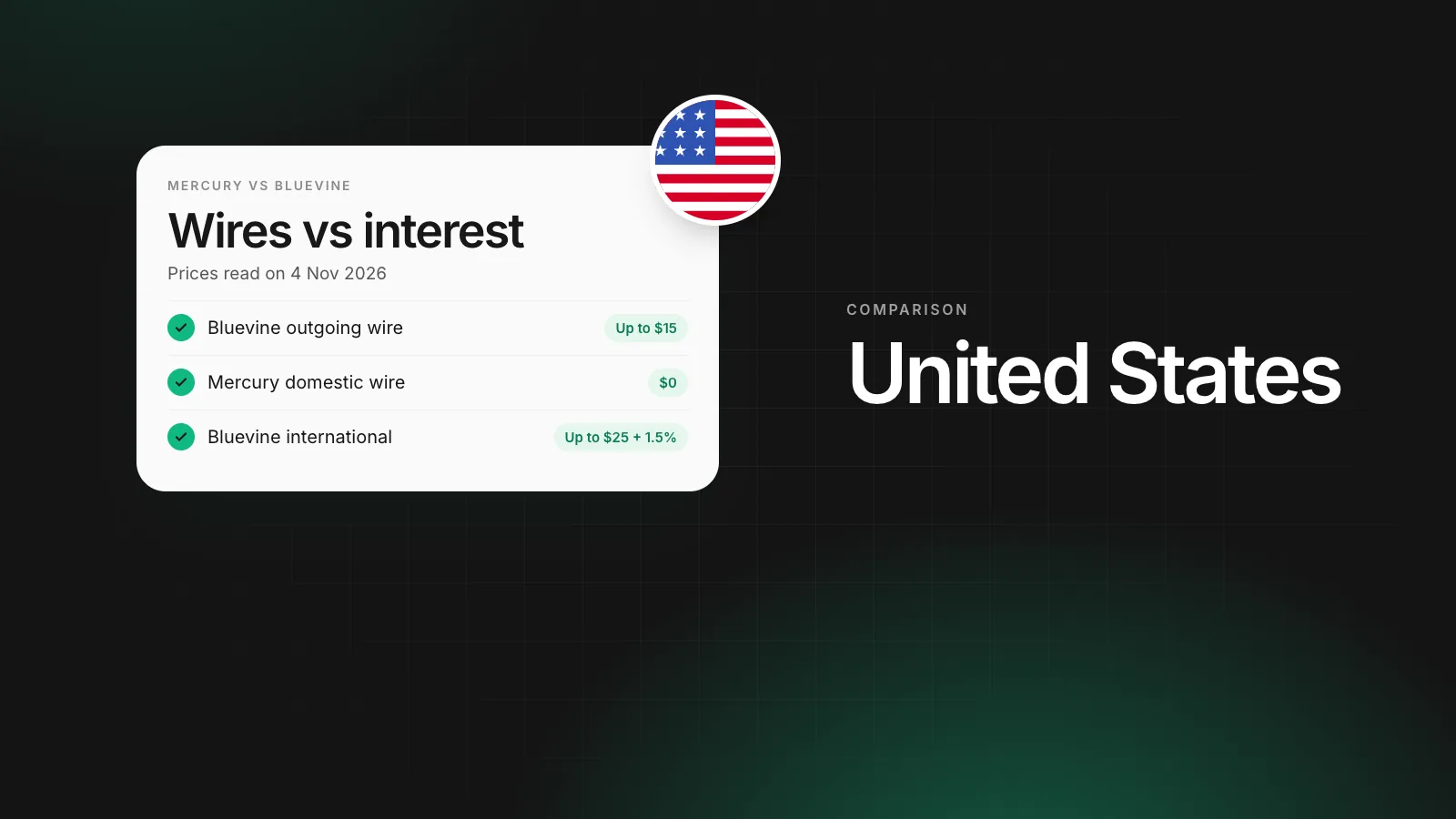
| Outgoing domestic wire | Up to $15 | $0 |
| International payment | Up to $25, plus up to 1.5% in a foreign currency | $0 in USD; 1% if converted |
| Partner bank | Coastal Community Bank and program banks | Choice Financial Group, Column N.A. |
When Bluevine costs less
Take a company that holds $80,000 and sends two wires a month. On Bluevine Standard, if it meets the activity condition, it earns 1.3% on that balance, roughly $87 a month, and pays up to $30 in wire fees. Interest wins.
When Mercury costs less
Now take an agency that pays 15 contractors abroad each month by wire. On Bluevine that is up to $375 in payment fees before any currency fee. On Mercury, USD wires are $0, and converted ones cost 1%. The more money you send, the more Mercury's model helps.
The question both leave open
Both hold dollars. A contractor in Poland paid by a converted wire receives zloty at the sender's rate, sometimes minus an intermediary fee. A European client paying you by wire to a US account pays its own bank's international fee. If either happens every month, the currency leg is your largest cost.
Paying into the United States: the local rail
| What | Detail |
|---|---|
| Local rail | ACH for batch payments; RTP and FedNow for instant transfers |
| Run by | Nacha for ACH; The Clearing House for RTP; the Federal Reserve for FedNow |
| Settlement | Same-day ACH within the business day, standard ACH the next; RTP and FedNow in seconds, 24/7, where both banks take part |
Source: Nacha: Same Day ACH. Checked when this guide was last updated; the scheme's own page has the current figures.
Where Rivet fits
Rivet is built for companies that earn or pay in several currencies. Starter is free with USD details for ACH and wires. Growth ($200 a month) adds EUR and GBP details, local payouts to 120+ countries at $1 per payout and FX from 0.50%, shown before you confirm. Rivet is not a bank; regulated partner institutions hold the funds. See Payouts and the true cost of international payments.
Questions people ask
Which is better, Bluevine or Mercury?
Bluevine suits a small business that keeps a steady balance and wants interest on checking. Mercury suits a company that sends wires often or wants startup tools such as treasury and corporate credit. Count your monthly wires first; that usually decides it.
Does Bluevine charge for international wires?
Yes. Bluevine's checking page lists up to $25 per international payment, and foreign-currency payments add up to 1.5% of the amount.
Is Bluevine a real bank?
Bluevine is a financial technology company. Its checking accounts are provided by Coastal Community Bank, Member FDIC, and program banks, with coverage up to $3M per depositor through that network.
What if I invoice clients outside the US?
Both accounts hold US dollars. To give a European client euro details for SEPA, or to pay contractors in their own currency on local rails, you need a multi-currency account.
Sources
Alexia compares the accounts, cards and payment tools companies weigh before they switch, and writes Rivet's market guides for founders in a specific country. Prices in Alexia's comparisons come from each provider's own pricing page on the date given in the article, rules come from the regulator or tax authority that sets them, and every source is listed at the end.
More from Alexia M. →This article is general information, not legal, tax or financial advice. Rules and fees change; check the sources above and the provider’s current terms before you act on them.
- mercury vs bluevine
- bluevine business checking
- mercury bank
- wire fees
- comparison