Korea e-tax invoice requirements: who issues, when and how
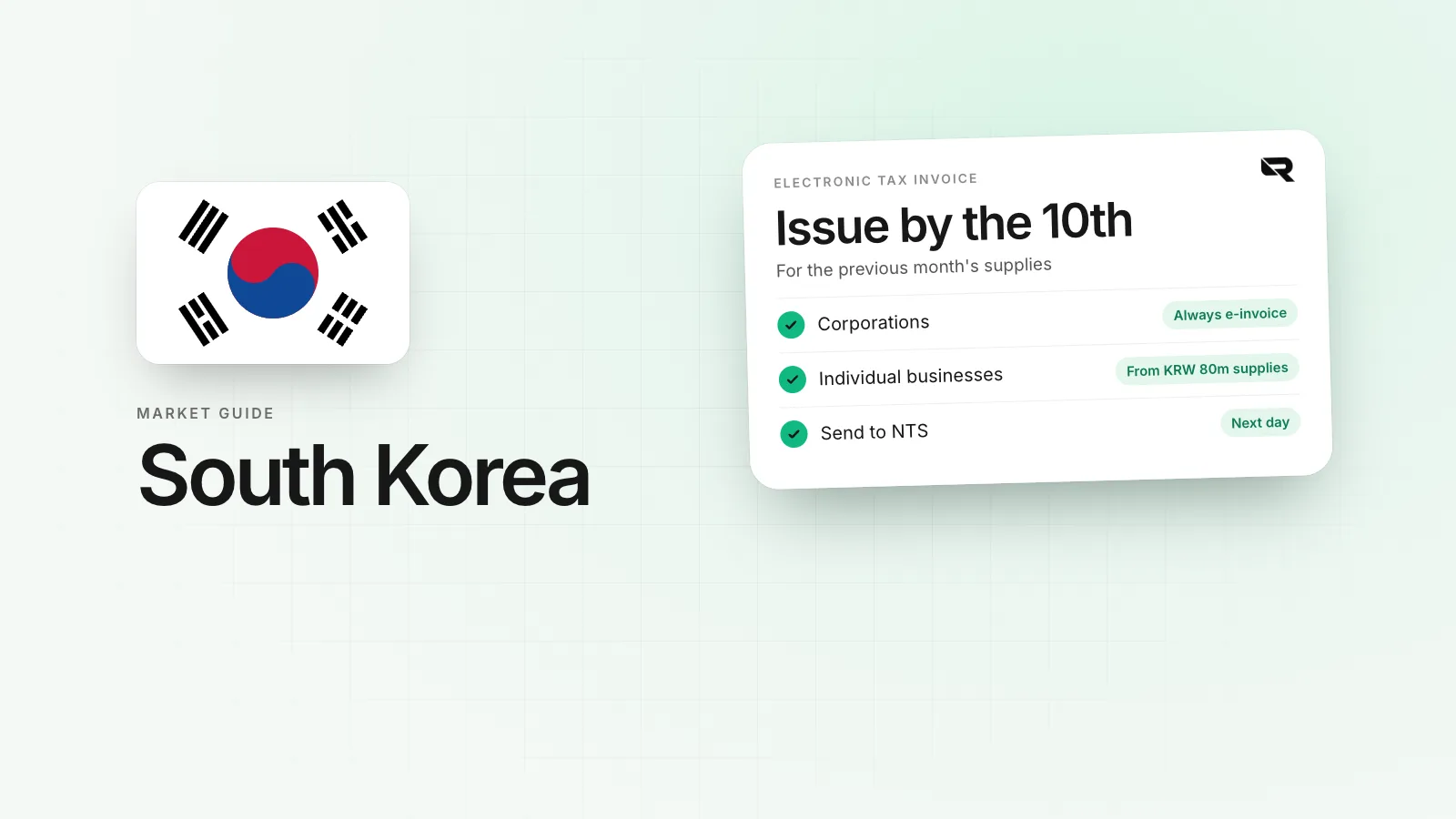
Every Korean corporation issues electronic tax invoices through Hometax or certified software, and sends them to the National Tax Service the day after issue. The deadline for monthly invoices is the 10th of the next month.
- Published
- Reading time
- 2 min read
"Korea e-invoicing requirements" and "korea e tax invoice" are the first suggestions after "Korea e-invoicing". Korea was one of the first countries to make electronic invoices mandatory, so for a Korean company the question is less whether than how and when.
Who must issue
| Business | Rule |
|---|---|
| Corporations | Always, for VAT-taxable supplies |
| Individual businesses | From KRW 80 million of supplies in the prior year (since July 2024) |
| Smaller individual businesses | Paper or voluntary e-invoicing |
Timing
- Issue the invoice when the supply happens, or consolidate a month's supplies and issue by the 10th of the following month.
- Send it to the NTS by the day after issue. Hometax does this automatically; certified software sends it for you.
Exports and foreign customers
Exports of goods are zero rated. Many services supplied to foreign businesses and paid for in foreign currency through a foreign exchange bank are zero rated too. The documentation differs: some zero-rated sales need a tax invoice, others need export or foreign currency receipt evidence. A Korean SaaS company billing a US customer should keep the contract, the invoice and the record of the dollar receipt together.
Keeping the ledger and invoices in step
When invoices go to the NTS within a day, the tax office sees your sales before your accountant closes the month. Mismatches between invoices and receipts are easier to explain when each payment is in the company's name with a clear reference.
Paying into South Korea: the local rail
| What | Detail |
|---|---|
| Local rail | Interbank transfers through KFTC's electronic banking network |
| Run by | Korea Financial Telecommunications and Clearings Institute |
| Settlement | Seconds, 24/7 |
Source: KFTC. Checked when this guide was last updated; the scheme's own page has the current figures.
Where Rivet fits
Rivet gives registered companies USD details on the free Starter plan and EUR and GBP details on Growth, so overseas customers pay in their own currency and each receipt shows the payer and reference. Statements export for your accountant. Check the eligibility list on our site for Korean companies. Rivet is not a bank; regulated partner institutions hold the funds. See Korea companies receiving foreign payments.
Questions people ask
Does Korea have mandatory e-invoicing?
Yes. Korea has required electronic tax invoices from corporations since 2011 and has lowered the threshold for individual businesses in steps, to KRW 80 million of prior-year supplies from July 2024.
How do I issue a Korean e-tax invoice?
Through the NTS Hometax portal or certified invoicing software, using a digital certificate for the business.
What happens if I issue late?
Late issuance and late transmission carry penalties based on the supply value. Check the current rates on the NTS site.
Do I need an e-tax invoice for overseas customers?
Zero-rated exports follow different rules depending on what is supplied and how payment is received. Ask your tax adviser how your export sales should be documented.
Sources
Alexia compares the accounts, cards and payment tools companies weigh before they switch, and writes Rivet's market guides for founders in a specific country. Prices in Alexia's comparisons come from each provider's own pricing page on the date given in the article, rules come from the regulator or tax authority that sets them, and every source is listed at the end.
More from Alexia M. →This article is general information, not legal, tax or financial advice. Rules and fees change; check the sources above and the provider’s current terms before you act on them.
- korea e invoicing
- korea e tax invoice
- south korea e invoicing mandate
- nts
- hometax
- vat