Korean companies receiving and holding foreign currency: FX reporting rules
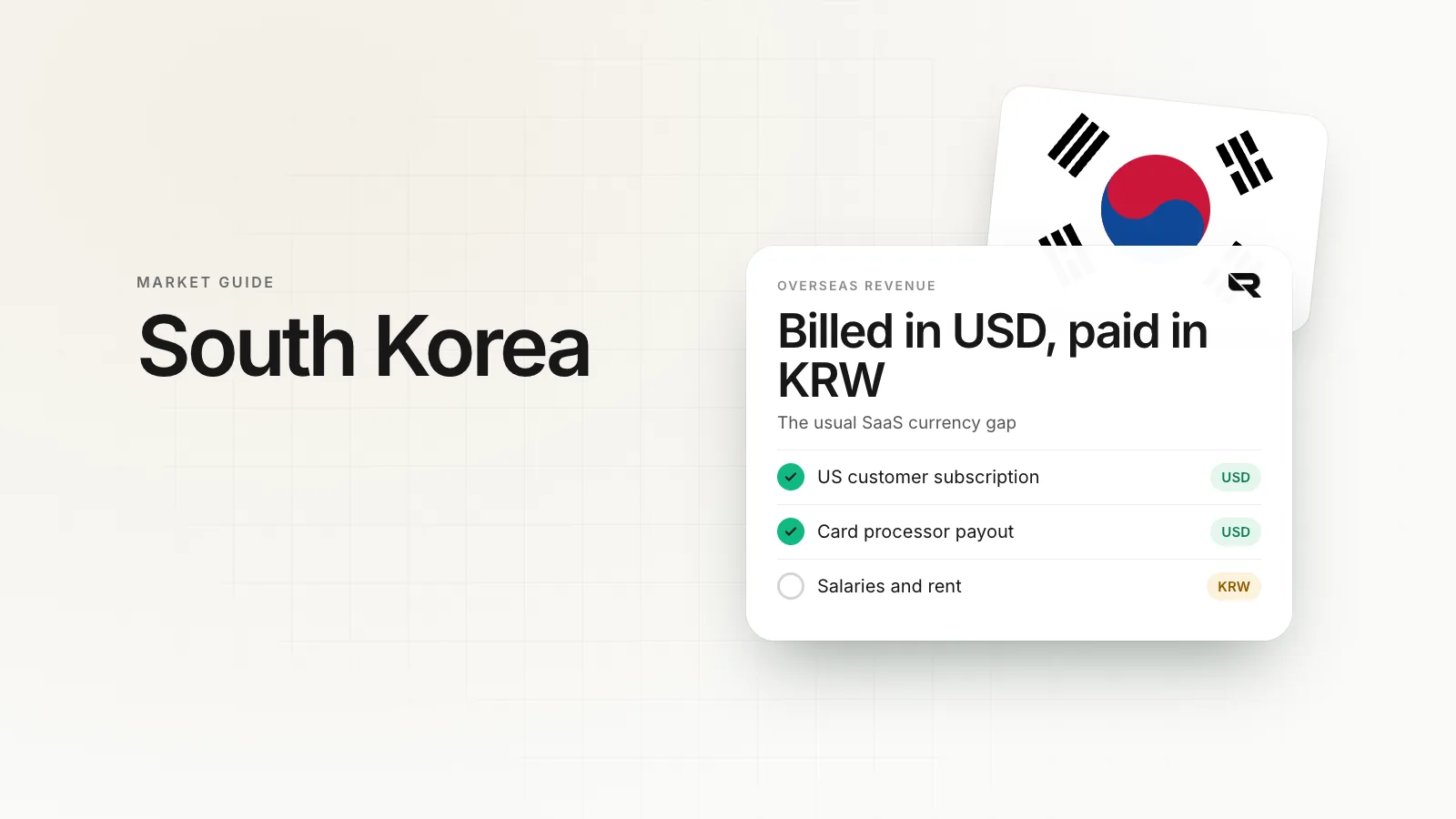
A Korean software company paid by a US client receives dollars through its Korean bank. If it wants an account abroad, Korean foreign exchange law asks it to report first. The government has been easing these rules in stages, but reporting obligations remain.
- Published
- Reading time
- 1 min read
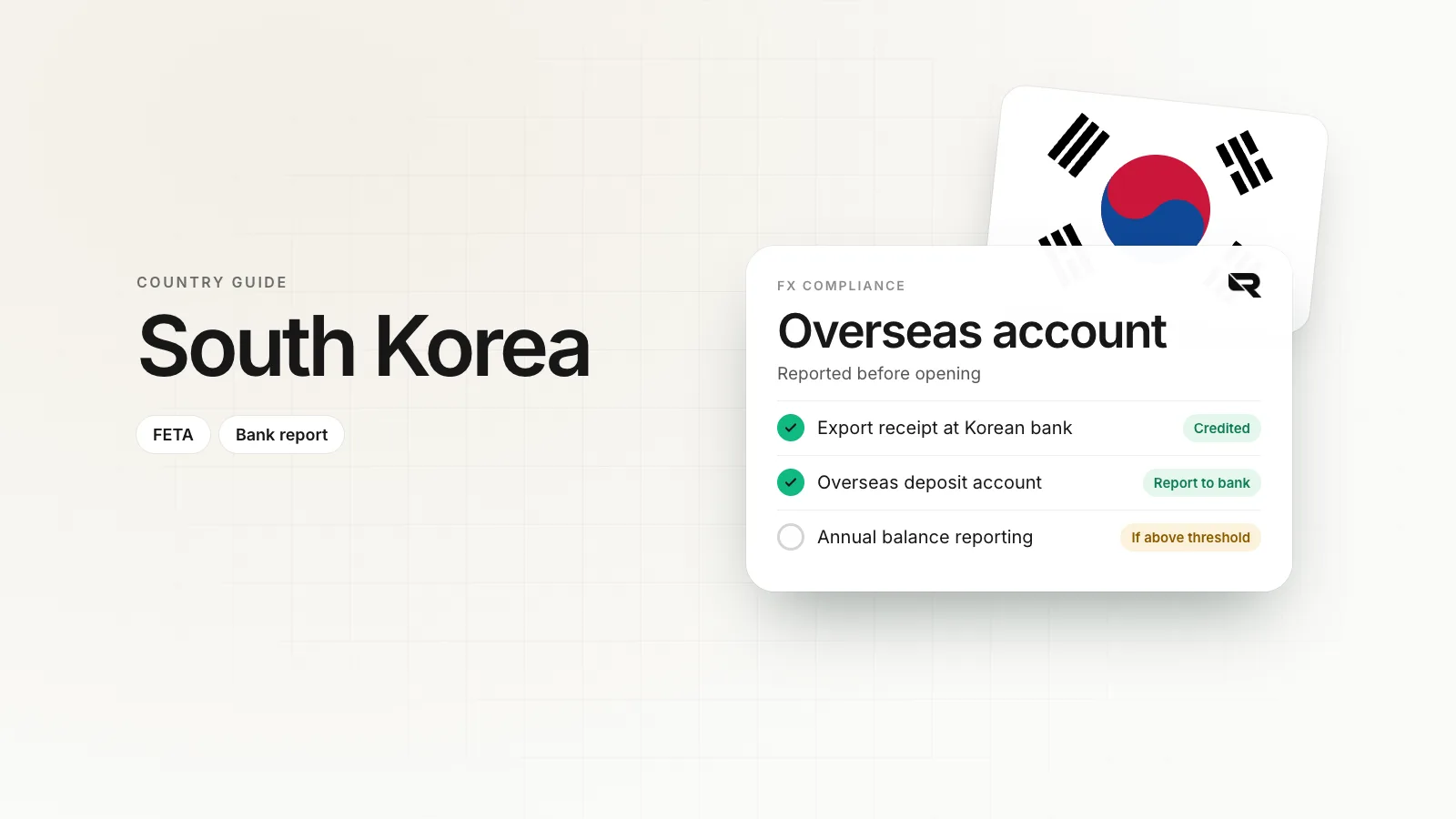
A Seoul game developer earns dollars from app stores and a US publisher. Its Korean bank receives and classifies each payment. When the company wanted a dollar account in the US for a new American subsidiary's costs, its bank explained the first step: report the overseas account under the Foreign Exchange Transactions Act before opening it.
The framework
Korea's Foreign Exchange Transactions Act and its regulations govern foreign currency transactions by residents, including companies. Banks act as designated foreign exchange banks, processing transactions and receiving reports.
Receipts from abroad
Export proceeds, such as payments for software, services or goods, come in through Korean banks, which classify them with the contract and invoice. Korea has relaxed the old repatriation requirements over time; check current rules for your type of transaction.
Accounts abroad
A Korean company that wants to open a deposit account abroad generally reports it first to its designated foreign exchange bank. Depending on the amounts, balances and transactions in that account may need periodic reporting. The rules were simplified in recent reforms, but reporting has not disappeared.
Recent easing
Korea's government has announced foreign exchange reforms to make cross-border transactions easier, including higher reporting thresholds and simpler procedures. Read the Ministry of Economy and Finance's announcements or ask your bank for the current position.
Paying into South Korea: the local rail
| What | Detail |
|---|---|
| Local rail | Interbank transfers through KFTC's electronic banking network |
| Run by | Korea Financial Telecommunications and Clearings Institute |
| Settlement | Seconds, 24/7 |
Source: KFTC. Checked when this guide was last updated; the scheme's own page has the current figures.
Where Rivet fits
Rivet opens business accounts for registered companies after verification. A Korea-registered company should report to its designated foreign exchange bank before opening an account abroad, and check any ongoing reporting. Korean founders' companies registered elsewhere, such as a US subsidiary, can use a Rivet business account with US account details on every plan. Rivet is not a bank; regulated partner institutions hold the funds.
Questions people ask
Can a Korean company open a bank account abroad?
Yes, generally after reporting to its designated foreign exchange bank under the Foreign Exchange Transactions Regulations. Balances above thresholds may need periodic reporting.
Do Korean exporters have to bring proceeds home?
Korea has relaxed repatriation rules over time. Check the current regulations and your bank's guidance for your type of receipt.
What did recent reforms change?
The government raised several reporting thresholds and simplified procedures to reduce the burden on companies and individuals. Specific changes are published by the Ministry of Economy and Finance.
What happens if a company does not report?
Failing to report required foreign exchange transactions can lead to fines or other penalties.
Sources
William covers what happens once a company starts moving money: getting the business verified, paying contractors and suppliers abroad, and keeping card spend under control. William writes for the founder or finance lead who has to make it work this week, and links every rule cited to the text it comes from.
More from William Sunjo M. →This article is general information, not legal, tax or financial advice. Rules and fees change; check the sources above and the provider’s current terms before you act on them.
- south korea
- foreign exchange
- fx reporting
- overseas accounts
- usd
- krw